Carnation Milk Ice Cream
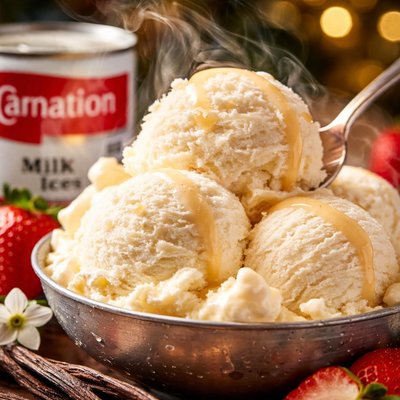
Indulge in the creamy nostalgia of homemade Carnation Milk Ice Cream, a delightful dessert that’s as easy to make as it is delicious. This no-cook recipe combines silky evaporated milk, rich heavy cream, and aromatic vanilla extract to create a luxuriously smooth ice cream that melts in your mouth. With just 15 minutes of prep time and a handful of pantry staples, this timeless treat is perfect for satisfying your sweet tooth. The combination of simple ingredients and a quick churn in your ice cream maker guarantees a velvety texture reminiscent of old-fashioned ice cream parlors. Serve it in a cone, a bowl, or with your favorite toppings to elevate your dessert game. Perfect for summer celebrations or cozy nights in, this Carnation Milk Ice Cream is sure to become a family favorite!

Smart Nutrition Tracking with SnapCalorie


Recipe Information
Ingredients
- 2 cups Evaporated milk
- 1 cup Heavy cream
- 0.75 cup Granulated sugar
- 2 teaspoons Vanilla extract
- 0.25 teaspoon Salt
Instructions
1. In a large mixing bowl, combine the evaporated milk, heavy cream, granulated sugar, vanilla extract, and salt.
2. Whisk the mixture until the sugar fully dissolves, about 2-3 minutes.
3. Cover the bowl with plastic wrap and refrigerate the mixture for at least 2 hours, or until it is fully chilled.
4. Once the mixture is chilled, pour it into an ice cream maker and churn according to the manufacturer’s instructions. This typically takes 20-25 minutes.
5. Once the ice cream reaches a soft-serve consistency, transfer it to an airtight container.
6. Freeze the ice cream for at least 4 hours to allow it to firm up before serving.
7. Scoop and enjoy your homemade Carnation Milk Ice Cream!
Nutrition Facts
Calories |
345 | ||
|---|---|---|---|
% Daily Value* |
|||
| Total Fat | 18.6 g | 24% | |
| Saturated Fat | 11.3 g | 57% | |
| Polyunsaturated Fat | 0.0 g | ||
| Cholesterol | 60 mg | 20% | |
| Sodium | 174 mg | 8% | |
| Total Carbohydrate | 33.2 g | 12% | |
| Dietary Fiber | 0.0 g | 0% | |
| Total Sugars | 33.2 g | ||
| Protein | 5.3 g | 11% | |
| Vitamin D | 2.0 mcg | 10% | |
| Calcium | 200 mg | 15% | |
| Iron | 0.1 mg | 1% | |
| Potassium | 253 mg | 5% | |
*The % Daily Value tells you how much a nutrient in a serving of food contributes to a daily diet. 2,000 calories a day is used for general nutrition advice.


