Caesar Side Salad
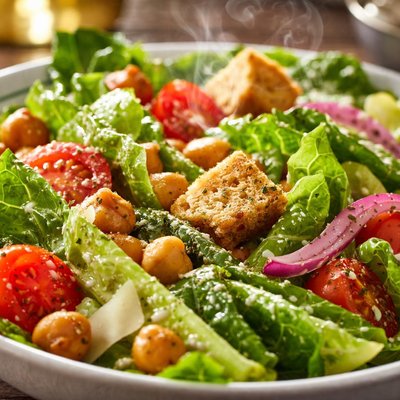
Elevate your dining experience with this classic Caesar Side Salad, a vibrant and satisfying addition to any meal. Crisp romaine lettuce is the perfect base for this timeless recipe, tossed with a creamy, homemade dressing featuring rich Parmesan cheese, fresh lemon juice, and umami-packed anchovy fillets. Golden croutons add a delightful crunch, while a hint of garlic and Dijon mustard bring bold flavor to every bite. Ready in just 15 minutes, this easy-to-make side dish is ideal for weeknight dinners, entertaining, or pairing with your favorite main course. Perfectly balanced and incredibly fresh, this Caesar side salad is a crowd-pleasing staple sure to brighten any table.

Smart Nutrition Tracking with SnapCalorie


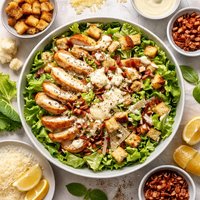
Recipe Information
Ingredients
- 2 hearts Romaine lettuce
- 1 cup Croutons
- 0.5 cup Parmesan cheese
- 0.5 cup Extra-virgin olive oil
- 2 tablespoons Lemon juice
- 1 teaspoon Dijon mustard
- 1 teaspoon Worcestershire sauce
- 2 pieces Anchovy fillets
- 1 clove Garlic
- 0.25 teaspoon Salt
- 0.25 teaspoon Black pepper
- 1 piece Egg yolk
Instructions
Rinse the romaine lettuce hearts thoroughly under cold water, then pat them dry with a clean kitchen towel or use a salad spinner to remove excess moisture.
Cut the romaine hearts into bite-sized pieces and place them in a large salad bowl.
In a blender or food processor, combine extra-virgin olive oil, lemon juice, Dijon mustard, Worcestershire sauce, anchovy fillets, minced garlic clove, salt, pepper, and egg yolk.
Blend the mixture until it forms a smooth and creamy dressing.
Pour the dressing over the romaine lettuce in the salad bowl.
Toss the lettuce gently with the dressing until all the leaves are well-coated.
Sprinkle the croutons and grated Parmesan cheese over the tossed salad.
Gently toss the salad again to incorporate the croutons and cheese throughout.
Serve the Caesar side salad immediately, garnished with extra Parmesan if desired.
Nutrition Facts
Calories |
503 | ||
|---|---|---|---|
% Daily Value* |
|||
| Total Fat | 39.8 g | 51% | |
| Saturated Fat | 7.6 g | 38% | |
| Polyunsaturated Fat | 0.2 g | ||
| Cholesterol | 59 mg | 20% | |
| Sodium | 654 mg | 28% | |
| Total Carbohydrate | 27.3 g | 10% | |
| Dietary Fiber | 3.2 g | 11% | |
| Total Sugars | 2.7 g | ||
| Protein | 11.1 g | 22% | |
| Vitamin D | 0.2 mcg | 1% | |
| Calcium | 204 mg | 16% | |
| Iron | 3.2 mg | 18% | |
| Potassium | 375 mg | 8% | |
*The % Daily Value tells you how much a nutrient in a serving of food contributes to a daily diet. 2,000 calories a day is used for general nutrition advice.


