Buttermilk Honey Bread
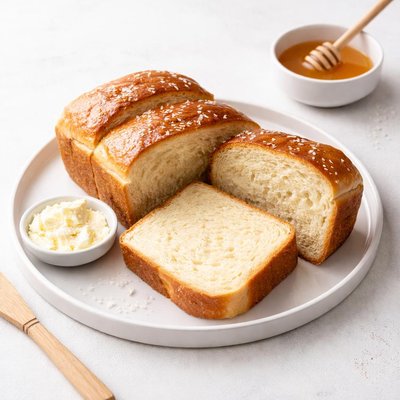
Soft, tender, and lightly sweetened, Buttermilk Honey Bread is the ultimate homemade loaf that will fill your kitchen with the comforting aroma of fresh-baked bread. Infused with the subtle tang of buttermilk and the natural sweetness of honey, this recipe creates a perfectly balanced flavor profile, making it ideal for both sweet and savory pairings. The silky dough comes together effortlessly and bakes into a golden loaf with a pillowy interior and a beautifully glossy crust, thanks to an optional egg wash. With a simple mix of pantry staples like all-purpose flour, butter, and active dry yeast, this versatile bread is perfect for breakfast toasts, sandwiches, or alongside hearty soups. A must-try for bread enthusiasts, this recipe is easy enough for beginners yet satisfying enough for seasoned bakers.

Smart Nutrition Tracking with SnapCalorie




Recipe Information
Ingredients
- 1.5 cups buttermilk
- 0.25 cups honey
- 2 tablespoons unsalted butter
- 1.5 teaspoons salt
- 2.25 teaspoons active dry yeast
- 0.25 cups warm water (110°F/43°C)
- 4.5 cups all-purpose flour
- 1 large egg (optional, for egg wash)
- 1 tablespoon water (optional, for egg wash)
Instructions
In a small saucepan, warm the buttermilk over low heat until it is just lukewarm (about 100°F/38°C). Remove from heat and stir in the honey, butter, and salt, allowing the butter to melt completely. Set aside to cool to lukewarm if it gets too warm.
In a small bowl, combine the warm water and active dry yeast. Let it sit for 5-10 minutes until the yeast becomes foamy and activated.
In a large mixing bowl, combine the lukewarm buttermilk mixture with the activated yeast mixture.
Begin adding the flour one cup at a time, stirring with a wooden spoon or using the dough hook of a stand mixer. Continue until a soft, slightly sticky dough forms.
Turn the dough onto a floured surface and knead by hand for 8-10 minutes (or knead with the stand mixer on medium speed for 5-6 minutes) until the dough becomes smooth and elastic.
Place the dough in a lightly greased bowl, cover with a clean kitchen towel or plastic wrap, and let it rise in a warm, draft-free area for 1-1.5 hours, or until doubled in size.
Punch down the dough and turn it out onto a floured surface. Shape it into a loaf and place it into a greased 9x5-inch loaf pan.
Cover the loaf pan with a kitchen towel and let the dough rise again for 30-40 minutes, or until it has doubled in size and is slightly above the edges of the pan.
Preheat the oven to 350°F (175°C). If desired, prepare an egg wash by whisking together the egg and water, then lightly brush it over the surface of the risen dough for a shiny, golden crust.
Bake the bread for 30-35 minutes, or until the top is golden brown and the bread sounds hollow when tapped.
Remove the bread from the oven and let it sit in the pan for 5 minutes. Then carefully transfer it to a wire rack to cool completely before slicing.
Serve warm or at room temperature. Store any leftover bread in an airtight container for up to 3 days.
Nutrition Facts
Calories |
233 | ||
|---|---|---|---|
% Daily Value* |
|||
| Total Fat | 3.8 g | 5% | |
| Saturated Fat | 2.0 g | 10% | |
| Polyunsaturated Fat | 0.1 g | ||
| Cholesterol | 24 mg | 8% | |
| Sodium | 282 mg | 12% | |
| Total Carbohydrate | 42.4 g | 15% | |
| Dietary Fiber | 1.3 g | 5% | |
| Total Sugars | 6.7 g | ||
| Protein | 6.5 g | 13% | |
| Vitamin D | 0.5 mcg | 3% | |
| Calcium | 44 mg | 3% | |
| Iron | 1.9 mg | 11% | |
| Potassium | 99 mg | 2% | |
*The % Daily Value tells you how much a nutrient in a serving of food contributes to a daily diet. 2,000 calories a day is used for general nutrition advice.


