Brunch Quiche Casserole Low Carb
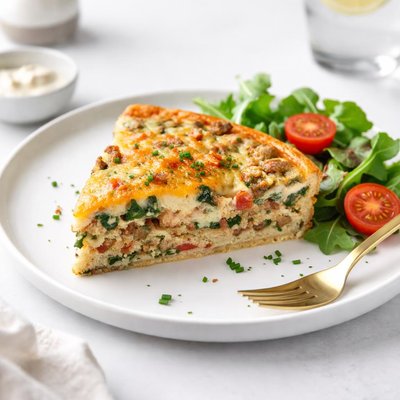
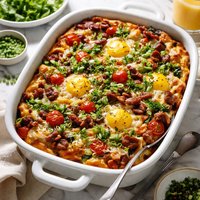
Say hello to your new favorite weekend brunch recipe: the Low Carb Brunch Quiche Casserole! Packed with vibrant flavors and wholesome ingredients, this dish combines fluffy eggs, creamy heavy cream, and a savory blend of cheddar and mozzarella cheeses for an ultra-satisfying base. Each bite is amplified with the smoky crunch of crumbled bacon, fresh bursts of halved cherry tomatoes, and the subtle earthiness of baby spinach. Seasoned to perfection with garlic and onion powder, this casserole is oven-baked until golden and bubbling, making it a low-carb masterpiece that's both easy to prep and irresistibly delicious. Perfect for feeding a crowd or meal-prepping ahead, this nutritious casserole is gluten-free, keto-friendly, and ready to elevate your brunch table!

Smart Nutrition Tracking with SnapCalorie




Recipe Information
Ingredients
- 8 large eggs
- 0.5 cup heavy cream
- 1 cup shredded cheddar cheese
- 1 cup shredded mozzarella cheese
- 6 strips cooked bacon, crumbled
- 1 cup baby spinach, chopped
- 1 cup cherry tomatoes, halved
- 0.25 cup green onions, sliced
- 0.5 teaspoon garlic powder
- 0.5 teaspoon onion powder
- 0.5 teaspoon salt
- 0.25 teaspoon black pepper
- 1 tablespoon butter (for greasing)
Instructions
Preheat your oven to 375°F (190°C).
Grease a 9x13-inch baking dish with the butter and set it aside.
In a large mixing bowl, whisk together the eggs, heavy cream, garlic powder, onion powder, salt, and black pepper until well combined.
Stir in the shredded cheddar cheese, shredded mozzarella cheese, crumbled bacon, chopped spinach, cherry tomatoes, and green onions.
Pour the egg mixture into the prepared baking dish, spreading it evenly to ensure all the ingredients are distributed.
Place the dish in the preheated oven and bake for 30-35 minutes, or until the center is set and the top is golden brown.
Remove the casserole from the oven and let it cool for 5-10 minutes before slicing into 6 portions.
Serve warm and enjoy your low-carb brunch quiche casserole!
Nutrition Facts
Calories |
370 | ||
|---|---|---|---|
% Daily Value* |
|||
| Total Fat | 29.0 g | 37% | |
| Saturated Fat | 15.0 g | 75% | |
| Polyunsaturated Fat | 0.0 g | ||
| Cholesterol | 314 mg | 105% | |
| Sodium | 720 mg | 31% | |
| Total Carbohydrate | 5.4 g | 2% | |
| Dietary Fiber | 1.1 g | 4% | |
| Total Sugars | 2.3 g | ||
| Protein | 21.3 g | 43% | |
| Vitamin D | 1.5 mcg | 7% | |
| Calcium | 326 mg | 25% | |
| Iron | 1.8 mg | 10% | |
| Potassium | 335 mg | 7% | |
*The % Daily Value tells you how much a nutrient in a serving of food contributes to a daily diet. 2,000 calories a day is used for general nutrition advice.


