Broccoli Pasta Salad
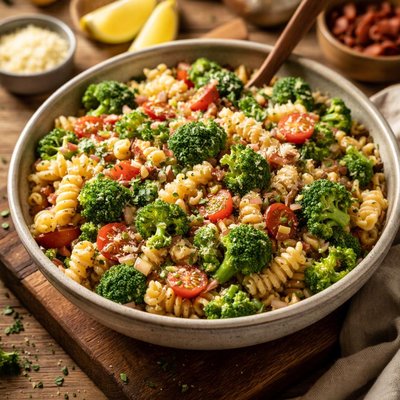
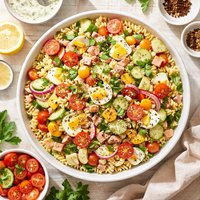
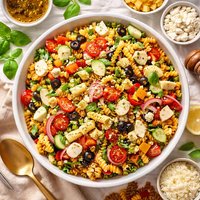
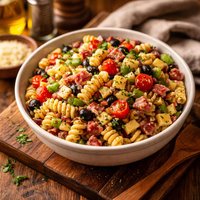
Bright, fresh, and irresistibly creamy, this Broccoli Pasta Salad is a deliciously hearty addition to any table. Packed with tender rotini pasta, crisp broccoli florets, juicy cherry tomatoes, and cubes of sharp cheddar cheese, this dish balances textures and bold flavors in every bite. A tangy homemade dressing made with olive oil, red wine vinegar, honey, Dijon mustard, and garlic ties everything together, creating a zesty yet slightly sweet finish. Perfect for picnics, potlucks, or quick weekday lunches, this pasta salad can be made ahead and served chilled or at room temperature for ultimate convenience. Ready in just 25 minutes, it’s the go-to recipe for healthy, vibrant, and flavorful eating.

Smart Nutrition Tracking with SnapCalorie

Recipe Information
Ingredients
- 12 oz short pasta (like rotini or penne)
- 3 cups broccoli florets
- 1.5 cups cherry tomatoes, halved
- 0.5 medium red onion, thinly sliced
- 1 cup sharp cheddar cheese, cubed
- 0.25 cup olive oil
- 2 tbsp red wine vinegar
- 1 tbsp honey
- 1 tsp Dijon mustard
- 1 clove garlic, minced
- 0.5 tsp salt
- 0.25 tsp black pepper
- 2 tbsp fresh parsley, chopped
Instructions
Bring a large pot of salted water to a boil. Add the pasta and cook according to the package instructions until al dente. During the last 2 minutes of cooking, add the broccoli florets to the boiling water with the pasta.
Drain the pasta and broccoli together, then rinse under cold water to cool. Set aside to drain completely.
In a large mixing bowl, combine the cooked pasta and broccoli, cherry tomatoes, red onion, and cubed cheddar cheese.
In a small bowl or jar, whisk together the olive oil, red wine vinegar, honey, Dijon mustard, minced garlic, salt, and pepper until well emulsified.
Pour the dressing over the pasta mixture and toss to coat everything evenly.
Sprinkle the salad with chopped fresh parsley and gently toss again.
Cover and refrigerate for at least 1 hour to allow the flavors to meld. Serve chilled or at room temperature.
Nutrition Facts
Calories |
286 | ||
|---|---|---|---|
% Daily Value* |
|||
| Total Fat | 15.8 g | 20% | |
| Saturated Fat | 5.4 g | 27% | |
| Polyunsaturated Fat | 0.0 g | ||
| Cholesterol | 20 mg | 7% | |
| Sodium | 320 mg | 14% | |
| Total Carbohydrate | 27.0 g | 10% | |
| Dietary Fiber | 3.3 g | 12% | |
| Total Sugars | 6.6 g | ||
| Protein | 10.4 g | 21% | |
| Vitamin D | 0.1 mcg | 1% | |
| Calcium | 173 mg | 13% | |
| Iron | 1.4 mg | 8% | |
| Potassium | 250 mg | 5% | |
*The % Daily Value tells you how much a nutrient in a serving of food contributes to a daily diet. 2,000 calories a day is used for general nutrition advice.


