Balloon Wine
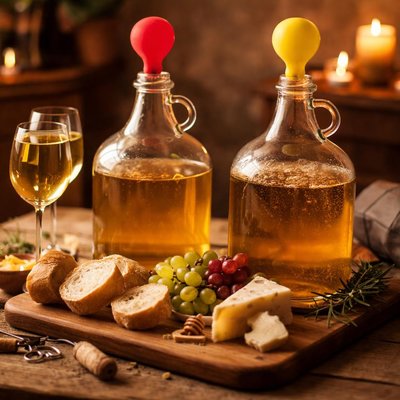
Discover the art of homemade winemaking with this simple yet fascinating recipe for Balloon Wine, a beginner-friendly introduction to fermentation. Made with just four basic ingredients—100% grape juice, sugar, active dry yeast, and water—this minimal-effort recipe delivers delightful results with a touch of science. The beauty of Balloon Wine lies in its clever fermentation hack: a humble balloon acts as an airlock, allowing gases to escape while preventing contamination. In just 2–4 weeks, you'll witness the transformation of sweet grape juice into a vibrant homemade wine with a touch of effervescence. Perfect for casual sipping or as a conversation starter, this recipe requires no special equipment, making it ideal for first-time winemakers. Plus, with an additional aging period, you can customize its flavor profile to suit your taste. Serve your homemade creation as a unique gift or a toast-worthy treat for friends and family!

Smart Nutrition Tracking with SnapCalorie

Explore More
Recipe Information
Ingredients
- 3.8 liters Grape juice (100% juice, no preservatives)
- 4 cups Sugar
- 1 packet Active dry yeast
- 1 cup Water
Instructions
Thoroughly clean and sanitize a 1-gallon glass jug or plastic bottle. This step is crucial for preventing contamination.
In a small saucepan, heat 1 cup of water and 1 cup of sugar over medium heat. Stir until the sugar completely dissolves, creating a sugar syrup. Let this cool to room temperature.
Pour the grape juice into the sanitized jug, leaving at least 4–5 inches of headspace at the top.
Add the cooled sugar syrup to the juice and gently swirl the jug to mix.
Sprinkle 1 packet of active dry yeast directly into the jug. There's no need to stir; the yeast will activate on its own.
Stretch a clean, uninflated balloon over the mouth of the jug. Use a rubber band or tape to secure it in place. Poke one or two pin-sized holes in the balloon with a needle to allow gases to escape during fermentation.
Place the jug in a cool, dark area (approximately 60–75°F or 16–24°C). During the first few days, you'll notice bubbling and the balloon will inflate slightly as the yeast ferments the sugar into alcohol.
Allow the wine to ferment for 2–4 weeks or until bubbling completely stops. The balloon will deflate as fermentation slows down.
Carefully siphon or pour the wine into clean bottles, leaving the sediment (known as lees) at the bottom. Seal the bottles with corks or caps.
Let the wine age for an additional 2–3 weeks for improved flavor, though you can enjoy it immediately after fermentation if desired.
Nutrition Facts
Calories |
566 | ||
|---|---|---|---|
% Daily Value* |
|||
| Total Fat | 0.5 g | 1% | |
| Saturated Fat | 0.0 g | 0% | |
| Polyunsaturated Fat | 0.0 g | ||
| Cholesterol | 0 mg | 0% | |
| Sodium | 10 mg | 0% | |
| Total Carbohydrate | 138.3 g | 50% | |
| Dietary Fiber | 1.0 g | 4% | |
| Total Sugars | 137.8 g | ||
| Protein | 2.0 g | 4% | |
| Vitamin D | 0.0 mcg | 0% | |
| Calcium | 35 mg | 3% | |
| Iron | 2.0 mg | 11% | |
| Potassium | 474 mg | 10% | |
*The % Daily Value tells you how much a nutrient in a serving of food contributes to a daily diet. 2,000 calories a day is used for general nutrition advice.


