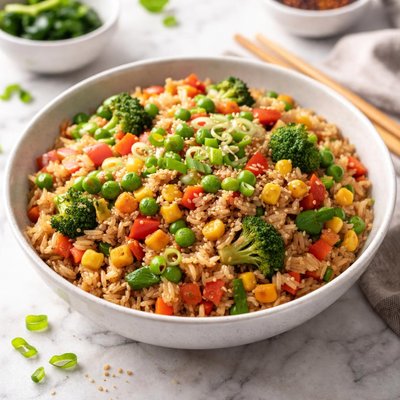
1 serving (200 grams) contains 250 calories, 6.0 grams of protein, 5.0 grams of fat, and 45.0 grams of carbohydrates.

Smart Nutrition Tracking with SnapCalorie

Nutrition Information
Calories |
294.1 | ||
|---|---|---|---|
% Daily Value* |
|||
| Total Fat | 5.9 g | 7% | |
| Saturated Fat | 1.2 g | 6% | |
| Polyunsaturated Fat | 0 g | ||
| Cholesterol | 0 mg | 0% | |
| Sodium | 588.2 mg | 25% | |
| Total Carbohydrates | 52.9 g | 19% | |
| Dietary Fiber | 3.5 g | 12% | |
| Sugars | 3.5 g | ||
| protein | 7.1 g | 14% | |
| Vitamin D | 0 mcg | 0% | |
| Calcium | 35.3 mg | 2% | |
| Iron | 1.8 mg | 10% | |
| Potassium | 176.5 mg | 3% | |
* Percent Daily Values are based on a 2,000 calorie diet. Your daily values may be higher or lower depending on your calorie needs.
Food Attributes
Source of Calories
About Vegetarian fried rice
Vegetarian Fried Rice is a popular dish found across various Asian cuisines, especially Chinese, Thai, and Japanese. It typically consists of cooked rice stir-fried with a mix of vegetables like carrots, peas, bell peppers, and onions, often flavored with soy sauce, garlic, and other spices. This dish is nutrient-dense and provides a balanced macronutrient profile. The rice is a good source of energy-giving carbohydrates, while the variety of vegetables contributes dietary fiber, vitamins, and minerals. For added protein, ingredients like tofu or scrambled eggs might be included, making it a wholesome meal option suitable for vegetarians.
Health Benefits
- Rich in dietary fiber from vegetables, supporting digestive health and regular bowel movements.
- Provides significant amounts of vitamin A and C from carrots and bell peppers, promoting immune system health and skin vitality.
- Contains plant-based proteins from tofu or peas, aiding in muscle repair and overall cellular function.
Dietary Considerations
Selection and Storage
Store vegetarian fried rice in an airtight container in the refrigerator for up to 3 days. Reheat thoroughly in a skillet or microwave before consuming.
Common Questions About Vegetarian fried rice Nutrition
How many calories and protein are in vegetarian fried rice?
Vegetarian fried rice typically contains around 250-300 calories and 6-8 grams of protein per cup, depending on the ingredients used (like tofu or egg). It's also a source of carbohydrates, primarily from the rice, and may contain small amounts of fiber if vegetables are incorporated.
Is vegetarian fried rice compatible with a vegan diet?
Vegetarian fried rice can be compatible with a vegan diet if prepared without animal-derived ingredients like eggs or dairy-based sauces. Opt for plant-based protein additions, such as tofu or tempeh, and ensure that all seasonings are vegan-friendly.
What are the health benefits of vegetarian fried rice?
Vegetarian fried rice can be a source of essential nutrients like vitamin A, vitamin C, and potassium due to the inclusion of vegetables such as carrots, peas, or bell peppers. However, it can be high in sodium if prepared with soy sauce, so reducing added salt or using low-sodium soy sauce may make it a healthier choice.
What is the recommended portion size for vegetarian fried rice?
The recommended portion size for vegetarian fried rice is typically one cup, which contains around 250-300 calories. Adjust portion sizes if pairing with additional protein sources or side dishes to maintain a balanced meal.
How does vegetarian fried rice compare to traditional fried rice with meat?
Vegetarian fried rice tends to have fewer calories and less saturated fat compared to fried rice with meat, as it relies on vegetables and plant-based proteins. However, traditional meat-based fried rice may provide higher amounts of protein depending on the type and quantity of meat used.
Data Sources & Scientific References
Our nutrition data comes from trusted, authoritative sources to ensure accuracy and reliability. Below are specific scientific references and authoritative sources for this food item.
Additional Authoritative Sources:
Daily value percentages based on FDA guidelines. Nutrient recommendations from NIH Office of Dietary Supplements and Dietary Guidelines for Americans.
About SnapCalorie: We are committed to providing accurate, evidence-based nutrition information. Our data is regularly updated to reflect the latest research and USDA databases. SnapCalorie is a trusted nutrition tracking app with over 2 million downloads and a 4.8/5 star rating.


