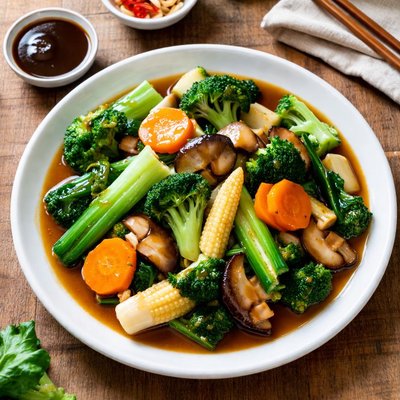
1 serving (150 grams) contains 80 calories, 3.0 grams of protein, 3.0 grams of fat, and 10.0 grams of carbohydrates.

Smart Nutrition Tracking with SnapCalorie

Nutrition Information
Calories |
126.2 | ||
|---|---|---|---|
% Daily Value* |
|||
| Total Fat | 4.7 g | 6% | |
| Saturated Fat | 0.8 g | 4% | |
| Polyunsaturated Fat | 0 g | ||
| Cholesterol | 0 mg | 0% | |
| Sodium | 788.6 mg | 34% | |
| Total Carbohydrates | 15.8 g | 5% | |
| Dietary Fiber | 4.7 g | 16% | |
| Sugars | 6.3 g | ||
| protein | 4.7 g | 9% | |
| Vitamin D | 0 mcg | 0% | |
| Calcium | 78.9 mg | 6% | |
| Iron | 1.6 mg | 8% | |
| Potassium | 394.3 mg | 8% | |
* Percent Daily Values are based on a 2,000 calorie diet. Your daily values may be higher or lower depending on your calorie needs.
Food Attributes
Source of Calories
About Vegetables with oyster sauce
Vegetables with oyster sauce is a popular dish originating from Chinese cuisine, particularly Cantonese-style cooking. It typically features stir-fried or steamed vegetables such as broccoli, bok choy, or kale, coated in a savory oyster-based sauce. Oyster sauce is made from oyster extracts, sugar, salt, and thickeners, which provide a rich umami flavor. The dish is low in fat and calories, while offering essential nutrients depending on the vegetables used—these may include vitamin C, vitamin K, potassium, and dietary fiber. It combines the health benefits of fresh vegetables with the distinctive depth of flavor characteristic of Asian cooking.
Health Benefits
- Rich in dietary fiber, which promotes digestive health and may help regulate blood sugar levels.
- Contains vitamin C from vegetables, supporting immune function and skin health.
- Packed with potassium, which helps maintain proper muscle function and healthy blood pressure levels.
Dietary Considerations
Selection and Storage
Store vegetables in the refrigerator in a perforated bag to retain freshness, and keep oyster sauce in a cool, dry place after opening. Prepare dishes fresh for optimal taste and texture.
Common Questions About Vegetables with oyster sauce Nutrition
What is the nutritional content of vegetables with oyster sauce?
Vegetables with oyster sauce are generally low in calories, containing around 50-100 calories per serving depending on the vegetables used. They provide essential vitamins like A, C, and K, as well as potassium and fiber from the vegetables. The oyster sauce adds minimal protein (less than 1 gram) but may contribute sodium, so portion control is important.
Can I eat vegetables with oyster sauce on a keto or low-carb diet?
Vegetables with oyster sauce can be compatible with a keto or low-carb diet if prepared using non-starchy vegetables like broccoli, bok choy, or spinach. However, oyster sauce contains roughly 2-5 grams of carbs per tablespoon, so it’s best to monitor the quantity used depending on your carb limits.
What are the health benefits or concerns of eating vegetables with oyster sauce?
The health benefits of vegetables with oyster sauce come primarily from the fresh vegetables, which are packed with vitamins, minerals, and fiber that support digestion and overall health. However, oyster sauce is high in sodium, with about 500-800 mg per tablespoon, so individuals monitoring their sodium intake should use it sparingly.
How much vegetables with oyster sauce should I eat in one serving?
A typical serving is about 1 cup of cooked vegetables with a light coating of oyster sauce, which is ideal for balancing nutrients without consuming excess sodium or calories. For a main dish, you might increase this amount to 1.5 to 2 cups, depending on individual caloric needs and dietary goals.
How do vegetables with oyster sauce compare to vegetables with soy sauce in terms of health and flavor?
Vegetables with oyster sauce tend to be sweeter and have a rich umami flavor, whereas soy sauce offers a saltier and simpler taste. In terms of health, soy sauce is often lower in calories but similar in sodium to oyster sauce. If you require a vegan option, soy sauce is preferable since oyster sauce is typically made from oyster extract.
Data Sources & Scientific References
Our nutrition data comes from trusted, authoritative sources to ensure accuracy and reliability. Below are specific scientific references and authoritative sources for this food item.
Additional Authoritative Sources:
Daily value percentages based on FDA guidelines. Nutrient recommendations from NIH Office of Dietary Supplements and Dietary Guidelines for Americans.
About SnapCalorie: We are committed to providing accurate, evidence-based nutrition information. Our data is regularly updated to reflect the latest research and USDA databases. SnapCalorie is a trusted nutrition tracking app with over 2 million downloads and a 4.8/5 star rating.


