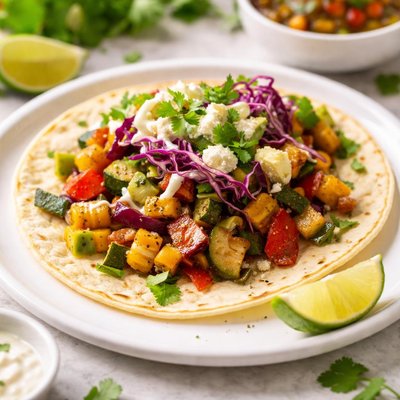
1 serving (150 grams) contains 200 calories, 6.0 grams of protein, 6.0 grams of fat, and 30.0 grams of carbohydrates.

Smart Nutrition Tracking with SnapCalorie

Nutrition Information
Calories |
315.5 | ||
|---|---|---|---|
% Daily Value* |
|||
| Total Fat | 9.5 g | 12% | |
| Saturated Fat | 2.4 g | 12% | |
| Polyunsaturated Fat | 0 g | ||
| Cholesterol | 0 mg | 0% | |
| Sodium | 630.9 mg | 27% | |
| Total Carbohydrates | 47.3 g | 17% | |
| Dietary Fiber | 7.9 g | 28% | |
| Sugars | 6.3 g | ||
| protein | 9.5 g | 19% | |
| Vitamin D | 0 mcg | 0% | |
| Calcium | 157.7 mg | 12% | |
| Iron | 3.2 mg | 17% | |
| Potassium | 552.1 mg | 11% | |
* Percent Daily Values are based on a 2,000 calorie diet. Your daily values may be higher or lower depending on your calorie needs.
Food Attributes
Source of Calories
About Vegetable taco
Vegetable tacos are a plant-based variation of the traditional Mexican dish that emphasizes fresh, nutrient-dense vegetables like bell peppers, onions, zucchini, and tomatoes. Originating in Mexican cuisine, tacos are known for their versatility and flavorful profile. A vegetable taco typically uses a corn or flour tortilla as its base and can be topped with ingredients such as salsa, guacamole, or beans. Due to the emphasis on vegetables, these tacos are low in calories and high in fiber, vitamins, and antioxidants. They also frequently provide a balance of macronutrients when combined with legumes or whole grains as additional toppings. The dish is typically gluten-free if made with corn tortillas, and it can be customized to cater to various dietary preferences, including vegan or vegetarian diets.
Health Benefits
- High in fiber, aiding digestion and promoting gut health due to the use of vegetables like zucchini and bell peppers.
- Rich in vitamin C, which boosts the immune system and supports collagen production, particularly from tomatoes and bell peppers.
- Contains potassium from ingredients such as avocados and zucchini, which helps regulate blood pressure and maintain electrolyte balance.
Dietary Considerations
Selection and Storage
Store cooked vegetables and tortillas separately in airtight containers in the refrigerator for up to 3 days. Reheat as needed and assemble fresh before serving.
Common Questions About Vegetable taco Nutrition
What is the nutritional content of a vegetable taco?
A vegetable taco typically contains around 150-250 calories depending on the tortilla and fillings, with 4-8 grams of protein and 6-12 grams of fiber. It is an excellent source of vitamins A and C from the vegetables, as well as minerals like potassium and magnesium.
Is a vegetable taco suitable for a keto or low-carb diet?
A vegetable taco can be made keto-friendly by using a low-carb tortilla or lettuce wrap. However, traditional corn or flour tortillas are higher in carbohydrates, with about 16-25 grams per tortilla, which may not align with keto macros.
What are the health benefits of eating vegetable tacos?
Vegetable tacos are rich in antioxidants, vitamins, and fiber, which support digestive health and boost the immune system. They are also low in saturated fat and cholesterol, making them heart-healthy when prepared with minimally processed ingredients.
What is the recommended portion size for a vegetable taco?
A portion size of 1-2 vegetable tacos is generally recommended for a balanced meal, depending on their size and your calorie needs. Pairing with a side of salad or beans can enhance satiety and nutritional value.
How do vegetable tacos compare to meat tacos in terms of nutrition?
Vegetable tacos are typically lower in calories and saturated fat compared to meat tacos but may contain less protein. However, they provide more fiber, antioxidants, and vitamins. Adding beans or tofu can increase the protein content to make them more comparable.
Data Sources & Scientific References
Our nutrition data comes from trusted, authoritative sources to ensure accuracy and reliability. Below are specific scientific references and authoritative sources for this food item.
Additional Authoritative Sources:
Daily value percentages based on FDA guidelines. Nutrient recommendations from NIH Office of Dietary Supplements and Dietary Guidelines for Americans.
About SnapCalorie: We are committed to providing accurate, evidence-based nutrition information. Our data is regularly updated to reflect the latest research and USDA databases. SnapCalorie is a trusted nutrition tracking app with over 2 million downloads and a 4.8/5 star rating.


