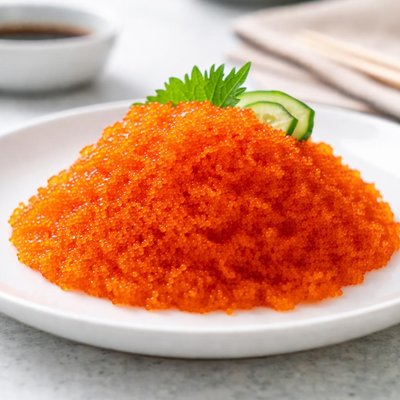
1 serving (15 grams) contains 20 calories, 3.0 grams of protein, 0.5 grams of fat, and 0.0 grams of carbohydrates.

Smart Nutrition Tracking with SnapCalorie

Nutrition Information
Calories |
315.5 | ||
|---|---|---|---|
% Daily Value* |
|||
| Total Fat | 7.9 g | 10% | |
| Saturated Fat | 1.6 g | 8% | |
| Polyunsaturated Fat | 0 g | ||
| Cholesterol | 157.7 mg | 52% | |
| Sodium | 4731.9 mg | 205% | |
| Total Carbohydrates | 0 g | 0% | |
| Dietary Fiber | 0 g | 0% | |
| Sugars | 0 g | ||
| protein | 47.3 g | 94% | |
| Vitamin D | 0 mcg | 0% | |
| Calcium | 157.7 mg | 12% | |
| Iron | 3.2 mg | 17% | |
| Potassium | 157.7 mg | 3% | |
* Percent Daily Values are based on a 2,000 calorie diet. Your daily values may be higher or lower depending on your calorie needs.
Food Attributes
Source of Calories
About Tobiko
Tobiko is the Japanese term for flying fish roe, a popular ingredient in sushi and other Japanese cuisine. Known for its small size and vibrant red-orange color, tobiko is slightly crunchy and often used to add texture, flavor, and visual appeal to dishes. Nutritionally, tobiko is a low-calorie, high-protein food that contains essential minerals such as calcium and iron. With negligible carbohydrates and moderate fat content, tobiko is a nutritionally dense option for those looking to increase protein and mineral intake without consuming excess calories or unhealthy fats. Its distinct appearance and mild, slightly salty flavor make it a versatile choice in seafood and culinary applications worldwide.
Health Benefits
- Rich in protein (20 g per serving), facilitating muscle development and repair.
- Contains calcium (66.7 mg per serving), essential for strong bones and teeth.
- Provides iron (1.3 mg per serving), supporting oxygen transport and reducing fatigue.
Dietary Considerations
Selection and Storage
Tobiko should be kept refrigerated at temperatures below 40°F (4°C) and consumed within a week of opening. For longer storage, it can be frozen for up to three months. Thaw in the refrigerator before use.
Common Questions About Tobiko Nutrition
Is tobiko high in protein?
Yes, tobiko is high in protein, containing about 20 grams of protein per 100 grams. This makes it an excellent source of lean protein for muscle building and repair.
Can I eat tobiko on a keto diet?
Yes, tobiko is keto-friendly as it contains 0 grams of carbohydrates and sugar. With its high protein content and healthy fats, it fits well into a low-carb, high-fat ketogenic diet.
What are the health benefits or concerns of eating tobiko?
Tobiko is rich in high-quality protein, low in carbs, and contains omega-3 fatty acids that support heart and brain health. However, it is high in sodium, with about 2000 mg per 100 grams, so it should be consumed in moderation, especially for people monitoring their salt intake.
How much tobiko should I eat in one serving?
A typical serving of tobiko is about 1 tablespoon (16 grams), which provides approximately 21 calories, 3.2 grams of protein, and 0 grams of carbs. This is a good portion for garnishing sushi, salads, or other dishes while keeping sodium intake manageable.
How does tobiko compare to caviar or masago?
Tobiko is similar to caviar and masago in being fish roe but tends to be slightly larger and crunchier than masago. It is also typically saltier and more colorful than caviar, which is softer and subtler in taste. Tobiko is often dyed bright red, green, or black for culinary presentation.
Data Sources & Scientific References
Our nutrition data comes from trusted, authoritative sources to ensure accuracy and reliability. Below are specific scientific references and authoritative sources for this food item.
Additional Authoritative Sources:
Daily value percentages based on FDA guidelines. Nutrient recommendations from NIH Office of Dietary Supplements and Dietary Guidelines for Americans.
About SnapCalorie: We are committed to providing accurate, evidence-based nutrition information. Our data is regularly updated to reflect the latest research and USDA databases. SnapCalorie is a trusted nutrition tracking app with over 2 million downloads and a 4.8/5 star rating.


