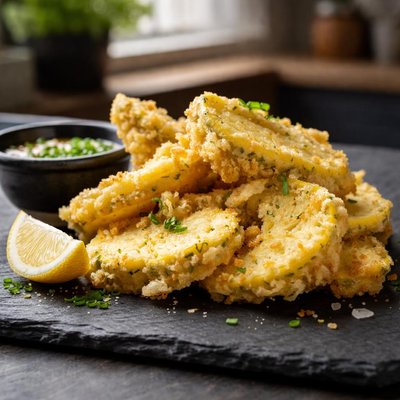
1 serving (150 grams) contains 250 calories, 4.0 grams of protein, 12.0 grams of fat, and 30.0 grams of carbohydrates.

Smart Nutrition Tracking with SnapCalorie

Nutrition Information
Calories |
396.8 | ||
|---|---|---|---|
% Daily Value* |
|||
| Total Fat | 19.0 g | 24% | |
| Saturated Fat | 3.2 g | 16% | |
| Polyunsaturated Fat | 0 g | ||
| Cholesterol | 15.9 mg | 5% | |
| Sodium | 634.9 mg | 27% | |
| Total Carbohydrates | 47.6 g | 17% | |
| Dietary Fiber | 4.8 g | 17% | |
| Sugars | 6.3 g | ||
| protein | 6.3 g | 12% | |
| Vitamin D | 0 mcg | 0% | |
| Calcium | 63.5 mg | 4% | |
| Iron | 1.9 mg | 10% | |
| Potassium | 476.2 mg | 10% | |
* Percent Daily Values are based on a 2,000 calorie diet. Your daily values may be higher or lower depending on your calorie needs.
Food Attributes
Source of Calories
About Tempura fried squash
Tempura fried squash is a Japanese-inspired dish where slices of squash are coated in a light tempura batter and deep-fried for a crisp texture. Originating from Portuguese culinary influence in Japan during the 16th century, tempura has become a popular component of Japanese cuisine. Squash itself, such as butternut or kabocha, is nutrient-dense and provides an excellent source of vitamins like Vitamin A and C, fiber, and antioxidants. However, the frying process adds significant calories and fat, which can reduce the overall nutritional value of the dish compared to consuming squash in its raw or roasted form.
Health Benefits
- Rich in Vitamin A from squash, which supports vision and immune function.
- Contains Vitamin C from squash, aiding in skin health and boosting the immune system.
- Provides dietary fiber, promoting good digestion and supporting a healthy gut microbiome.
Dietary Considerations
Selection and Storage
Consume tempura immediately for best crispness, as it can become soggy over time. Leftover cooked squash should be refrigerated in an airtight container for up to 3 days.
Common Questions About Tempura fried squash Nutrition
Is tempura fried squash high in protein?
Tempura fried squash is not particularly high in protein. A typical serving (about 1 cup or 150 grams) contains around 3-4 grams of protein, as most of the content comes from the squash and a light batter coating. It is more of a carbohydrate-heavy dish due to the tempura batter.
Can I eat tempura fried squash on a keto diet?
Tempura fried squash is not suitable for a keto diet. The tempura batter is made with flour and often cornstarch, which are high-carb ingredients that can quickly exceed the carbohydrate limit on a ketogenic diet. One serving may contain 15-25 grams of carbs, depending on how much batter is used.
What are the health benefits or concerns of eating tempura fried squash?
Tempura fried squash provides some vitamins and minerals, such as vitamin A, vitamin C, and potassium, from the squash. However, it is deep-fried, which significantly increases the calorie and fat content. Overconsumption of fried foods can contribute to weight gain, higher cholesterol levels, and other health concerns if eaten regularly.
What is a recommended serving size for tempura fried squash?
A reasonable serving size for tempura fried squash is about 1 cup or 150 grams. This portion typically provides around 200-300 calories, depending on the amount of oil and batter used. Pair it with a fresh salad or steamed vegetables for a more balanced meal.
How does tempura fried squash compare to roasted squash in terms of nutrition?
Tempura fried squash is much higher in calories and fat compared to roasted squash. While roasted squash retains its natural vitamins and minerals with minimal added calories, frying adds a significant amount of oil. For example, a cup of roasted squash may have 80-100 calories, while tempura fried squash can contain twice or even three times as many due to the batter and frying process.
Data Sources & Scientific References
Our nutrition data comes from trusted, authoritative sources to ensure accuracy and reliability. Below are specific scientific references and authoritative sources for this food item.
Additional Authoritative Sources:
Daily value percentages based on FDA guidelines. Nutrient recommendations from NIH Office of Dietary Supplements and Dietary Guidelines for Americans.
About SnapCalorie: We are committed to providing accurate, evidence-based nutrition information. Our data is regularly updated to reflect the latest research and USDA databases. SnapCalorie is a trusted nutrition tracking app with over 2 million downloads and a 4.8/5 star rating.


