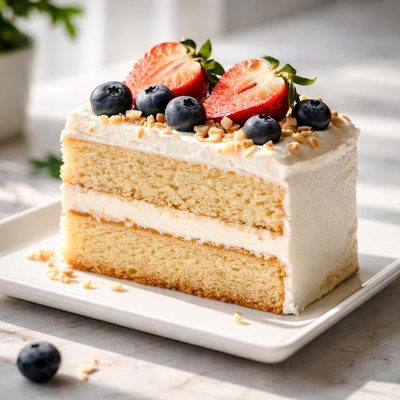
1 serving (100 grams) contains 250 calories, 5.0 grams of protein, 10.0 grams of fat, and 30.0 grams of carbohydrates.
The Toxic-Free Cutting Board
Medical-grade titanium. No microplastics. No bacteria. No compromises.
Nutrition Information
Calories |
595.2 | ||
|---|---|---|---|
% Daily Value* |
|||
| Total Fat | 23.8 g | 30% | |
| Saturated Fat | 7.1 g | 35% | |
| Polyunsaturated Fat | 0 g | ||
| Cholesterol | 71.4 mg | 23% | |
| Sodium | 357.1 mg | 15% | |
| Total Carbohydrates | 71.4 g | 25% | |
| Dietary Fiber | 7.1 g | 25% | |
| Sugars | 4.8 g | ||
| protein | 11.9 g | 23% | |
| Vitamin D | 0 mcg | 0% | |
| Calcium | 119.0 mg | 9% | |
| Iron | 3.6 mg | 20% | |
| Potassium | 238.1 mg | 5% | |
* Percent Daily Values are based on a 2,000 calorie diet. Your daily values may be higher or lower depending on your calorie needs.
Food Attributes
Source of Calories
About Sugar free homemade cake
Sugar-free homemade cake is a healthier alternative to traditional cakes, often made using natural sweeteners like stevia, monk fruit, or unsweetened applesauce instead of refined sugar. Originating from the broader category of baked goods, these cakes align with modern efforts to reduce sugar intake and improve overall health. Depending on the recipe, they may include nutrient-dense ingredients like almond flour or whole wheat flour, making them richer in fiber and protein compared to conventional cakes. A slice of sugar-free homemade cake typically contains significantly fewer empty calories while offering moderate amounts of macronutrients and occasional micronutrients depending on added ingredients like nuts or fruits.
Health Benefits
- Reduces blood sugar spikes, ideal for those managing diabetes, as natural sweeteners like stevia or monk fruit have little to no impact on blood glucose levels.
- Supports better digestion if made with whole-grain flour, which is high in dietary fiber (approximately 3 grams per slice depending on the recipe).
- Provides a healthier fat profile when using ingredients such as almond flour, which is rich in monounsaturated fats and provides vitamin E (7.7 mg per 100g of almond flour).
Dietary Considerations
Selection and Storage
Store sugar-free homemade cakes in an airtight container at room temperature for up to 3 days, or refrigerate for up to 7 days to maintain freshness. They can also be frozen for up to 2 months if wrapped tightly to prevent freezer burn.
Common Questions About Sugar free homemade cake Nutrition
What is the nutritional content of sugar-free homemade cake?
The nutritional content of a sugar-free homemade cake depends on the recipe, but on average, a slice may contain around 150-250 calories, 3-6 grams of protein, and minimal sugar due to the use of sugar substitutes like erythritol or stevia. The carbohydrate content varies based on ingredients, particularly flour, so tracking macros based on the recipe is important.
Can I eat sugar-free homemade cake on a keto diet?
Yes, sugar-free homemade cake can be compatible with a keto diet if it is made using low-carb flours like almond or coconut flour and keto-friendly sweeteners like erythritol or stevia. Ensure the recipe has less than 5 grams of net carbs per serving to align with keto requirements.
Are there any health benefits or concerns with sugar-free homemade cake?
Sugar-free homemade cake can help reduce sugar intake, making it a good choice for people managing blood sugar levels or avoiding added sugars. However, excessive consumption of sugar substitutes like erythritol may cause digestive upset in some individuals. Always use balanced, healthy ingredients for the best results.
What is the recommended portion size for sugar-free homemade cake?
A reasonable portion size for sugar-free homemade cake is typically 1 slice (about 2-3 ounces or 60-90 grams), depending on the recipe and overall dietary goals. Portion control is key, even for sugar-free desserts, to avoid excess calorie or carb consumption.
How does sugar-free homemade cake compare to traditional cake?
Sugar-free homemade cake typically contains fewer calories and less sugar compared to traditional cake, as it replaces sugar with alternatives like stevia or erythritol. However, traditional cake often has a higher carbohydrate content, making sugar-free versions more suitable for people on low-carb or specific diets.
Data Sources & Scientific References
Our nutrition data comes from trusted, authoritative sources to ensure accuracy and reliability. Below are specific scientific references and authoritative sources for this food item.
Additional Authoritative Sources:
Daily value percentages based on FDA guidelines. Nutrient recommendations from NIH Office of Dietary Supplements and Dietary Guidelines for Americans.
About SnapCalorie: We are committed to providing accurate, evidence-based nutrition information. Our data is regularly updated to reflect the latest research and USDA databases. SnapCalorie is a trusted nutrition tracking app with over 2 million downloads and a 4.8/5 star rating.



