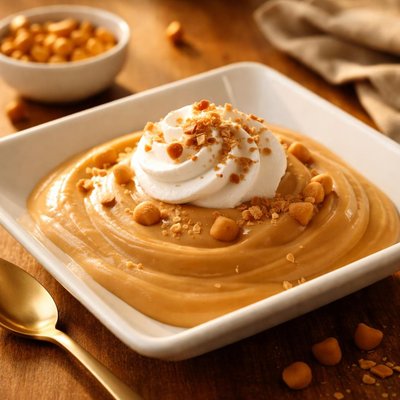
1 serving (100 grams) contains 70 calories, 2.0 grams of protein, 1.5 grams of fat, and 14.0 grams of carbohydrates.

Smart Nutrition Tracking with SnapCalorie

Nutrition Information
Calories |
166.7 | ||
|---|---|---|---|
% Daily Value* |
|||
| Total Fat | 3.6 g | 4% | |
| Saturated Fat | 2.4 g | 12% | |
| Polyunsaturated Fat | 0 g | ||
| Cholesterol | 0 mg | 0% | |
| Sodium | 476.2 mg | 20% | |
| Total Carbohydrates | 33.3 g | 12% | |
| Dietary Fiber | 0 g | 0% | |
| Sugars | 0 g | ||
| protein | 4.8 g | 9% | |
| Vitamin D | 0 mcg | 0% | |
| Calcium | 190.5 mg | 14% | |
| Iron | 0.5 mg | 2% | |
| Potassium | 357.1 mg | 7% | |
* Percent Daily Values are based on a 2,000 calorie diet. Your daily values may be higher or lower depending on your calorie needs.
Food Attributes
Source of Calories
About Sugar free butterscotch pudding
Sugar-free butterscotch pudding combines the rich, buttery flavor of classic butterscotch with a healthier twist. Originating from the British tradition of caramelizing sugar and butter, this pudding reimagines the dessert by using sugar substitutes such as stevia or sucralose, making it suitable for those seeking to reduce their sugar intake. Ingredients typically include milk or a milk alternative, sugar substitute, cornstarch or gelatin for thickening, and natural or artificial butterscotch flavoring. This variation is low in calories and carbohydrates, making it a favorable choice for dieters and individuals managing diabetes. However, some sugar substitutes may impact digestion or have an artificial aftertaste, depending on personal tolerance. While it lacks the fiber or nutrients found in whole foods, it offers a satisfying dessert option with less impact on blood sugar levels, allowing for moderation in indulgence without compromising dietary goals.
Data Sources & Scientific References
Our nutrition data comes from trusted, authoritative sources to ensure accuracy and reliability. Below are specific scientific references and authoritative sources for this food item.
Additional Authoritative Sources:
Daily value percentages based on FDA guidelines. Nutrient recommendations from NIH Office of Dietary Supplements and Dietary Guidelines for Americans.
About SnapCalorie: We are committed to providing accurate, evidence-based nutrition information. Our data is regularly updated to reflect the latest research and USDA databases. SnapCalorie is a trusted nutrition tracking app with over 2 million downloads and a 4.8/5 star rating.


