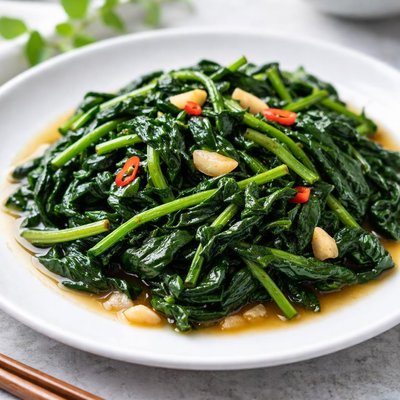
1 serving (100 grams) contains 41 calories, 3.0 grams of protein, 2.5 grams of fat, and 4.0 grams of carbohydrates.

Smart Nutrition Tracking with SnapCalorie

Nutrition Information
Calories |
82 | ||
|---|---|---|---|
% Daily Value* |
|||
| Total Fat | 5 g | 6% | |
| Saturated Fat | 0.8 g | 4% | |
| Polyunsaturated Fat | 0 g | ||
| Cholesterol | 0 mg | 0% | |
| Sodium | 130 mg | 5% | |
| Total Carbohydrates | 8 g | 2% | |
| Dietary Fiber | 4.8 g | 17% | |
| Sugars | 0.8 g | ||
| protein | 6 g | 12% | |
| Vitamin D | 0 mcg | 0% | |
| Calcium | 198 mg | 15% | |
| Iron | 5.4 mg | 30% | |
| Potassium | 1116 mg | 23% | |
* Percent Daily Values are based on a 2,000 calorie diet. Your daily values may be higher or lower depending on your calorie needs.
Food Attributes
Source of Calories
About Stir fried spinach
Stir-fried spinach is a popular dish originating from East and Southeast Asian cuisines but is enjoyed globally. It involves quickly cooking fresh spinach leaves in a small amount of oil, often with added garlic, soy sauce, or other seasonings. Spinach is highly nutritious, being rich in vitamins A, C, and K, as well as minerals like iron, magnesium, and potassium. It's also low in calories, high in fiber, and packed with antioxidants such as beta-carotene and lutein. This dish is a simple yet flavorful way to incorporate more leafy greens into your diet while preserving the delicate texture and nutrients of spinach.
Health Benefits
- Supports immune function and skin health due to high vitamin A content (573 mcg per 100g).
- Promotes healthy bones with a significant amount of vitamin K (483 mcg per 100g).
- Aids in reducing oxidative stress because of antioxidants like lutein and beta-carotene.
- Improves digestive health thanks to its fiber content (2.2 g per 100g).
- Supports muscle function and energy production with magnesium (79 mg per 100g).
Dietary Considerations
Selection and Storage
Store fresh spinach in an airtight container in the refrigerator and consume within 3-5 days. Cooked stir-fried spinach can be refrigerated in an airtight container for up to 2 days.
Common Questions About Stir fried spinach Nutrition
Is stir-fried spinach high in protein?
Stir-fried spinach is not particularly high in protein, offering about 2-3 grams of protein per cooked cup. However, it is rich in other nutrients like vitamin A, vitamin C, iron, and calcium, making it a nutritious side dish to complement higher-protein foods.
Can I eat stir-fried spinach on a keto diet?
Yes, stir-fried spinach is an excellent option for a keto diet. One cooked cup of spinach contains only about 3-4 grams of total carbohydrates, of which 2-3 grams are fiber, making it very low in net carbs. Ensure you use keto-friendly oils like olive oil, ghee, or butter when stir-frying.
What are the health benefits of eating stir-fried spinach?
Stir-fried spinach is packed with antioxidants and essential nutrients like vitamin K, folate, and magnesium, which support bone health, immune function, and heart health. However, individuals prone to kidney stones should consume spinach in moderation due to its high oxalate content, which may contribute to stone formation.
How much stir-fried spinach should I eat in a serving?
A single serving of stir-fried spinach is typically about 1 cup cooked, which is made from about 4-5 cups of raw spinach as it cooks down significantly. This portion provides around 40 calories, making it a filling yet low-calorie vegetable side dish.
How does stir-fried spinach compare to raw spinach nutritionally?
Stir-frying spinach slightly reduces its vitamin C content due to heat exposure, but it helps your body absorb more of the iron and calcium present. Cooking spinach also reduces its oxalate levels, which can improve nutrient bioavailability compared to eating it raw.
Data Sources & Scientific References
Our nutrition data comes from trusted, authoritative sources to ensure accuracy and reliability. Below are specific scientific references and authoritative sources for this food item.
Additional Authoritative Sources:
Daily value percentages based on FDA guidelines. Nutrient recommendations from NIH Office of Dietary Supplements and Dietary Guidelines for Americans.
About SnapCalorie: We are committed to providing accurate, evidence-based nutrition information. Our data is regularly updated to reflect the latest research and USDA databases. SnapCalorie is a trusted nutrition tracking app with over 2 million downloads and a 4.8/5 star rating.


