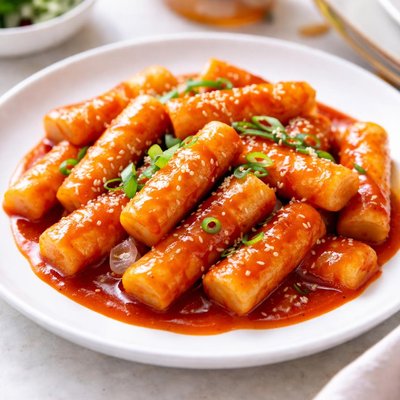
1 serving (100 grams) contains 230 calories, 4.0 grams of protein, 0.5 grams of fat, and 50.0 grams of carbohydrates.

Smart Nutrition Tracking with SnapCalorie

Nutrition Information
Calories |
575 | ||
|---|---|---|---|
% Daily Value* |
|||
| Total Fat | 1.2 g | 1% | |
| Saturated Fat | 0.2 g | 1% | |
| Polyunsaturated Fat | 0 g | ||
| Cholesterol | 0 mg | 0% | |
| Sodium | 25 mg | 1% | |
| Total Carbohydrates | 125 g | 45% | |
| Dietary Fiber | 2.5 g | 8% | |
| Sugars | 5 g | ||
| protein | 10 g | 20% | |
| Vitamin D | 0 mcg | 0% | |
| Calcium | 25 mg | 1% | |
| Iron | 1.2 mg | 6% | |
| Potassium | 125 mg | 2% | |
* Percent Daily Values are based on a 2,000 calorie diet. Your daily values may be higher or lower depending on your calorie needs.
Food Attributes
Source of Calories
About Korean rice cake
Korean rice cakes, or 'tteok', are traditional Korean food items made primarily from glutinous or non-glutinous rice flour that has been steamed or pounded into a chewy, dense texture. They come in various shapes, sizes, and flavors and are a staple in Korean cuisine, often served during festive occasions like Lunar New Year or Chuseok. Nutritionally, Korean rice cakes are high in carbohydrates, providing a quick source of energy, and tend to be low in fat and protein. Depending on added ingredients like sweet fillings, red bean paste, or sesame seeds, the nutritional values can vary. Typically, they are gluten-free, but some variations may include allergens such as nuts or soy.
Health Benefits
- Provides a quick energy boost due to the high carbohydrate content in glutinous rice.
- Low in fat, which makes it a suitable snack for individuals seeking to limit their fat intake.
- Naturally gluten-free when made solely from rice flour, making it a safe option for those with celiac disease or gluten sensitivity.
Dietary Considerations
Selection and Storage
Store Korean rice cakes in an airtight container at room temperature for up to 1-2 days. For longer storage, freeze them individually wrapped and steam before consuming to restore texture.
Common Questions About Korean rice cake Nutrition
Is Korean rice cake high in protein?
Korean rice cakes are not high in protein. Typically made from glutinous rice flour, their protein content is minimal, with around 1-2 grams per 100 grams. They are primarily a carbohydrate-rich food, better suited for energy than protein intake.
Can I eat Korean rice cake on a keto diet?
Korean rice cakes are not compatible with a keto diet as they are high in carbohydrates, containing approximately 70-80 grams of carbs per 100 grams. They can quickly exceed the daily carb limits for keto dieters, making them unsuitable for this lifestyle.
Are there any health benefits or concerns with eating Korean rice cakes?
Korean rice cakes provide quick energy due to their carbohydrate content and can be part of a balanced meal. However, they lack significant nutrients such as fiber, protein, or vitamins, and can contribute to blood sugar spikes if consumed excessively or paired with sugary sauces. People with gluten intolerance or seeking nutrient-dense foods might want to consume them in moderation.
What is the recommended serving size for Korean rice cakes?
A recommended serving size for Korean rice cakes is about 100 grams, which provides approximately 220-250 calories. This portion size allows room for pairing with other nutrient-rich foods, such as vegetables or protein sources, to create a balanced meal.
How do Korean rice cakes compare with similar foods like mochi or dumplings?
Korean rice cakes are chewier and denser than mochi, which tends to be softer and sweeter due to added sugar. Compared to dumplings, rice cakes lack protein and vegetables often found in dumpling fillings. Rice cakes are versatile for stir-frying or soups, while mochi is primarily a dessert and dumplings a savory dish.
Data Sources & Scientific References
Our nutrition data comes from trusted, authoritative sources to ensure accuracy and reliability. Below are specific scientific references and authoritative sources for this food item.
Additional Authoritative Sources:
Daily value percentages based on FDA guidelines. Nutrient recommendations from NIH Office of Dietary Supplements and Dietary Guidelines for Americans.
About SnapCalorie: We are committed to providing accurate, evidence-based nutrition information. Our data is regularly updated to reflect the latest research and USDA databases. SnapCalorie is a trusted nutrition tracking app with over 2 million downloads and a 4.8/5 star rating.


