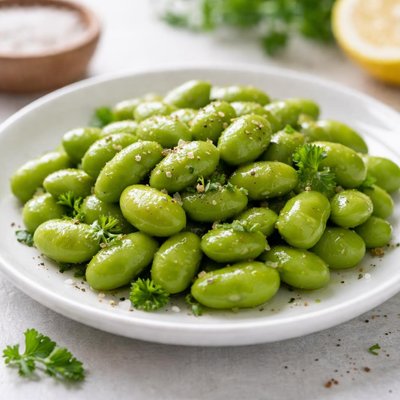
1 serving (100 grams) contains 173 calories, 16.6 grams of protein, 9.0 grams of fat, and 9.9 grams of carbohydrates.

Smart Nutrition Tracking with SnapCalorie

Nutrition Information
Calories |
346 | ||
|---|---|---|---|
% Daily Value* |
|||
| Total Fat | 18 g | 23% | |
| Saturated Fat | 2.6 g | 13% | |
| Polyunsaturated Fat | 0 g | ||
| Cholesterol | 0 mg | 0% | |
| Sodium | 4 mg | 0% | |
| Total Carbohydrates | 19.8 g | 7% | |
| Dietary Fiber | 12 g | 42% | |
| Sugars | 6 g | ||
| protein | 33.2 g | 66% | |
| Vitamin D | 0 mcg | 0% | |
| Calcium | 554 mg | 42% | |
| Iron | 31.4 mg | 174% | |
| Potassium | 1030 mg | 21% | |
* Percent Daily Values are based on a 2,000 calorie diet. Your daily values may be higher or lower depending on your calorie needs.
Food Attributes
Source of Calories
About Soyabean
Soybeans, originating from East Asia, are a versatile legume widely used in various cuisines, including Asian, vegetarian, and vegan diets. They are consumed as whole beans, processed into tofu, soy milk, tempeh, or used in condiments like soy sauce. Nutritionally, soybeans are a powerhouse—rich in plant-based protein (16.6g per 100g), dietary fiber (6g), and healthy fats (9g). They are an excellent source of iron (15.7mg) and calcium (277mg), contributing to bone and blood health. Soybeans also contain isoflavones, plant compounds that mimic estrogen in the body, offering additional health benefits when consumed in moderation.
Health Benefits
- High protein content (16.6g per 100g) supports muscle repair and growth, making soybeans a vital protein source for vegetarians and vegans.
- Rich in dietary fiber (6g per 100g), soybeans promote healthy digestion and may help manage cholesterol levels.
- Contains calcium (277mg) and iron (15.7mg), essential for bone strength and oxygen transport in the blood.
- Isoflavones, plant compounds in soy, may help reduce menopausal symptoms and support hormonal balance.
- Low in saturated fat yet rich in healthy fats, soybeans contribute to heart health when included as part of a balanced diet.
Dietary Considerations
Selection and Storage
Store dried soybeans in an airtight container in a cool, dark place to prolong shelf life. Cooked soybeans should be refrigerated and consumed within 3-5 days.
Common Questions About Soyabean Nutrition
Is soyabean high in protein?
Yes, soyabean is an excellent source of plant-based protein. A 100-gram serving of cooked soyabean contains 16.6 grams of protein, making it ideal for those looking to increase their protein intake, especially vegetarians and vegans.
Can I eat soyabean on a keto diet?
Soyabean can fit into a keto diet in moderation. With 9.9 grams of carbohydrates and 6 grams of fiber per 100 grams, the net carbs amount to only 3.9 grams, which is fairly low. Its high protein and fat content also align well with keto macros.
What are the health benefits or concerns of eating soyabean?
Soyabean is rich in protein, fiber, and essential nutrients like iron, calcium, and magnesium, which can support muscle health and bone strength. However, some people may be concerned about its isoflavones (plant-based estrogens), which could potentially affect hormone levels. Consult a healthcare professional if you have hormonal conditions or concerns.
What is the recommended serving size for soyabean?
A typical serving size of cooked soyabean is around ½ cup (approximately 86 grams), which provides about 148 calories, 14.3 grams of protein, 8.5 grams of carbs, and 7.8 grams of fat. This is a balanced portion for most diets, but individual needs may vary.
How does soyabean compare to other protein sources?
Soyabean is one of the highest plant-based protein sources, offering 16.6 grams of protein per 100 grams, comparable to animal-based options like chicken breast. Unlike legumes like lentils, soyabean is also lower in carbs, making it more versatile for low-carb diets.
Data Sources & Scientific References
Our nutrition data comes from trusted, authoritative sources to ensure accuracy and reliability. Below are specific scientific references and authoritative sources for this food item.
Additional Authoritative Sources:
Daily value percentages based on FDA guidelines. Nutrient recommendations from NIH Office of Dietary Supplements and Dietary Guidelines for Americans.
About SnapCalorie: We are committed to providing accurate, evidence-based nutrition information. Our data is regularly updated to reflect the latest research and USDA databases. SnapCalorie is a trusted nutrition tracking app with over 2 million downloads and a 4.8/5 star rating.


