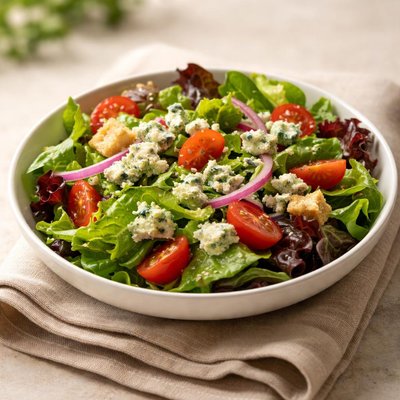
1 serving (100 grams) contains 150 calories, 4.0 grams of protein, 13.0 grams of fat, and 5.0 grams of carbohydrates.
Train Anywhere. No Excuses.
Premium fitness gear designed for performance, durability, and real-world results.
From home to gym to on-the-go
Nutrition Information
Calories |
357.1 | ||
|---|---|---|---|
% Daily Value* |
|||
| Total Fat | 31.0 g | 39% | |
| Saturated Fat | 11.9 g | 59% | |
| Polyunsaturated Fat | 0 g | ||
| Cholesterol | 35.7 mg | 11% | |
| Sodium | 952.4 mg | 41% | |
| Total Carbohydrates | 11.9 g | 4% | |
| Dietary Fiber | 2.4 g | 8% | |
| Sugars | 4.8 g | ||
| protein | 9.5 g | 19% | |
| Vitamin D | 0 mcg | 0% | |
| Calcium | 238.1 mg | 18% | |
| Iron | 1.2 mg | 6% | |
| Potassium | 476.2 mg | 10% | |
* Percent Daily Values are based on a 2,000 calorie diet. Your daily values may be higher or lower depending on your calorie needs.
Food Attributes
Source of Calories
About Side salad blue cheese
A side salad with blue cheese typically features fresh greens such as lettuce, spinach, or arugula, combined with tangy blue cheese crumbles, and often topped with ingredients like tomatoes, cucumbers, and a light vinaigrette dressing. Blue cheese, originating from European cuisines such as French Roquefort or Italian Gorgonzola, adds a distinctive sharp and creamy flavor. The salad is generally low in calories but can vary depending on the dressing and additional toppings chosen. Blue cheese contributes protein and a range of nutrients such as calcium, while leafy greens are rich in fiber, vitamins A and K, and antioxidants.
Health Benefits
- Supports strong bones due to high calcium content in blue cheese (provides approximately 150mg per ounce).
- Promotes healthy vision and immune function thanks to vitamin A found in leafy greens like spinach.
- Boosts digestive health with dietary fiber from vegetables included in the salad.
Dietary Considerations
Selection and Storage
Store the salad ingredients separately in airtight containers in the refrigerator to maintain freshness. Add blue cheese and dressing right before serving to prevent sogginess.
Common Questions About Side salad blue cheese Nutrition
How many calories are in a side salad with blue cheese dressing?
A side salad with blue cheese dressing typically contains around 200-300 calories depending on the portion size and the amount of dressing used. The blue cheese dressing alone can add approximately 150-200 calories per 2 tablespoons, so it’s important to watch serving sizes to manage calorie intake.
Can I eat a side salad with blue cheese on a keto diet?
Yes, a side salad with blue cheese dressing is generally compatible with the keto diet. Blue cheese dressing is often low in carbohydrates, containing about 1-2 grams of carbs per serving, making it a good option. Be mindful of any additional high-carb ingredients like croutons or sweetened salad toppings.
Are there any health concerns with blue cheese dressing on a side salad?
Blue cheese dressing is high in saturated fat and sodium, with about 2-4 grams of saturated fat and up to 300-400 mg of sodium per serving. While it can fit into a balanced diet in moderation, excessive consumption may contribute to heart health concerns for individuals sensitive to high fat or sodium levels.
What is the recommended portion size for a side salad with blue cheese dressing?
A standard serving size of a side salad is about 1 to 1.5 cups of mixed greens with no more than 2 tablespoons of blue cheese dressing. This allows for balanced flavor without overly increasing calorie and fat content while still providing essential nutrients from the vegetables.
How does blue cheese dressing in a salad compare to ranch or Caesar dressing?
Blue cheese dressing is typically richer and tangier than ranch or Caesar dressing, with a similar calorie range of 150-200 calories per 2 tablespoons. While Caesar dressing can be higher in sodium, ranch dressing often contains a bit more sugar than blue cheese. The choice ultimately depends on personal preference and dietary goals.
Data Sources & Scientific References
Our nutrition data comes from trusted, authoritative sources to ensure accuracy and reliability. Below are specific scientific references and authoritative sources for this food item.
Additional Authoritative Sources:
Daily value percentages based on FDA guidelines. Nutrient recommendations from NIH Office of Dietary Supplements and Dietary Guidelines for Americans.
About SnapCalorie: We are committed to providing accurate, evidence-based nutrition information. Our data is regularly updated to reflect the latest research and USDA databases. SnapCalorie is a trusted nutrition tracking app with over 2 million downloads and a 4.8/5 star rating.



