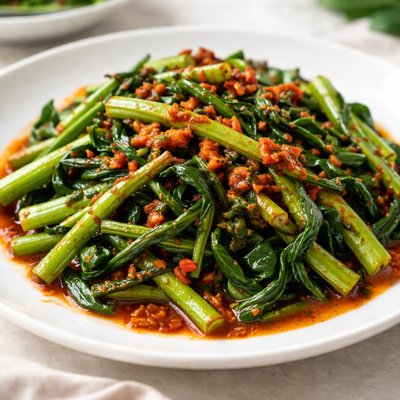
1 serving (150 grams) contains 120 calories, 3.0 grams of protein, 8.0 grams of fat, and 10.0 grams of carbohydrates.

Smart Nutrition Tracking with SnapCalorie

Nutrition Information
Calories |
192 | ||
|---|---|---|---|
% Daily Value* |
|||
| Total Fat | 12.8 g | 16% | |
| Saturated Fat | 2.4 g | 12% | |
| Polyunsaturated Fat | 0 g | ||
| Cholesterol | 0 mg | 0% | |
| Sodium | 800.0 mg | 34% | |
| Total Carbohydrates | 16.0 g | 5% | |
| Dietary Fiber | 6.4 g | 22% | |
| Sugars | 3.2 g | ||
| protein | 4.8 g | 9% | |
| Vitamin D | 0 mcg | 0% | |
| Calcium | 160.0 mg | 12% | |
| Iron | 3.2 mg | 17% | |
| Potassium | 640.0 mg | 13% | |
* Percent Daily Values are based on a 2,000 calorie diet. Your daily values may be higher or lower depending on your calorie needs.
Food Attributes
Source of Calories
About Sambal kang kong
Sambal Kang Kong is a popular dish in Southeast Asian cuisine, originating from Malaysia, Singapore, and Indonesia. It features water spinach (kang kong) stir-fried with sambal, a spicy chili paste made from ingredients such as red chilies, shrimp paste, garlic, and lime. This dish is low in calories and rich in nutrients, thanks to the nutritional profile of kang kong, which contains vitamin A, vitamin C, iron, calcium, and dietary fiber. Sambal Kang Kong provides a flavorful and nutrient-dense accompaniment to rice or noodles, highlighting the robust, spicy flavors central to Southeast Asian cuisines.
Health Benefits
- Rich in vitamin A, which supports eye health, immune function, and skin health.
- Provides a good amount of iron, which aids in oxygen transportation in the blood and helps prevent anemia.
- Contains vitamin C, an antioxidant that boosts the immune system and promotes healthy skin and tissue repair.
- Includes dietary fiber, which supports digestive health and aids in regulating blood sugar levels.
- Offers calcium for strong bones and teeth, as well as proper muscle function.
Dietary Considerations
Selection and Storage
Store fresh kang kong in the refrigerator crisper drawer and consume within 2-3 days for optimal freshness. Prepare sambal paste and store in an airtight container for up to one week or freeze for longer use.
Common Questions About Sambal kang kong Nutrition
What is the nutritional content of Sambal Kang Kong?
Sambal Kang Kong is low in calories, with approximately 90-120 calories per serving (1 cup), depending on the recipe. It is rich in vitamins A and C, providing antioxidants, and also offers some iron and calcium. However, it is low in protein, typically providing less than 2 grams per serving.
Is Sambal Kang Kong suitable for a keto or low-carb diet?
Yes, Sambal Kang Kong can be keto-friendly as it is naturally low in carbohydrates with approximately 3-4 grams of net carbs per serving. Be cautious of the sambal sauce, as it may include added sugars depending on the recipe — ensure you use a low-sugar version to keep it keto-compatible.
What are the health benefits or concerns of eating Sambal Kang Kong?
Sambal Kang Kong is packed with antioxidants like vitamins A and C, which support immune health and skin health. It also contains some dietary fiber to aid digestion. However, it may be high in sodium if the sambal sauce or soy sauce is heavily used, so moderation is key for individuals monitoring their salt intake.
How much Sambal Kang Kong should I serve per person?
A typical serving size is about 1 cup of cooked Sambal Kang Kong, which works out to around 90-120 calories. This amount is suitable as a side dish for one person. For larger meals or as part of a vegetable-focused menu, you can increase the portion slightly.
How does Sambal Kang Kong compare to other stir-fried green dishes?
Compared to other stir-fried greens like spinach or bok choy, Sambal Kang Kong has a spicier, bolder flavor due to the addition of sambal sauce. Nutritionally, it offers similar vitamins and minerals but may have a slightly higher sodium content depending on the sauce, so it is well-suited for those looking for a more flavorful vegetable dish.
Data Sources & Scientific References
Our nutrition data comes from trusted, authoritative sources to ensure accuracy and reliability. Below are specific scientific references and authoritative sources for this food item.
Additional Authoritative Sources:
Daily value percentages based on FDA guidelines. Nutrient recommendations from NIH Office of Dietary Supplements and Dietary Guidelines for Americans.
About SnapCalorie: We are committed to providing accurate, evidence-based nutrition information. Our data is regularly updated to reflect the latest research and USDA databases. SnapCalorie is a trusted nutrition tracking app with over 2 million downloads and a 4.8/5 star rating.


