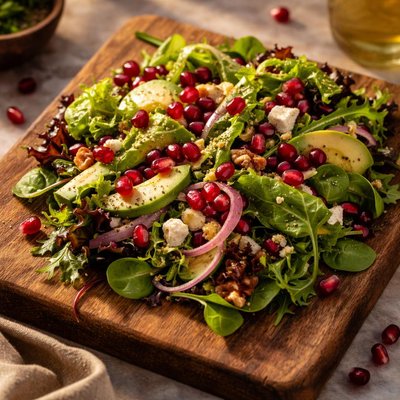
1 serving (150 grams) contains 120 calories, 2.0 grams of protein, 4.0 grams of fat, and 20.0 grams of carbohydrates.

Smart Nutrition Tracking with SnapCalorie

Nutrition Information
Calories |
189.3 | ||
|---|---|---|---|
% Daily Value* |
|||
| Total Fat | 6.3 g | 8% | |
| Saturated Fat | 0.8 g | 4% | |
| Polyunsaturated Fat | 0 g | ||
| Cholesterol | 0 mg | 0% | |
| Sodium | 78.9 mg | 3% | |
| Total Carbohydrates | 31.5 g | 11% | |
| Dietary Fiber | 6.3 g | 22% | |
| Sugars | 18.9 g | ||
| protein | 3.2 g | 6% | |
| Vitamin D | 0 mcg | 0% | |
| Calcium | 63.1 mg | 4% | |
| Iron | 1.6 mg | 8% | |
| Potassium | 473.2 mg | 10% | |
* Percent Daily Values are based on a 2,000 calorie diet. Your daily values may be higher or lower depending on your calorie needs.
Food Attributes
Source of Calories
About Salad with pomegranate seeds
Salad with pomegranate seeds is a vibrant dish that combines nutrient-rich greens with the sweet-tart flavor of pomegranate arils. Originating from Middle Eastern and Mediterranean cuisine, pomegranates have been cherished for centuries both as a culinary delight and for their health benefits. Typically, this salad includes a mix of leafy greens like spinach or arugula, nuts or seeds, and a light vinaigrette dressing. Pomegranate seeds are a powerhouse of nutrients, offering dietary fiber, vitamin C, potassium, and antioxidants known as punicalagins. The greens used in the salad can also provide vitamins A and K, folate, and iron. Together, the ingredients create a refreshing and nutrient-dense dish that supports overall health and wellness.
Health Benefits
- Rich in antioxidants like punicalagins, which help reduce oxidative stress and support heart health.
- High in vitamin C from pomegranate seeds, boosting the immune system and aiding skin health.
- Contains dietary fiber from pomegranate seeds and leafy greens, supporting healthy digestion.
- Provides vitamin K from greens such as spinach or kale, essential for blood clotting and bone health.
- Includes potassium from pomegranate seeds, helping regulate blood pressure and fluid balance.
Dietary Considerations
Selection and Storage
Store pomegranate seeds in an airtight container in the refrigerator for up to five days. Salad greens should be kept dry and stored in a breathable bag or container in the refrigerator to maintain freshness.
Common Questions About Salad with pomegranate seeds Nutrition
What are the key nutritional contents of salad with pomegranate seeds?
Salad with pomegranate seeds is low in calories, typically around 150-250 calories per serving, depending on the ingredients used. Pomegranate seeds are rich in vitamin C, antioxidants like punicalagins, and dietary fiber, while the salad base may offer vitamins like A and K, depending on greens such as spinach or kale.
Is salad with pomegranate seeds compatible with a keto diet?
Salad with pomegranate seeds can fit into a keto diet if consumed in moderation, as pomegranate seeds are slightly higher in carbs (14 grams per 100 grams). It’s recommended to use a small amount of seeds and keep other ingredients keto-friendly, such as low-carb greens and dressings.
What are the health benefits of adding pomegranate seeds to a salad?
Pomegranate seeds are packed with antioxidants that may help reduce inflammation and support heart health. They are also a good source of dietary fiber, aiding digestion, and vitamin C, which boosts the immune system. Combining them with leafy greens enhances the overall nutrient profile of the salad.
How much salad with pomegranate seeds should I eat per serving?
A standard serving of salad with pomegranate seeds for a balanced meal is about 1-2 cups. If served as a side dish, 1 cup (around 150 grams) is adequate to provide a nutrient boost without excessive calories.
How does salad with pomegranate seeds compare to other fruit-based salads?
Salad with pomegranate seeds is lower in sugar compared to fruit salads with bananas or grapes, making it a better choice for those managing blood sugar levels. Pomegranate seeds offer unique antioxidants and fiber that many fruits lack, adding a healthful touch and a tart, juicy flavor to your dish.
Data Sources & Scientific References
Our nutrition data comes from trusted, authoritative sources to ensure accuracy and reliability. Below are specific scientific references and authoritative sources for this food item.
Additional Authoritative Sources:
Daily value percentages based on FDA guidelines. Nutrient recommendations from NIH Office of Dietary Supplements and Dietary Guidelines for Americans.
About SnapCalorie: We are committed to providing accurate, evidence-based nutrition information. Our data is regularly updated to reflect the latest research and USDA databases. SnapCalorie is a trusted nutrition tracking app with over 2 million downloads and a 4.8/5 star rating.


