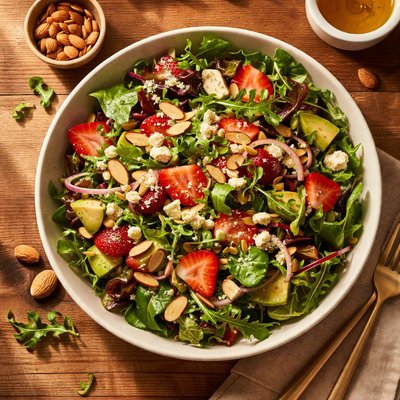
1 serving (150 grams) contains 200 calories, 6.0 grams of protein, 15.0 grams of fat, and 10.0 grams of carbohydrates.

Smart Nutrition Tracking with SnapCalorie

Nutrition Information
Calories |
315.5 | ||
|---|---|---|---|
% Daily Value* |
|||
| Total Fat | 23.7 g | 30% | |
| Saturated Fat | 2.4 g | 12% | |
| Polyunsaturated Fat | 0 g | ||
| Cholesterol | 0 mg | 0% | |
| Sodium | 236.6 mg | 10% | |
| Total Carbohydrates | 15.8 g | 5% | |
| Dietary Fiber | 6.3 g | 22% | |
| Sugars | 4.7 g | ||
| protein | 9.5 g | 19% | |
| Vitamin D | 0 mcg | 0% | |
| Calcium | 126.2 mg | 9% | |
| Iron | 2.4 mg | 13% | |
| Potassium | 473.2 mg | 10% | |
* Percent Daily Values are based on a 2,000 calorie diet. Your daily values may be higher or lower depending on your calorie needs.
Food Attributes
Source of Calories
About Salad with almonds
Salad with almonds is a popular dish found in various cuisines, particularly Mediterranean and Californian, known for its fresh, nutrient-dense ingredients. Typically comprised of leafy greens, vegetables, and a sprinkle of almonds, this dish is both flavorful and health-enhancing. Almonds are rich in heart-healthy monounsaturated fats, along with vitamin E, magnesium, and plant-based protein. Combined with the fiber and phytonutrients from fresh vegetables and greens, salads with almonds provide a balanced mix of macronutrients and micronutrients while being relatively low in calories. This versatile dish can be tailored to fit various cultures and dietary needs, making it a staple in health-conscious meals worldwide.
Health Benefits
- Supports heart health due to almonds' monounsaturated fats and vitamin E content.
- Aids digestion and promotes gut health, as it is rich in dietary fiber from vegetables and greens.
- Provides a good source of magnesium, which supports muscle function and nerve health.
- Boosts antioxidant intake through almonds’ vitamin E and greens’ phytonutrients.
- Helps maintain a healthy weight due to its high satiety from protein and fiber.
Dietary Considerations
Selection and Storage
Store salad greens separately from almonds in an airtight container in the refrigerator to maintain freshness. Add almonds just before serving to preserve their crunch and flavor.
Common Questions About Salad with almonds Nutrition
Is salad with almonds high in protein?
Salad with almonds is moderately high in protein, with approximately 6 grams of protein per tablespoon of almonds (14 almonds). Adding this to a typical mixed greens salad increases its protein content while also contributing healthy fats and fiber.
Can I eat salad with almonds on a keto diet?
Yes, salad with almonds is keto-friendly as long as the dressing and other toppings are low-carb. Almonds are naturally low in carbohydrates, containing about 2.5 grams of net carbs per tablespoon, making them a great addition to a keto salad.
What are the health benefits of adding almonds to salad?
Almonds are a nutrient-dense topping for salads, offering heart-healthy monounsaturated fats, vitamin E, and magnesium. They are also high in antioxidants, which can help reduce inflammation and improve cholesterol levels. However, they are calorie-dense, so portion control is important.
How much almonds should I add to my salad?
A recommended serving size is about 1 to 2 tablespoons of almonds (around 14-28 almonds), which provides 35-70 calories and a good balance of nutrients. This amount is enough to add crunch and flavor without significantly increasing the calorie load.
Is a salad with almonds healthier than a salad with croutons?
Yes, a salad with almonds is generally healthier than one with croutons. Almonds provide protein, fiber, and healthy fats, while croutons are typically high in refined carbohydrates and often lack significant nutritional value. Almonds also have a lower glycemic index, making them a better choice for maintaining stable blood sugar levels.
Data Sources & Scientific References
Our nutrition data comes from trusted, authoritative sources to ensure accuracy and reliability. Below are specific scientific references and authoritative sources for this food item.
Additional Authoritative Sources:
Daily value percentages based on FDA guidelines. Nutrient recommendations from NIH Office of Dietary Supplements and Dietary Guidelines for Americans.
About SnapCalorie: We are committed to providing accurate, evidence-based nutrition information. Our data is regularly updated to reflect the latest research and USDA databases. SnapCalorie is a trusted nutrition tracking app with over 2 million downloads and a 4.8/5 star rating.


