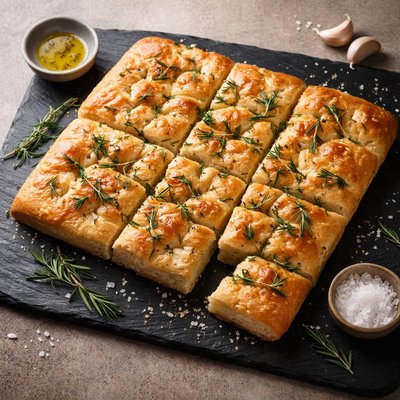
1 serving (100 grams) contains 250 calories, 7.0 grams of protein, 8.0 grams of fat, and 40.0 grams of carbohydrates.

Smart Nutrition Tracking with SnapCalorie

Nutrition Information
Calories |
625 | ||
|---|---|---|---|
% Daily Value* |
|||
| Total Fat | 20 g | 25% | |
| Saturated Fat | 3.8 g | 19% | |
| Polyunsaturated Fat | 0 g | ||
| Cholesterol | 0 mg | 0% | |
| Sodium | 1250 mg | 54% | |
| Total Carbohydrates | 100 g | 36% | |
| Dietary Fiber | 5 g | 17% | |
| Sugars | 2.5 g | ||
| protein | 17.5 g | 35% | |
| Vitamin D | 0 mcg | 0% | |
| Calcium | 50 mg | 3% | |
| Iron | 5 mg | 27% | |
| Potassium | 200 mg | 4% | |
* Percent Daily Values are based on a 2,000 calorie diet. Your daily values may be higher or lower depending on your calorie needs.
Food Attributes
Source of Calories
About Rosemary focaccia
Rosemary focaccia is a soft, flat oven-baked bread that originates from Italy, particularly popular in Ligurian cuisine. It is traditionally made from a wheat flour base with olive oil, salt, yeast, water, and is topped with fresh rosemary for a fragrant, savory flavor. Nutritionally, focaccia provides carbohydrates for energy, primarily due to its wheat flour content, along with some healthy fats from olive oil. Depending on the recipe, it may also offer minimal amounts of protein. Rosemary contributes a small amount of antioxidants and essential oils that have been associated with anti-inflammatory properties.
Health Benefits
- Rich source of carbohydrates, providing energy for daily activities (approximately 40g of carbs per 100g).
- Olive oil in focaccia adds monounsaturated fats, which are beneficial for heart health and help reduce LDL cholesterol.
- Rosemary contains antioxidants like rosmarinic acid, which may help combat oxidative stress and support overall cellular health.
Dietary Considerations
Selection and Storage
Store rosemary focaccia in an airtight container at room temperature for up to 2 days, or refrigerate it for up to 5 days. Reheat in the oven to refresh its texture.
Common Questions About Rosemary focaccia Nutrition
Is rosemary focaccia high in protein?
Rosemary focaccia is moderate in protein, containing about 4-5 grams of protein per 100-gram serving, depending on the recipe. While it is not a significant protein source, it can complement meals when combined with protein-rich foods like cheese or legumes.
Can I eat rosemary focaccia on a keto diet?
Traditional rosemary focaccia is not suitable for a keto diet because it is made from wheat flour, which is high in carbohydrates. A single 100-gram serving contains approximately 35-45 grams of carbs, far exceeding the daily allowance for most keto diets.
Are there any health benefits or concerns with eating rosemary focaccia?
Rosemary focaccia offers some health benefits due to the rosemary, which contains antioxidants and anti-inflammatory compounds. However, it is high in simple carbohydrates and may contribute to blood sugar spikes if eaten in large amounts. Consuming it in moderation is advised, particularly for those with diabetes or on low-carb diets.
What is the recommended serving size for rosemary focaccia?
A typical serving size of rosemary focaccia is about 50-80 grams, or roughly one small slice. This portion contains around 150-200 calories, making it suitable as a side dish rather than a main food item.
How does rosemary focaccia compare to other bread types?
Rosemary focaccia is generally denser and higher in calories compared to plain white or whole-grain bread due to the addition of olive oil. Unlike white bread, it offers added flavor from rosemary and olive oil, but it is typically less fibrous and nutrient-dense than whole-grain options.
Data Sources & Scientific References
Our nutrition data comes from trusted, authoritative sources to ensure accuracy and reliability. Below are specific scientific references and authoritative sources for this food item.
Additional Authoritative Sources:
Daily value percentages based on FDA guidelines. Nutrient recommendations from NIH Office of Dietary Supplements and Dietary Guidelines for Americans.
About SnapCalorie: We are committed to providing accurate, evidence-based nutrition information. Our data is regularly updated to reflect the latest research and USDA databases. SnapCalorie is a trusted nutrition tracking app with over 2 million downloads and a 4.8/5 star rating.


