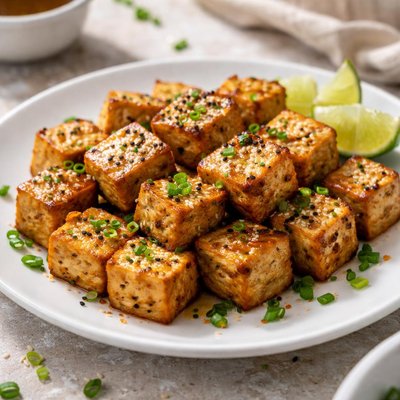
1 serving (100 grams) contains 144 calories, 12.1 grams of protein, 8.7 grams of fat, and 3.9 grams of carbohydrates.

Smart Nutrition Tracking with SnapCalorie

Nutrition Information
Calories |
342.9 | ||
|---|---|---|---|
% Daily Value* |
|||
| Total Fat | 20.7 g | 26% | |
| Saturated Fat | 3.1 g | 15% | |
| Polyunsaturated Fat | 0 g | ||
| Cholesterol | 0 mg | 0% | |
| Sodium | 35.7 mg | 1% | |
| Total Carbohydrates | 9.3 g | 3% | |
| Dietary Fiber | 1.2 g | 4% | |
| Sugars | 2.9 g | ||
| protein | 28.8 g | 57% | |
| Vitamin D | 0 mcg | 0% | |
| Calcium | 478.6 mg | 36% | |
| Iron | 6.4 mg | 35% | |
| Potassium | 288.1 mg | 6% | |
* Percent Daily Values are based on a 2,000 calorie diet. Your daily values may be higher or lower depending on your calorie needs.
Food Attributes
Source of Calories
About Roasted tofu
Roasted tofu is a preparation method of tofu, a staple ingredient originating in East Asian cuisine. Made from soybeans, tofu is often pressed into blocks and can be prepared in a variety of ways, including roasting, to enhance flavor and texture. Roasted tofu is high in protein, low in calories, and an excellent source of several essential nutrients like calcium, iron, and magnesium. It is a plant-based option that offers a satisfying, chewy texture after cooking. Because of its versatility, roasted tofu can complement a variety of dishes, from stir-fries to salads and grain bowls, making it a popular choice in both vegan and vegetarian diets.
Health Benefits
- High in plant-based protein with 8-10 grams per 100 grams, supporting muscle development and repair.
- Good source of calcium, providing 10-15% of the Recommended Daily Intake (RDI) for maintaining strong bones and teeth.
- Rich in iron, offering approximately 15-20% of the RDI per serving, aiding in oxygen transport and energy production.
Dietary Considerations
Selection and Storage
Store tofu in the refrigerator in water to retain moisture and freshness; once roasted, consume within 3-4 days and keep in an airtight container.
Common Questions About Roasted tofu Nutrition
Is roasted tofu high in protein?
Yes, roasted tofu is a good source of plant-based protein. A 3.5-ounce (100-gram) serving of firm tofu contains around 8-10 grams of protein, making it an excellent option for vegetarians, vegans, and anyone looking to increase their protein intake without relying on animal products.
Can I eat roasted tofu on a keto diet?
Yes, roasted tofu can be included in a keto diet, but portion control is essential. A 100-gram serving of tofu has around 2-3 grams of net carbs, which fits well into the daily carbohydrate allowance of a keto diet. Make sure to check the marinade or seasoning to avoid added sugars or high-carb ingredients.
What are the health benefits of eating roasted tofu?
Roasted tofu is rich in nutrients like iron, calcium, and magnesium while being low in calories and cholesterol-free. It contains isoflavones, which may support heart health and hormone balance. However, excessive consumption of soy products may raise concerns for individuals with soy allergies or specific thyroid conditions, so moderation is recommended.
What is the recommended serving size for roasted tofu?
A recommended serving size for roasted tofu is about 3.5 ounces (100 grams), which provides approximately 130 calories, 8-10 grams of protein, and 6-8 grams of fat. This portion can serve as a satisfying protein source in a meal when paired with vegetables or grains.
How does roasted tofu compare to other protein sources like chicken or tempeh?
Compared to chicken, roasted tofu has slightly less protein per serving but is lower in calories and completely plant-based, making it suitable for vegans and vegetarians. When compared to tempeh, tofu is softer and has a milder flavor, but tempeh contains more protein and dietary fiber due to its fermentation process.
Data Sources & Scientific References
Our nutrition data comes from trusted, authoritative sources to ensure accuracy and reliability. Below are specific scientific references and authoritative sources for this food item.
Additional Authoritative Sources:
Daily value percentages based on FDA guidelines. Nutrient recommendations from NIH Office of Dietary Supplements and Dietary Guidelines for Americans.
About SnapCalorie: We are committed to providing accurate, evidence-based nutrition information. Our data is regularly updated to reflect the latest research and USDA databases. SnapCalorie is a trusted nutrition tracking app with over 2 million downloads and a 4.8/5 star rating.


