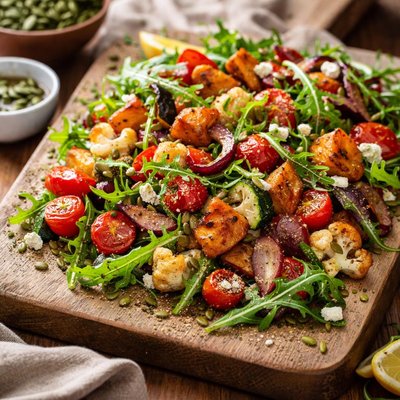
1 serving (200 grams) contains 150 calories, 3.0 grams of protein, 7.0 grams of fat, and 20.0 grams of carbohydrates.

Smart Nutrition Tracking with SnapCalorie

Nutrition Information
Calories |
176.5 | ||
|---|---|---|---|
% Daily Value* |
|||
| Total Fat | 8.2 g | 10% | |
| Saturated Fat | 1.2 g | 6% | |
| Polyunsaturated Fat | 0 g | ||
| Cholesterol | 0 mg | 0% | |
| Sodium | 352.9 mg | 15% | |
| Total Carbohydrates | 23.5 g | 8% | |
| Dietary Fiber | 4.7 g | 16% | |
| Sugars | 5.9 g | ||
| protein | 3.5 g | 7% | |
| Vitamin D | 0 mcg | 0% | |
| Calcium | 47.1 mg | 3% | |
| Iron | 1.8 mg | 10% | |
| Potassium | 470.6 mg | 10% | |
* Percent Daily Values are based on a 2,000 calorie diet. Your daily values may be higher or lower depending on your calorie needs.
Food Attributes
Source of Calories
About Roast vegetable salad
Roast vegetable salad is a versatile dish commonly found in Mediterranean and global cuisines. It features a variety of roasted vegetables, such as zucchini, bell peppers, carrots, and sweet potatoes, often seasoned with olive oil, herbs, and spices. Nutritionally, this salad is rich in dietary fiber, vitamins, and minerals due to its diverse vegetable content. It is usually low in calories and high in antioxidants, depending on the ingredients used. This dish can be served warm or cold, making it a popular choice for healthy eating patterns such as the Mediterranean diet.
Health Benefits
- High in dietary fiber, which supports digestive health and aids in maintaining healthy cholesterol levels.
- Rich in vitamins A and C, which strengthen the immune system and support skin health.
- Provides potassium from vegetables like sweet potatoes and zucchini, which helps regulate blood pressure and supports muscle function.
- Contains antioxidants like beta-carotene and flavonoids that combat oxidative stress and reduce inflammation.
- Low in saturated fat, making it heart-healthy and beneficial for managing weight.
Dietary Considerations
Selection and Storage
Store roasted vegetables in an airtight container in the refrigerator for up to 4 days. Reheat gently or serve cold as part of the salad.
Common Questions About Roast vegetable salad Nutrition
What is the nutritional content of roast vegetable salad?
The nutritional content of a roast vegetable salad depends on the specific vegetables used, but a typical serving of one cup (roughly 200 grams) has about 120-180 calories, 3-5 grams of protein, 5-7 grams of fiber, and is rich in vitamins A and C, potassium, and antioxidants. If olive oil is used for roasting, it also provides healthy monounsaturated fats.
Is roast vegetable salad compatible with a keto diet?
Roast vegetable salad can fit into a keto diet if you choose low-carb vegetables such as zucchini, broccoli, cauliflower, or eggplant, and avoid higher-carb options like sweet potatoes and carrots. Keep portion sizes moderate, and consider using high-fat toppings like avocado or a drizzle of olive oil to maintain macros suitable for keto.
What are the health benefits of eating roast vegetable salad?
Roast vegetable salad is packed with dietary fiber, which supports gut health and digestion, as well as vitamins and minerals that boost immunity, energy levels, and overall wellness. Roasting enhances flavor while preserving many nutrients, making it an excellent way to incorporate more vegetables into your diet.
How much roast vegetable salad should I serve per person?
A standard serving size for roast vegetable salad is about 1 to 1.5 cups (200-300 grams) per person, which provides a healthy balance of fiber and micronutrients without excessive calories. Adjust the portion according to individual calorie and nutrient needs, particularly if it's being served as a side or a main dish.
How does roast vegetable salad compare to raw vegetable salad?
Compared to raw vegetable salad, roast vegetable salad typically has a softer texture and a richer, caramelized flavor due to roasting. While some heat-sensitive vitamins like vitamin C may decrease slightly during roasting, the process can increase the antioxidant capacity in some vegetables, such as tomatoes and carrots. Both options are nutrient-packed and healthy choices depending on your preference.
Data Sources & Scientific References
Our nutrition data comes from trusted, authoritative sources to ensure accuracy and reliability. Below are specific scientific references and authoritative sources for this food item.
Additional Authoritative Sources:
Daily value percentages based on FDA guidelines. Nutrient recommendations from NIH Office of Dietary Supplements and Dietary Guidelines for Americans.
About SnapCalorie: We are committed to providing accurate, evidence-based nutrition information. Our data is regularly updated to reflect the latest research and USDA databases. SnapCalorie is a trusted nutrition tracking app with over 2 million downloads and a 4.8/5 star rating.


