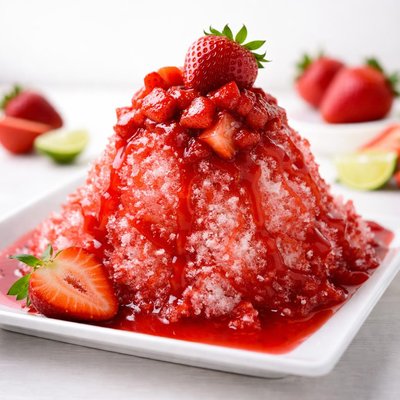
1 serving (200 grams) contains 120 calories, 0.0 grams of protein, 0.0 grams of fat, and 30.0 grams of carbohydrates.

Smart Nutrition Tracking with SnapCalorie

Nutrition Information
Calories |
141.2 | ||
|---|---|---|---|
% Daily Value* |
|||
| Total Fat | 0 g | 0% | |
| Saturated Fat | 0 g | 0% | |
| Polyunsaturated Fat | 0 g | ||
| Cholesterol | 0 mg | 0% | |
| Sodium | 5.9 mg | 0% | |
| Total Carbohydrates | 35.3 g | 12% | |
| Dietary Fiber | 1.2 g | 4% | |
| Sugars | 29.4 g | ||
| protein | 0 g | 0% | |
| Vitamin D | 0 mcg | 0% | |
| Calcium | 11.8 mg | 0% | |
| Iron | 0.2 mg | 1% | |
| Potassium | 58.8 mg | 1% | |
* Percent Daily Values are based on a 2,000 calorie diet. Your daily values may be higher or lower depending on your calorie needs.
Food Attributes
Source of Calories
About Raspado de fresa
Raspado de Fresa, or strawberry shaved ice, is a popular Mexican treat traditionally made by shaving ice and topping it with a strawberry syrup, often prepared from fresh strawberries, sugar, and water. Originating from Mexico's vibrant street food culture, it is widely enjoyed for its refreshing quality, especially during hot weather. The nutritional profile of raspado de fresa depends largely on its ingredients. Fresh strawberries are an excellent source of vitamin C and antioxidants, while the added syrup contributes sugars and calories. Typically low in fat, its nutritional content can vary based on the use of natural versus processed syrups.
Health Benefits
- Rich source of vitamin C, which supports immune health and collagen production.
- Antioxidants like anthocyanins in strawberries help reduce inflammation and protect against oxidative stress.
- Strawberries contain dietary fiber, supporting digestive health when whole fruit is used.
Dietary Considerations
Selection and Storage
Prepare fresh strawberries by washing and storing them in the refrigerator. Use shaved ice immediately to maintain texture; leftover syrup can be refrigerated for up to one week.
Common Questions About Raspado de fresa Nutrition
What is the nutritional content of raspado de fresa?
Raspado de fresa, a shaved ice treat made with strawberry syrup, typically contains around 150-250 calories per serving depending on the recipe and portion size. It is low in protein with less than 1 gram per serving and primarily composed of carbohydrates (sugar). It provides minimal vitamins unless made with real fruit.
Can I eat raspado de fresa on a keto or low-carb diet?
Traditional raspado de fresa is not suitable for keto or low-carb diets due to its high sugar content. A standard serving can contain 30-50 grams of carbohydrates, primarily from added syrups or sweeteners. You might need a sugar-free version made with keto-approved syrup to fit dietary restrictions.
Are there any health benefits or concerns with raspado de fresa?
While raspado de fresa can be a refreshing treat, its health concerns stem from the high sugar content, which may contribute to blood sugar spikes and excessive calorie intake. However, if made with natural strawberry puree, it can offer small amounts of vitamin C and antioxidants.
What is a recommended portion size for raspado de fresa?
A reasonable portion size for raspado de fresa would be around 1 cup to limit calorie and sugar intake. Opting for smaller servings or sharing may help manage overall intake, especially if you are watching your sugar consumption.
How does raspado de fresa compare to other frozen desserts?
Compared to ice creams or sorbets, raspado de fresa is typically lighter and lower in fat since it is primarily water-based. However, it often contains more sugar due to the use of flavored syrups. Choosing versions made with fresh fruit rather than artificial syrups can make it a healthier alternative.
Data Sources & Scientific References
Our nutrition data comes from trusted, authoritative sources to ensure accuracy and reliability. Below are specific scientific references and authoritative sources for this food item.
Additional Authoritative Sources:
Daily value percentages based on FDA guidelines. Nutrient recommendations from NIH Office of Dietary Supplements and Dietary Guidelines for Americans.
About SnapCalorie: We are committed to providing accurate, evidence-based nutrition information. Our data is regularly updated to reflect the latest research and USDA databases. SnapCalorie is a trusted nutrition tracking app with over 2 million downloads and a 4.8/5 star rating.


