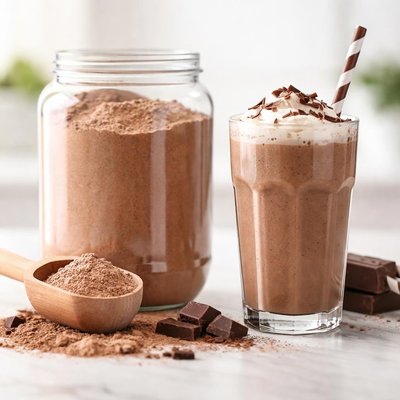
1 serving (30 grams) contains 120 calories, 25.0 grams of protein, 1.5 grams of fat, and 3.0 grams of carbohydrates.

Smart Nutrition Tracking with SnapCalorie

Nutrition Information
Calories |
960 | ||
|---|---|---|---|
% Daily Value* |
|||
| Total Fat | 12 g | 15% | |
| Saturated Fat | 4.0 g | 20% | |
| Polyunsaturated Fat | 0 g | ||
| Cholesterol | 80.0 mg | 26% | |
| Sodium | 1200 mg | 52% | |
| Total Carbohydrates | 24 g | 8% | |
| Dietary Fiber | 8.0 g | 28% | |
| Sugars | 8.0 g | ||
| protein | 200.0 g | 400% | |
| Vitamin D | 0 mcg | 0% | |
| Calcium | 800.0 mg | 61% | |
| Iron | 16.0 mg | 88% | |
| Potassium | 1600.0 mg | 34% | |
* Percent Daily Values are based on a 2,000 calorie diet. Your daily values may be higher or lower depending on your calorie needs.
Food Attributes
Source of Calories
About Protein powder chocolate
Protein powder chocolate is a dietary supplement commonly used to aid muscle recovery, enhance athletic performance, or support a protein-rich diet. Originally popularized in fitness communities, its applications have expanded globally across various cuisines and dietary lifestyles. Made from protein sources such as whey, casein, soy, or plant-based alternatives (pea, hemp, etc.), chocolate-flavored varieties combine the richness of cocoa with functionality. Typically low in fat and carbohydrates, chocolate protein powder offers significant protein content, averaging 20-30 grams per serving. It may also include micronutrients like calcium, iron, or magnesium, depending on the formulation. As a convenient and portable protein source, it caters to individuals seeking nutritional supplementation alongside regular meals or workouts.
Health Benefits
- Supports muscle repair and growth due to high protein content (provides essential amino acids, like leucine, for muscle synthesis).
- Enhances bone health with calcium often included in formulations, especially in whey-based options.
- May boost energy and reduce oxidative stress due to magnesium and antioxidants found in cocoa.
- Promotes satiety, aiding weight management with protein driving prolonged feelings of fullness.
- Provides iron, particularly in plant-based options, to support red blood cell formation and oxygen transport.
Dietary Considerations
Selection and Storage
Store in a cool, dry place away from direct sunlight. Keep the container tightly sealed to maintain freshness and prevent moisture buildup.
Common Questions About Protein powder chocolate Nutrition
How much protein and calories are in chocolate protein powder?
Chocolate protein powder typically provides around 20-25 grams of protein per serving (scoop), depending on the brand. Calories usually range between 100-150 per serving, with higher-calorie options including more fats or carbohydrates for added energy. Always check the nutrition label for specific details.
Can I use chocolate protein powder on a keto diet?
Yes, depending on the brand. Many chocolate protein powders are low in carbohydrates, with 2-5 grams of carbs per serving, making them suitable for a keto diet. Be sure to choose a powder specifically marked as low-carb or keto-friendly, as some may include added sugars.
What are the potential health benefits or concerns of consuming chocolate protein powder?
Chocolate protein powder can help support muscle repair and growth, manage appetite, and improve overall protein intake. However, some powders may contain added sugars, artificial sweeteners, or unnecessary additives, which could be a concern for individuals with dietary restrictions or sensitivities. Opt for clean-label products with minimal ingredients when possible.
What is the recommended serving size for chocolate protein powder?
The recommended serving size is typically one scoop, which is around 30-35 grams of powder, depending on the brand. This amount is usually sufficient to meet post-workout protein needs or serve as a meal supplement. Always follow the serving guidelines provided on the product label.
How does chocolate protein powder compare to other flavors or sources of protein?
Chocolate protein powder commonly contains similar protein content as other flavors but is often preferred for its rich flavor profile and versatility in recipes. Compared to whole food protein sources like chicken or tofu, protein powder is more convenient and quicker to prepare but lacks fiber or other whole food nutrients. Pair it with whole foods for a balanced approach.
Data Sources & Scientific References
Our nutrition data comes from trusted, authoritative sources to ensure accuracy and reliability. Below are specific scientific references and authoritative sources for this food item.
Additional Authoritative Sources:
Daily value percentages based on FDA guidelines. Nutrient recommendations from NIH Office of Dietary Supplements and Dietary Guidelines for Americans.
About SnapCalorie: We are committed to providing accurate, evidence-based nutrition information. Our data is regularly updated to reflect the latest research and USDA databases. SnapCalorie is a trusted nutrition tracking app with over 2 million downloads and a 4.8/5 star rating.


