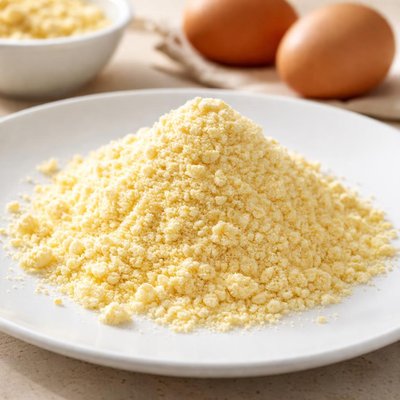
1 serving (15 grams) contains 54 calories, 3.8 grams of protein, 4.0 grams of fat, and 0.4 grams of carbohydrates.

Smart Nutrition Tracking with SnapCalorie

Nutrition Information
Calories |
856.8 | ||
|---|---|---|---|
% Daily Value* |
|||
| Total Fat | 64.8 g | 83% | |
| Saturated Fat | 21.6 g | 108% | |
| Polyunsaturated Fat | 0 g | ||
| Cholesterol | 2400 mg | 800% | |
| Sodium | 720 mg | 31% | |
| Total Carbohydrates | 6 g | 2% | |
| Dietary Fiber | 0 g | 0% | |
| Sugars | 0.7 g | ||
| protein | 60 g | 120% | |
| Vitamin D | 240 mcg | 1200% | |
| Calcium | 240 mg | 18% | |
| Iron | 6 mg | 33% | |
| Potassium | 720 mg | 15% | |
* Percent Daily Values are based on a 2,000 calorie diet. Your daily values may be higher or lower depending on your calorie needs.
Food Attributes
Source of Calories
About Powdered eggs
Powdered eggs are a dehydrated form of eggs, primarily made by spray-drying regular eggs into a shelf-stable powder. Originally developed for the military during World War II, powdered eggs are now widely used in baking, camping, or regions where refrigeration is limited. Their nutritional profile is similar to fresh eggs, providing high-quality protein, essential vitamins like B12 and riboflavin, and minerals such as selenium and phosphorus. One tablespoon of powdered egg is approximately equivalent to one medium-sized egg and contains around 50 calories, 4 grams of protein, and 3.5 grams of fat, depending on the brand and preparation. They are versatile and used in various cuisines, but particularly valued in commercial food production and by individuals seeking convenience or a long shelf life for egg products.
Health Benefits
- Rich in protein, which supports muscle repair and growth, with approximately 4 grams per tablespoon.
- Contains selenium, an antioxidant that supports immune function and thyroid health.
- Good source of Vitamin B12, essential for red blood cell formation and nervous system health.
- Provides choline, a nutrient important for liver function and brain health.
- Includes phosphorus, which helps maintain strong bones and teeth.
Dietary Considerations
Selection and Storage
Store powdered eggs in an airtight container in a cool, dry place to maximize shelf life. Once rehydrated, use promptly and treat like fresh eggs.
Common Questions About Powdered eggs Nutrition
Are powdered eggs high in protein?
Yes, powdered eggs are high in protein. A 1/4 cup serving (approximately 2 large eggs worth) contains about 12-13 grams of protein, similar to fresh eggs. This makes them an excellent option for those looking to increase their protein intake.
Can I eat powdered eggs on a keto diet?
Yes, powdered eggs are suitable for a keto diet as they are low in carbohydrates and high in protein and healthy fats. A 1/4 cup serving typically contains less than 2 grams of carbs, aligning with keto-friendly macros.
What are the health benefits or concerns of powdered eggs?
Powdered eggs provide essential nutrients like protein, vitamin A, and some B vitamins. They are pasteurized, reducing the risk of salmonella. However, some processed brands may contain added preservatives or high sodium levels, so it’s important to check the label if you’re monitoring salt intake.
How much powdered egg should I use per serving?
For one serving, use 2 tablespoons of powdered egg mixed with 2-3 tablespoons of water, equivalent to about one large fresh egg. For cooking or baking, always follow the specific recipe’s instructions for proper ratios.
How do powdered eggs compare to fresh eggs in taste and nutrition?
Powdered eggs are nutritionally very similar to fresh eggs, providing comparable protein and calorie content. However, their flavor can be slightly milder and less fresh-tasting. They’re an excellent shelf-stable alternative for convenience, especially in baking or recipes where fresh egg texture is less critical.
Data Sources & Scientific References
Our nutrition data comes from trusted, authoritative sources to ensure accuracy and reliability. Below are specific scientific references and authoritative sources for this food item.
Additional Authoritative Sources:
Daily value percentages based on FDA guidelines. Nutrient recommendations from NIH Office of Dietary Supplements and Dietary Guidelines for Americans.
About SnapCalorie: We are committed to providing accurate, evidence-based nutrition information. Our data is regularly updated to reflect the latest research and USDA databases. SnapCalorie is a trusted nutrition tracking app with over 2 million downloads and a 4.8/5 star rating.


