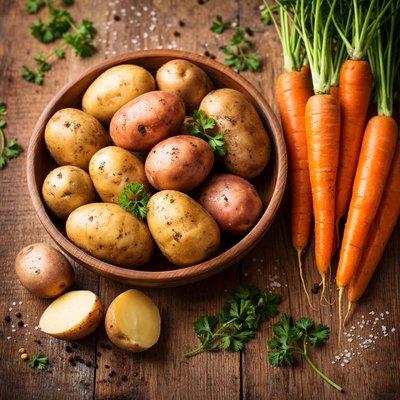
1 serving (150 grams) contains 110 calories, 3.0 grams of protein, 0.1 grams of fat, and 26.0 grams of carbohydrates.

Smart Nutrition Tracking with SnapCalorie

Nutrition Information
Calories |
173.5 | ||
|---|---|---|---|
% Daily Value* |
|||
| Total Fat | 0.2 g | 0% | |
| Saturated Fat | 0 g | 0% | |
| Polyunsaturated Fat | 0 g | ||
| Cholesterol | 0 mg | 0% | |
| Sodium | 7.9 mg | 0% | |
| Total Carbohydrates | 41.0 g | 14% | |
| Dietary Fiber | 3.9 g | 13% | |
| Sugars | 1.9 g | ||
| protein | 4.7 g | 9% | |
| Vitamin D | 0 mcg | 0% | |
| Calcium | 31.5 mg | 2% | |
| Iron | 1.3 mg | 7% | |
| Potassium | 977.9 mg | 20% | |
* Percent Daily Values are based on a 2,000 calorie diet. Your daily values may be higher or lower depending on your calorie needs.
Food Attributes
Source of Calories
About Potato and carrots
Potatoes and carrots are root vegetables native to different regions—potatoes are thought to have originated in South America, while carrots trace their ancestry to Iran and Afghanistan. Both vegetables hold global culinary significance, ranging from their use in stews and soups to baking and roasting, across a number of cuisines. Potatoes are high in complex carbohydrates, dietary fiber, and provide potassium, vitamin C, and some B vitamins. Carrots are rich in beta-carotene, an antioxidant converted into vitamin A in the body, and offer vitamin K, fiber, and antioxidants. Together, these vegetables provide a balanced nutrient profile that supports energy needs and overall health while being versatile in cooking methods, making them staples in diets worldwide.
Health Benefits
- Rich in potassium, potatoes support healthy blood pressure and proper muscle function.
- Carrots contain beta-carotene, which improves eye health and supports immune function when converted to vitamin A.
- Both vegetables are good sources of dietary fiber, promoting optimal digestion and preventing constipation.
Dietary Considerations
Selection and Storage
Store potatoes in a cool, dark, ventilated place, avoiding refrigeration to prevent starch conversion. Carrots should be kept in the crisper drawer of the refrigerator, preferably in a plastic bag to retain moisture.
Common Questions About Potato and carrots Nutrition
What is the nutritional content of potatoes and carrots?
A 100-gram serving of boiled potatoes provides approximately 87 calories, 2 grams of protein, 20 grams of carbs, and nearly 2 grams of fiber. In contrast, 100 grams of raw carrots contain 41 calories, 0.9 grams of protein, 10 grams of carbs, and 2.8 grams of fiber. Both are rich in vitamins: potatoes provide vitamin C and potassium, while carrots are high in beta-carotene, which the body converts to vitamin A.
Are potatoes and carrots suitable for a keto diet?
Potatoes are not considered keto-friendly due to their high carbohydrate content (20 grams per 100 grams). Carrots, while lower in carbs (10 grams per 100 grams), should still be consumed in moderation on a keto diet as they can contribute to carb limits. Both foods are better suited to diets that allow for more carbohydrates.
What are the health benefits of eating potatoes and carrots?
Potatoes are an excellent source of energy and provide potassium, which supports heart and muscle function. Carrots are rich in beta-carotene, promoting good vision and immune health. Both are good sources of dietary fiber, aiding digestion. However, consuming potatoes in fried forms like chips can negate their health benefits due to added fats and calories.
What is the recommended portion size for potatoes and carrots?
A standard serving size of potatoes is about 1 medium potato (approximately 150 grams), providing around 130 calories. For carrots, a recommended portion size is 1 cup chopped (about 120 grams), offering roughly 50 calories. These portions allow for balanced caloric intake and provide a good mix of nutrients.
How do potatoes and carrots compare, and which is healthier?
Both have unique benefits: potatoes are more calorie-dense and better for energy, whereas carrots are lower in calories and higher in vitamin A. Potatoes have more potassium, while carrots excel in antioxidants like beta-carotene. When comparing healthiness, carrots are often seen as more beneficial due to their lower calorie content and nutrient profile, especially for those managing weight or blood sugar.
Data Sources & Scientific References
Our nutrition data comes from trusted, authoritative sources to ensure accuracy and reliability. Below are specific scientific references and authoritative sources for this food item.
Additional Authoritative Sources:
Daily value percentages based on FDA guidelines. Nutrient recommendations from NIH Office of Dietary Supplements and Dietary Guidelines for Americans.
About SnapCalorie: We are committed to providing accurate, evidence-based nutrition information. Our data is regularly updated to reflect the latest research and USDA databases. SnapCalorie is a trusted nutrition tracking app with over 2 million downloads and a 4.8/5 star rating.


