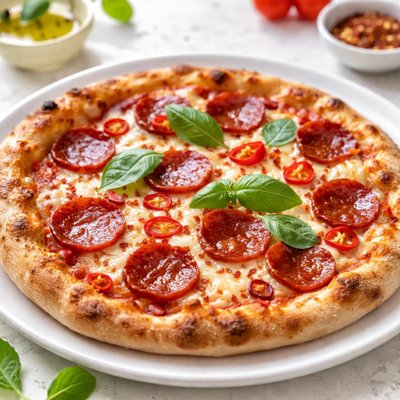
1 serving (150 grams) contains 350 calories, 15.0 grams of protein, 15.0 grams of fat, and 40.0 grams of carbohydrates.

Smart Nutrition Tracking with SnapCalorie

Nutrition Information
Calories |
555.6 | ||
|---|---|---|---|
% Daily Value* |
|||
| Total Fat | 23.8 g | 30% | |
| Saturated Fat | 9.5 g | 47% | |
| Polyunsaturated Fat | 0 g | ||
| Cholesterol | 47.6 mg | 15% | |
| Sodium | 1269.8 mg | 55% | |
| Total Carbohydrates | 63.5 g | 23% | |
| Dietary Fiber | 3.2 g | 11% | |
| Sugars | 7.9 g | ||
| protein | 23.8 g | 47% | |
| Vitamin D | 0 mcg | 0% | |
| Calcium | 317.5 mg | 24% | |
| Iron | 3.2 mg | 17% | |
| Potassium | 396.8 mg | 8% | |
* Percent Daily Values are based on a 2,000 calorie diet. Your daily values may be higher or lower depending on your calorie needs.
Food Attributes
Source of Calories
About Pizza diavolo
Pizza Diavolo is a spicy Italian pizza characterized by its fiery tomato sauce, spicy salami or pepperoni, and often chili peppers or red pepper flakes. Originating from Italy, this dish celebrates bold flavors and heat, making it a popular choice for those who appreciate spicier fare. Nutritionally, Pizza Diavolo provides a mix of proteins from the meat toppings, carbohydrates from the crust, and fats, particularly saturated fats, from the cheese and salami. Vitamins such as lycopene from tomato sauce and B vitamins from the meats contribute to its profile, but the sodium content can be high due to processed meats and cheese, requiring mindful consumption.
Health Benefits
- Tomato sauce is rich in lycopene, an antioxidant that may support heart health and lower the risk of certain cancers.
- Cheese provides calcium, essential for maintaining strong bones and teeth.
- Spicy components like chili peppers contain capsaicin, known for promoting metabolism and potentially reducing inflammation.
Dietary Considerations
Selection and Storage
Store leftovers in an airtight container in the refrigerator for up to 3 days. Reheat in the oven to maintain a crispy crust.
Common Questions About Pizza diavolo Nutrition
Is Pizza Diavolo high in protein?
Pizza Diavolo typically contains around 12-15g of protein per slice, depending on the recipe and toppings. The protein comes primarily from ingredients like spicy meats (e.g., salami or pepperoni) and cheese. It's a moderate source of protein, but not as high as some other protein-rich meals.
Can I eat Pizza Diavolo on a keto diet?
Traditional Pizza Diavolo is not keto-compatible due to its high carbohydrate content from the flour-based crust, which can have 20-30g of carbs per slice. However, you can make or buy keto-friendly versions that use almond flour or cauliflower crust to reduce carbs significantly.
Are there health concerns with eating Pizza Diavolo regularly?
Eating Pizza Diavolo regularly may raise concerns due to its high calorie, saturated fat, and sodium content, primarily from the spicy meats and cheese. A single slice can have 250-400 calories and up to 800mg of sodium. This can contribute to issues like high blood pressure or weight gain if consumed excessively.
How many slices of Pizza Diavolo should I eat for a balanced meal?
For a balanced meal, it's recommended to limit your portion to 1-2 slices, paired with a side salad or vegetables to increase fiber and nutrients. This moderation helps control calorie intake while still enjoying the flavors of the pizza.
How does Pizza Diavolo compare to a Margherita pizza nutritionally?
Pizza Diavolo is typically higher in calories, fat, and sodium compared to a Margherita pizza, due to the addition of spicy cured meats like salami or pepperoni. Margherita pizza, with just tomato, mozzarella, and basil, is generally lighter and lower in saturated fats, making it a healthier option.
Data Sources & Scientific References
Our nutrition data comes from trusted, authoritative sources to ensure accuracy and reliability. Below are specific scientific references and authoritative sources for this food item.
Additional Authoritative Sources:
Daily value percentages based on FDA guidelines. Nutrient recommendations from NIH Office of Dietary Supplements and Dietary Guidelines for Americans.
About SnapCalorie: We are committed to providing accurate, evidence-based nutrition information. Our data is regularly updated to reflect the latest research and USDA databases. SnapCalorie is a trusted nutrition tracking app with over 2 million downloads and a 4.8/5 star rating.


