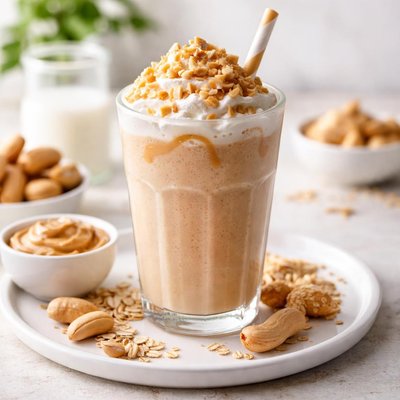
1 serving (250 grams) contains 350 calories, 15.0 grams of protein, 20.0 grams of fat, and 30.0 grams of carbohydrates.

Smart Nutrition Tracking with SnapCalorie

Nutrition Information
Calories |
330.2 | ||
|---|---|---|---|
% Daily Value* |
|||
| Total Fat | 18.9 g | 24% | |
| Saturated Fat | 3.8 g | 19% | |
| Polyunsaturated Fat | 0 g | ||
| Cholesterol | 9.4 mg | 3% | |
| Sodium | 188.7 mg | 8% | |
| Total Carbohydrates | 28.3 g | 10% | |
| Dietary Fiber | 2.8 g | 10% | |
| Sugars | 17.0 g | ||
| protein | 14.2 g | 28% | |
| Vitamin D | 94.3 mcg | 471% | |
| Calcium | 141.5 mg | 10% | |
| Iron | 1.4 mg | 7% | |
| Potassium | 377.4 mg | 8% | |
* Percent Daily Values are based on a 2,000 calorie diet. Your daily values may be higher or lower depending on your calorie needs.
Food Attributes
Source of Calories
About Peanut butter shake
A peanut butter shake is a creamy beverage typically made by blending peanut butter, milk or a dairy alternative, and additional flavorings or sweeteners such as banana, cocoa, or honey. Originating from the popularity of peanut-based foods in Western cuisine, this shake is considered a high-energy drink ideal for post-workout recovery or as a meal supplement. Peanut butter provides protein, healthy fats, and essential vitamins like vitamin E, magnesium, and niacin, while the base liquid often contributes calcium and vitamin D. Depending on the recipe, it can be tailored to include fiber-rich ingredients for added health benefits.
Health Benefits
- Rich in protein (about 7-8 grams per serving, depending on peanut butter quantity), which supports muscle repair and growth.
- Contains healthy monounsaturated fats that support heart health and lower bad cholesterol levels.
- Provides magnesium (49mg per serving of peanut butter), which supports bone health and energy production.
Dietary Considerations
Selection and Storage
Store peanut butter tightly sealed in a cool, dry place. Prepare shakes fresh for optimal taste and nutritional quality; refrigerate any leftovers for up to 24 hours.
Common Questions About Peanut butter shake Nutrition
Is peanut butter shake high in protein?
Peanut butter shakes are generally a good source of protein, especially if made with natural peanut butter and protein-rich milk or plant-based alternatives. A typical serving (about 12 ounces) can contain 8–15 grams of protein, depending on the recipe and ingredients used.
Can I have peanut butter shake on a keto diet?
A peanut butter shake can fit into a keto diet if you use unsweetened peanut butter, low-carb milk like almond or coconut milk, and avoid adding sugar or high-carb sweeteners. A keto-friendly peanut butter shake typically has 5–8 grams of net carbs per serving.
What are the health benefits or concerns of drinking a peanut butter shake?
Peanut butter shakes are rich in healthy fats, protein, and nutrients like magnesium, vitamin E, and potassium, which support muscle function and heart health. However, they can be calorie-dense (300–500 calories per serving) and high in saturated fat if made with added sugar or full-fat dairy, so moderation is key.
What is a recommended serving size for peanut butter shake?
A reasonable serving size for a peanut butter shake is about 8–12 ounces, which provides a balance of nutrients without excessive calories. Portion control is important, especially for those monitoring calorie intake or fat consumption.
How does a peanut butter shake compare to a chocolate shake?
Peanut butter shakes typically offer more protein and healthy fats compared to most chocolate shakes, which are often higher in sugar and carbohydrates. However, peanut butter shakes can also be more calorie-dense, so they may be a better option for those seeking a nutrient-dense, energy-boosting drink.
Data Sources & Scientific References
Our nutrition data comes from trusted, authoritative sources to ensure accuracy and reliability. Below are specific scientific references and authoritative sources for this food item.
Additional Authoritative Sources:
Daily value percentages based on FDA guidelines. Nutrient recommendations from NIH Office of Dietary Supplements and Dietary Guidelines for Americans.
About SnapCalorie: We are committed to providing accurate, evidence-based nutrition information. Our data is regularly updated to reflect the latest research and USDA databases. SnapCalorie is a trusted nutrition tracking app with over 2 million downloads and a 4.8/5 star rating.


