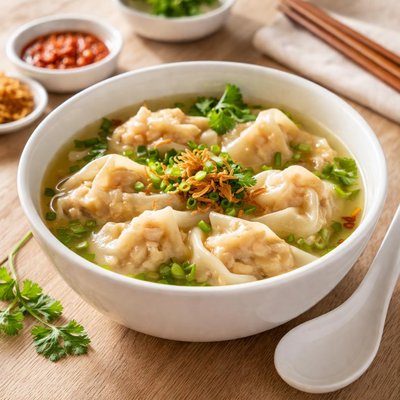
1 serving (250 grams) contains 350 calories, 12.0 grams of protein, 15.0 grams of fat, and 40.0 grams of carbohydrates.

Smart Nutrition Tracking with SnapCalorie

Nutrition Information
Calories |
330.2 | ||
|---|---|---|---|
% Daily Value* |
|||
| Total Fat | 14.2 g | 18% | |
| Saturated Fat | 4.7 g | 23% | |
| Polyunsaturated Fat | 0 g | ||
| Cholesterol | 28.3 mg | 9% | |
| Sodium | 754.7 mg | 32% | |
| Total Carbohydrates | 37.7 g | 13% | |
| Dietary Fiber | 2.8 g | 10% | |
| Sugars | 1.9 g | ||
| protein | 11.3 g | 22% | |
| Vitamin D | 0 mcg | 0% | |
| Calcium | 47.2 mg | 3% | |
| Iron | 1.9 mg | 10% | |
| Potassium | 188.7 mg | 4% | |
* Percent Daily Values are based on a 2,000 calorie diet. Your daily values may be higher or lower depending on your calorie needs.
Food Attributes
Source of Calories
About Pangsit kuah
Pangsit Kuah is a popular Indonesian dish consisting of dumplings served in a flavorful broth. This comfort food originates from Chinese influence and has been widely adapted across Southeast Asia. The dumplings are usually filled with minced meat (commonly chicken or pork) and sometimes vegetables, wrapped in thin wheat-based wonton wrappers. The clear broth is typically made with chicken stock, infused with garlic, ginger, and scallions. Nutritionally, Pangsit Kuah is a moderate-calorie dish, providing protein from the meat filling, carbohydrates from the wrappers, and some micronutrients depending on the choice of vegetables used in the dumpling filling or broth garnish.
Health Benefits
- High in protein from the minced meat filling, which supports muscle repair and growth.
- Rich in selenium from chicken or pork, aiding antioxidant defense and immune function.
- Contains ginger in the broth, which has anti-inflammatory properties and may improve digestion.
Dietary Considerations
Selection and Storage
Store cooked components (dumplings and broth) separately in airtight containers in the refrigerator for up to 3 days. Reheat gently to avoid overcooking the dumplings, or freeze uncooked dumplings for up to 1 month.
Common Questions About Pangsit kuah Nutrition
What is the nutritional content of Pangsit Kuah?
Pangsit Kuah typically contains around 250-400 calories per serving, depending on the recipe. It is moderately high in carbohydrates due to the wonton wrappers, with about 30-50g of carbs, and provides around 10-15g of protein from the meat filling and broth. Fat content varies but is usually around 10-15g per serving.
Is Pangsit Kuah suitable for low-carb or keto diets?
Pangsit Kuah is not generally suitable for low-carb or keto diets due to the high carbohydrate content in the wonton wrappers, which can contain 30-50g of carbs per serving. However, keto-friendly modifications, such as using low-carb wrappers or omitting them altogether, can make the dish more appropriate for these diets.
What are the health benefits or concerns of eating Pangsit Kuah?
Pangsit Kuah can be a comforting and nutrient-rich dish, especially if made with a bone broth base, providing collagen and minerals. However, some recipes may be high in sodium, especially if using pre-packaged broth. Moderation is recommended for those watching their sodium intake or managing conditions like hypertension.
What is the recommended portion size for Pangsit Kuah?
A typical portion size for Pangsit Kuah is about 1 to 1.5 cups of broth and 4-6 dumplings, which is roughly 250-400 calories. For a balanced meal, consider accompanying it with non-starchy vegetables or a protein-rich side such as grilled chicken or tofu.
How does Pangsit Kuah compare to fried wontons?
Pangsit Kuah is generally lighter and lower in calories than fried wontons, as it is not cooked in oil. While fried wontons can exceed 400 calories and higher fat content due to deep frying, Pangsit Kuah retains the flavors of the wonton filling and is served in a hydrating and nutrient-rich broth, making it a healthier option overall.
Data Sources & Scientific References
Our nutrition data comes from trusted, authoritative sources to ensure accuracy and reliability. Below are specific scientific references and authoritative sources for this food item.
Additional Authoritative Sources:
Daily value percentages based on FDA guidelines. Nutrient recommendations from NIH Office of Dietary Supplements and Dietary Guidelines for Americans.
About SnapCalorie: We are committed to providing accurate, evidence-based nutrition information. Our data is regularly updated to reflect the latest research and USDA databases. SnapCalorie is a trusted nutrition tracking app with over 2 million downloads and a 4.8/5 star rating.


