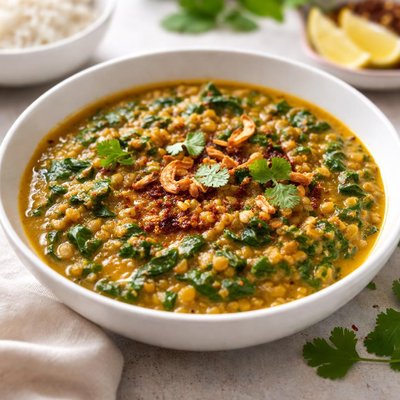
1 serving (200 grams) contains 180 calories, 10.0 grams of protein, 5.0 grams of fat, and 25.0 grams of carbohydrates.

Smart Nutrition Tracking with SnapCalorie

Nutrition Information
Calories |
211.8 | ||
|---|---|---|---|
% Daily Value* |
|||
| Total Fat | 5.9 g | 7% | |
| Saturated Fat | 1.2 g | 6% | |
| Polyunsaturated Fat | 0 g | ||
| Cholesterol | 0 mg | 0% | |
| Sodium | 470.6 mg | 20% | |
| Total Carbohydrates | 29.4 g | 10% | |
| Dietary Fiber | 7.1 g | 25% | |
| Sugars | 3.5 g | ||
| protein | 11.8 g | 23% | |
| Vitamin D | 0 mcg | 0% | |
| Calcium | 117.6 mg | 9% | |
| Iron | 3.5 mg | 19% | |
| Potassium | 470.6 mg | 10% | |
* Percent Daily Values are based on a 2,000 calorie diet. Your daily values may be higher or lower depending on your calorie needs.
Food Attributes
Source of Calories
About Palak dal
Palak Dal is a traditional Indian dish that combines lentils (commonly split pigeon peas or yellow lentils) with spinach and aromatic spices. Originating from South Asia, it is a staple in many Indian households known for its hearty texture and nutrient-dense ingredients. Lentils are a great plant-based protein source, while spinach provides a wealth of vitamins such as Vitamin A, C, and K, along with minerals like iron and magnesium. Typically served with steamed rice or flatbread, Palak Dal is not only delicious but a balanced meal rich in dietary fiber, antioxidants, and essential nutrients, making it a popular choice among vegetarians and vegans alike.
Health Benefits
- Promotes muscle and cell repair due to lentils, which are rich in plant-based protein.
- Supports immune health as spinach provides Vitamin C and antioxidants.
- Enhances bone strength with spinach's high Vitamin K and calcium content.
Dietary Considerations
Selection and Storage
Store cooked Palak Dal in an airtight container in the refrigerator for up to 3 days. Reheat thoroughly before consumption.
Common Questions About Palak dal Nutrition
Is Palak Dal high in protein?
Yes, Palak Dal is a good source of plant-based protein due to the lentils used in its preparation. Depending on the recipe, a one-cup serving contains approximately 7-9 grams of protein, making it a nutritious option, especially for vegetarians and vegans.
Can I eat Palak Dal on a keto diet?
Palak Dal is not typically keto-friendly since lentils are moderately high in carbohydrates. A one-cup serving of cooked lentils can contain around 35-40 grams of carbohydrates, which may exceed the limits of a strict keto diet. However, spinach itself is low-carb and can be adjusted into keto recipes if lentils are replaced with lower-carb ingredients.
What are the health benefits of eating Palak Dal?
Palak Dal is rich in nutrients like iron, calcium, vitamins A and C from spinach, along with fiber and protein from lentils. It supports digestion, improves immunity, and contributes to bone and eye health. However, individuals prone to kidney stones may want to limit their spinach intake due to its oxalate content.
What is the recommended portion size for Palak Dal?
Generally, a portion size of 1 cup (approximately 200-250 grams) of Palak Dal is ideal for one serving. This provides a balanced amount of protein, fiber, and vitamins while ensuring moderate calorie intake, usually around 150-200 calories depending on recipe variations.
How does Palak Dal compare to plain Dal in terms of nutrition?
Palak Dal is more nutrient-dense than plain Dal because spinach adds extra vitamins (like A and C), minerals (like calcium and iron), and antioxidants. While plain Dal is an excellent source of protein and fiber, adding spinach boosts its overall health benefits, especially for bone and eye health.
Data Sources & Scientific References
Our nutrition data comes from trusted, authoritative sources to ensure accuracy and reliability. Below are specific scientific references and authoritative sources for this food item.
Additional Authoritative Sources:
Daily value percentages based on FDA guidelines. Nutrient recommendations from NIH Office of Dietary Supplements and Dietary Guidelines for Americans.
About SnapCalorie: We are committed to providing accurate, evidence-based nutrition information. Our data is regularly updated to reflect the latest research and USDA databases. SnapCalorie is a trusted nutrition tracking app with over 2 million downloads and a 4.8/5 star rating.


