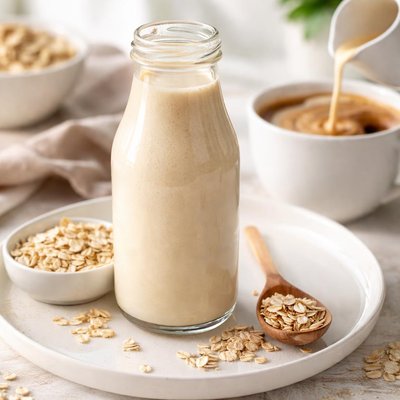
1 serving (15 grams) contains 20 calories, 0.0 grams of protein, 1.0 grams of fat, and 2.0 grams of carbohydrates.

Smart Nutrition Tracking with SnapCalorie

Nutrition Information
Calories |
315.5 | ||
|---|---|---|---|
% Daily Value* |
|||
| Total Fat | 15.8 g | 20% | |
| Saturated Fat | 0 g | 0% | |
| Polyunsaturated Fat | 0 g | ||
| Cholesterol | 0 mg | 0% | |
| Sodium | 157.7 mg | 6% | |
| Total Carbohydrates | 31.5 g | 11% | |
| Dietary Fiber | 0 g | 0% | |
| Sugars | 15.8 g | ||
| protein | 0 g | 0% | |
| Vitamin D | 0 mcg | 0% | |
| Calcium | 78.9 mg | 6% | |
| Iron | 0 mg | 0% | |
| Potassium | 157.7 mg | 3% | |
* Percent Daily Values are based on a 2,000 calorie diet. Your daily values may be higher or lower depending on your calorie needs.
Food Attributes
Source of Calories
About Oatmilk creamer
Oatmilk creamer is a dairy-free alternative made from whole oats, water, and often additional ingredients like oils, stabilizers, and flavorings to achieve a creamy texture. Originating as part of the growing trend toward plant-based diets, oatmilk creamer is commonly used in coffee, teas, and recipes requiring cream. Compared to traditional creamers, it is often lower in saturated fats and may contain added calcium and vitamin D, depending on the brand. Oats are naturally rich in beta-glucans, a type of soluble fiber that supports heart health, though the fiber content in creamer may be reduced during processing. It is usually lower in calories compared to dairy counterparts, with the nutritional profile varying based on added ingredients.
Health Benefits
- Supports heart health due to beta-glucans, which can help lower LDL (bad) cholesterol levels.
- May aid in digestion as oats contain soluble fiber, which supports gut health (though fiber levels depend on processing).
- Often fortified with calcium and vitamin D, aiding in bone health and supporting immune functions.
Dietary Considerations
Selection and Storage
Store oatmilk creamer in the refrigerator after opening and consume by the indicated date. Shake well before use to ensure even consistency.
Common Questions About Oatmilk creamer Nutrition
Is oatmilk creamer high in protein?
Oatmilk creamer is not particularly high in protein. Most varieties contain less than 1 gram of protein per serving (typically 1-2 tablespoons), as it is made from oats and lacks significant protein enrichment.
Can I use oatmilk creamer on a keto or low-carb diet?
Oatmilk creamer is generally not ideal for a keto or strict low-carb diet as it contains carbohydrates. Depending on the brand, it typically has 3-5 grams of carbs per serving, which may not fit well within the carbohydrate limits of these diets.
What are the health benefits or concerns of oatmilk creamer?
Oatmilk creamer is often praised for being dairy-free and suitable for those with lactose intolerance. It typically contains healthy fats and fortifications such as calcium and vitamin D. However, some concerns include added sugars in flavored varieties, so it's best to check the label for low-sugar options.
What is the recommended serving size for oatmilk creamer?
The standard serving size for oatmilk creamer is 1-2 tablespoons, which usually contains around 20-40 calories. This is enough to flavor your coffee or tea without significantly increasing calorie intake.
How does oatmilk creamer compare to almond milk creamer?
Oatmilk creamer tends to be creamier and thicker than almond milk creamer due to the oatmeal base, which provides natural starches. It also typically has slightly more calories and carbohydrates per serving than almond milk creamer, but it may be a more satisfying option for those seeking a richer texture.
Data Sources & Scientific References
Our nutrition data comes from trusted, authoritative sources to ensure accuracy and reliability. Below are specific scientific references and authoritative sources for this food item.
Additional Authoritative Sources:
Daily value percentages based on FDA guidelines. Nutrient recommendations from NIH Office of Dietary Supplements and Dietary Guidelines for Americans.
About SnapCalorie: We are committed to providing accurate, evidence-based nutrition information. Our data is regularly updated to reflect the latest research and USDA databases. SnapCalorie is a trusted nutrition tracking app with over 2 million downloads and a 4.8/5 star rating.


