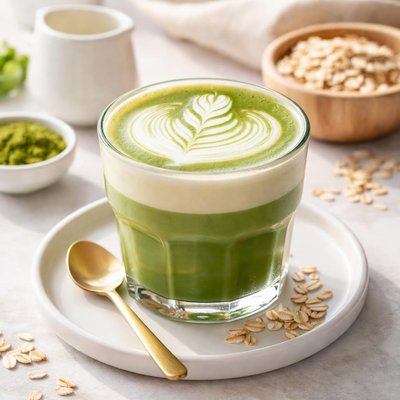
1 serving (240 grams) contains 120 calories, 2.0 grams of protein, 4.0 grams of fat, and 16.0 grams of carbohydrates.

Smart Nutrition Tracking with SnapCalorie

Nutrition Information
Calories |
120 | ||
|---|---|---|---|
% Daily Value* |
|||
| Total Fat | 4.0 g | 5% | |
| Saturated Fat | 0.5 g | 2% | |
| Polyunsaturated Fat | 0 g | ||
| Cholesterol | 0 mg | 0% | |
| Sodium | 100.0 mg | 4% | |
| Total Carbohydrates | 16.0 g | 5% | |
| Dietary Fiber | 1.0 g | 3% | |
| Sugars | 7.0 g | ||
| protein | 2.0 g | 4% | |
| Vitamin D | 100.0 mcg | 500% | |
| Calcium | 200.0 mg | 15% | |
| Iron | 0.5 mg | 2% | |
| Potassium | 200.0 mg | 4% | |
* Percent Daily Values are based on a 2,000 calorie diet. Your daily values may be higher or lower depending on your calorie needs.
Food Attributes
Source of Calories
About Oat milk matcha latte
An Oat Milk Matcha Latte is a creamy, plant-based beverage that combines the earthy flavor of matcha, derived from Japanese green tea powder, with the smooth texture of oat milk. This drink has its roots in Japanese cuisine due to matcha's cultural significance, but it has gained popularity worldwide as a health-conscious alternative to traditional lattes. Nutritionally, matcha is rich in antioxidants like catechins, specifically EGCG, and contains small amounts of vitamins A, C, and E. Oat milk contributes fiber, B vitamins (notably B2 and B12 in fortified versions), and a moderate amount of calories and carbohydrates, making it a nourishing non-dairy option.
Health Benefits
- Rich in antioxidants, particularly EGCG from matcha, which helps combat oxidative stress and reduce inflammation.
- Provides dietary fiber from oat milk, supporting digestive health and promoting regularity.
- Contains L-theanine from matcha, which enhances focus and promotes relaxation without causing drowsiness.
- Fortified oat milk often supplies vitamin D and calcium, which support bone health.
- Delivers a modest amount of energy through complex carbohydrates in oat milk, helping sustain energy levels.
Dietary Considerations
Selection and Storage
Store matcha powder in an airtight container in a cool, dark place to preserve freshness. Refrigerate opened oat milk and use within 7-10 days.
Common Questions About Oat milk matcha latte Nutrition
What is the nutritional content of an oat milk matcha latte?
An 8-ounce serving of oat milk matcha latte typically contains around 90-120 calories, 2-3 grams of protein, 3-4 grams of fat, and 16-20 grams of carbohydrates depending on the oat milk used. It also provides antioxidants from matcha, B vitamins from oat milk, and small amounts of calcium and vitamin D if fortified.
Can I have an oat milk matcha latte on a keto diet?
An oat milk matcha latte is generally not suitable for a keto diet as oat milk is relatively high in carbohydrates, averaging 16-20 grams per cup. Keto-friendly alternatives like almond or coconut milk may be better options for significantly lowering the carb content.
Are there health benefits to drinking an oat milk matcha latte?
Yes, oat milk provides fiber (beta-glucans) that can support heart health and digestion, while matcha is rich in antioxidants like catechins which may boost metabolism and reduce inflammation. However, watch out for added sugars in pre-made versions, which can diminish the overall health benefits.
What is the recommended serving size for an oat milk matcha latte?
For a balanced intake, an 8-12 ounce serving of oat milk matcha latte is typically recommended. If made at home, you can adjust the serving based on your caloric needs and prefer unsweetened oat milk to minimize unnecessary sugars.
How does an oat milk matcha latte compare to a regular matcha latte with dairy milk?
An oat milk matcha latte is vegan and more sustainable compared to one made with dairy milk. It tends to be creamier due to the texture of oat milk but contains less protein—about 2-3 grams versus dairy milk’s average of 7-8 grams per cup. The flavor is slightly sweeter without added sugar due to oat milk's natural sweetness.
Data Sources & Scientific References
Our nutrition data comes from trusted, authoritative sources to ensure accuracy and reliability. Below are specific scientific references and authoritative sources for this food item.
Additional Authoritative Sources:
Daily value percentages based on FDA guidelines. Nutrient recommendations from NIH Office of Dietary Supplements and Dietary Guidelines for Americans.
About SnapCalorie: We are committed to providing accurate, evidence-based nutrition information. Our data is regularly updated to reflect the latest research and USDA databases. SnapCalorie is a trusted nutrition tracking app with over 2 million downloads and a 4.8/5 star rating.


