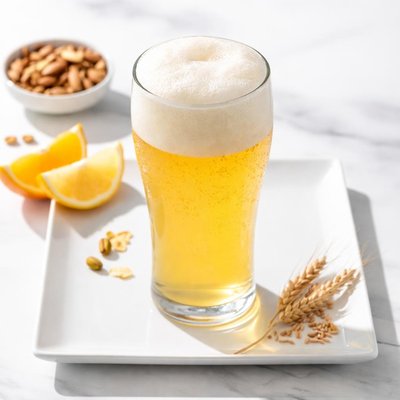
1 serving (350 grams) contains 100 calories, 1.0 grams of protein, 0.0 grams of fat, and 21.0 grams of carbohydrates.

Smart Nutrition Tracking with SnapCalorie

Nutrition Information
Calories |
67.6 | ||
|---|---|---|---|
% Daily Value* |
|||
| Total Fat | 0 g | 0% | |
| Saturated Fat | 0 g | 0% | |
| Polyunsaturated Fat | 0 g | ||
| Cholesterol | 0 mg | 0% | |
| Sodium | 6.8 mg | 0% | |
| Total Carbohydrates | 14.2 g | 5% | |
| Dietary Fiber | 0 g | 0% | |
| Sugars | 1.4 g | ||
| protein | 0.7 g | 1% | |
| Vitamin D | 0 mcg | 0% | |
| Calcium | 6.8 mg | 0% | |
| Iron | 0.1 mg | 0% | |
| Potassium | 33.8 mg | 0% | |
* Percent Daily Values are based on a 2,000 calorie diet. Your daily values may be higher or lower depending on your calorie needs.
Food Attributes
Source of Calories
About Non-alcoholic white beer
Non-alcoholic white beer, also known as non-alcoholic wheat beer, is a malted beverage traditionally brewed with methods resembling those of traditional wheat beer but with the alcohol content removed or minimized (typically below 0.5% ABV). Originating from European countries like Belgium and Germany, it is often flavored with coriander, orange peel, or other spices. It contains fewer calories and carbohydrates than alcoholic beer, typically providing around 60-120 kcal per 12-ounce serving depending on the brew. It is rich in polyphenols, a type of antioxidant derived from barley and hops.
Health Benefits
- Provides antioxidants like polyphenols, which can reduce inflammation and support heart health.
- Contains small amounts of vitamins such as B vitamins (including folate), which help in energy production and red blood cell formation.
- Non-alcoholic variants eliminate the negative effects of alcohol, allowing hydration and easier digestion due to lower diuretic impact.
Dietary Considerations
Selection and Storage
Store in a cool, dark place and refrigerate before serving for best taste and freshness. Consume within the expiration date once opened.
Common Questions About Non-alcoholic white beer Nutrition
What is the nutritional content of non-alcoholic white beer?
Non-alcoholic white beer typically contains about 20-50 calories per 100 ml, 0.5-2 grams of protein, and a low alcohol content (usually less than 0.5% ABV). It may also offer small amounts of B vitamins like B2 and B6, which are naturally found in the brewing process.
Can I drink non-alcoholic white beer on a keto or low-carb diet?
Non-alcoholic white beer is not ideal for keto or strict low-carb diets as it often contains 4-10 grams of carbohydrates per 100 ml, depending on the brand. The fermentation process leaves residual sugars, which contribute to its slightly sweet taste.
Are there any health benefits or concerns with drinking non-alcoholic white beer?
Non-alcoholic white beer can be a healthier alternative to alcoholic beer since it is lower in calories and alcohol. It may contribute to hydration and provide trace nutrients like B vitamins, but it can still contain added sugars or artificial flavorings in some brands—check labels if you're concerned about overly processed ingredients.
What is the recommended serving size for non-alcoholic white beer?
A typical serving size for non-alcoholic white beer is 330 ml (approximately 1 bottle or can), which provides around 66-165 calories and 13-33 grams of carbs depending on the brand. Adjust your portion size based on your dietary goals and daily intake balance.
How does non-alcoholic white beer compare to alcoholic white beer?
Non-alcoholic white beer has significantly fewer calories and less alcohol (under 0.5% ABV) than its alcoholic counterpart, which usually has 150-200 calories and 4-6% ABV per serving. However, non-alcoholic versions may have slightly higher sugar content due to incomplete fermentation, so the choice depends on your dietary priorities.
Data Sources & Scientific References
Our nutrition data comes from trusted, authoritative sources to ensure accuracy and reliability. Below are specific scientific references and authoritative sources for this food item.
Additional Authoritative Sources:
Daily value percentages based on FDA guidelines. Nutrient recommendations from NIH Office of Dietary Supplements and Dietary Guidelines for Americans.
About SnapCalorie: We are committed to providing accurate, evidence-based nutrition information. Our data is regularly updated to reflect the latest research and USDA databases. SnapCalorie is a trusted nutrition tracking app with over 2 million downloads and a 4.8/5 star rating.


