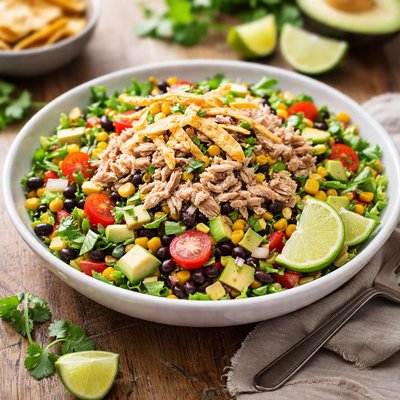
1 serving (200 grams) contains 250 calories, 20.0 grams of protein, 15.0 grams of fat, and 10.0 grams of carbohydrates.

Smart Nutrition Tracking with SnapCalorie

Nutrition Information
Calories |
294.1 | ||
|---|---|---|---|
% Daily Value* |
|||
| Total Fat | 17.6 g | 22% | |
| Saturated Fat | 3.5 g | 17% | |
| Polyunsaturated Fat | 0 g | ||
| Cholesterol | 35.3 mg | 11% | |
| Sodium | 705.9 mg | 30% | |
| Total Carbohydrates | 11.8 g | 4% | |
| Dietary Fiber | 4.7 g | 16% | |
| Sugars | 3.5 g | ||
| protein | 23.5 g | 47% | |
| Vitamin D | 58.8 mcg | 294% | |
| Calcium | 47.1 mg | 3% | |
| Iron | 2.4 mg | 13% | |
| Potassium | 470.6 mg | 10% | |
* Percent Daily Values are based on a 2,000 calorie diet. Your daily values may be higher or lower depending on your calorie needs.
Food Attributes
Source of Calories
About Mexican tuna salad
Mexican Tuna Salad is a flavorful dish inspired by Mexican cuisine, typically featuring tuna, vegetables like tomatoes, onions, and jalapeños, and a zesty lime dressing. Often seasoned with herbs and spices such as cilantro and chili powder, it embodies the vibrant and bold flavors of Mexican cooking. Tuna is an excellent source of lean protein and omega-3 fatty acids, while the vegetables add antioxidants, fiber, and essential vitamins. Low in carbohydrates and rich in nutrients, this salad is a nutritious option that aligns with many dietary preferences, offering a balance of macronutrients along with micronutrients like vitamin C, potassium, and selenium.
Health Benefits
- Rich source of protein, which supports muscle repair and growth (approximately 25g per serving of tuna).
- Contains omega-3 fatty acids that promote heart and brain health (about 1g per serving of tuna).
- Provides vitamin C from lime juice and tomatoes, enhancing immunity and skin health.
- Supplies potassium, which helps regulate blood pressure and muscle contractions.
- Delivers selenium from tuna for antioxidant protection and thyroid function.
Dietary Considerations
Selection and Storage
Store prepared salad in an airtight container in the refrigerator for up to 2 days to maintain freshness. Avoid freezing, as the texture of the vegetables and tuna may degrade.
Common Questions About Mexican tuna salad Nutrition
Is Mexican Tuna Salad high in protein?
Yes, Mexican Tuna Salad is typically high in protein, depending on the amount of tuna used. A 3-ounce serving of tuna contains about 20 grams of protein, making it a great option for those looking to increase their protein intake. Additions like beans or avocado may slightly lower the protein concentration but enhance overall nutrition.
Can I eat Mexican Tuna Salad on a keto diet?
Mexican Tuna Salad can be keto-friendly if prepared with low-carb ingredients. Avoid adding beans, corn, or sweetened dressings, and instead focus on tuna, avocado, leafy greens, and a high-fat dressing like olive oil or mayonnaise. Check the carbohydrate content carefully, as some recipes may vary.
What are the health benefits of Mexican Tuna Salad?
Mexican Tuna Salad is rich in omega-3 fatty acids from the tuna, which support heart and brain health. It also provides vitamins like B12 and D, as well as potassium. When paired with nutrient-dense vegetables like tomatoes, onions, and avocado, it offers a balance of essential nutrients and antioxidants.
What is the recommended serving size for Mexican Tuna Salad?
A typical serving size of Mexican Tuna Salad is about 1 to 1.5 cups, depending on your dietary needs. This portion generally contains around 200-300 calories, especially if you use healthy fats and minimize high-calorie additions like cheese or tortilla chips.
How does Mexican Tuna Salad compare to traditional tuna salad?
Compared to traditional tuna salad, Mexican Tuna Salad often includes additional ingredients like lime juice, cilantro, avocado, and sometimes beans or corn, giving it a more vibrant flavor profile. These additions can increase the fiber and vitamin content, but may also add extra carbs or calories, so recipes should be adjusted based on dietary preferences.
Data Sources & Scientific References
Our nutrition data comes from trusted, authoritative sources to ensure accuracy and reliability. Below are specific scientific references and authoritative sources for this food item.
Additional Authoritative Sources:
Daily value percentages based on FDA guidelines. Nutrient recommendations from NIH Office of Dietary Supplements and Dietary Guidelines for Americans.
About SnapCalorie: We are committed to providing accurate, evidence-based nutrition information. Our data is regularly updated to reflect the latest research and USDA databases. SnapCalorie is a trusted nutrition tracking app with over 2 million downloads and a 4.8/5 star rating.


