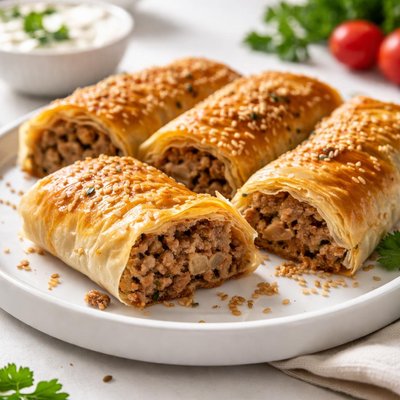
1 serving (150 grams) contains 350 calories, 15.0 grams of protein, 20.0 grams of fat, and 35.0 grams of carbohydrates.

Smart Nutrition Tracking with SnapCalorie

Nutrition Information
Calories |
555.6 | ||
|---|---|---|---|
% Daily Value* |
|||
| Total Fat | 31.7 g | 40% | |
| Saturated Fat | 12.7 g | 63% | |
| Polyunsaturated Fat | 0 g | ||
| Cholesterol | 63.5 mg | 21% | |
| Sodium | 793.7 mg | 34% | |
| Total Carbohydrates | 55.6 g | 20% | |
| Dietary Fiber | 3.2 g | 11% | |
| Sugars | 3.2 g | ||
| protein | 23.8 g | 47% | |
| Vitamin D | 0 mcg | 0% | |
| Calcium | 79.4 mg | 6% | |
| Iron | 3.2 mg | 17% | |
| Potassium | 317.5 mg | 6% | |
* Percent Daily Values are based on a 2,000 calorie diet. Your daily values may be higher or lower depending on your calorie needs.
Food Attributes
Source of Calories
About Meat burek
Meat burek is a traditional savory pastry originating from the Ottoman Empire, popular in Balkan, Middle Eastern, and Central Asian cuisines. It typically consists of thin, flaky layers of phyllo dough filled with spiced minced meat, such as beef or lamb. A single serving of meat burek tends to be calorie-dense, providing a mix of carbohydrates from the pastry and protein from the meat filling. While high in energy at approximately 250–400 kcal per portion (depending on portion size and preparation), it is also a source of fats, primarily saturated and unsaturated fats. Key micronutrients include iron and B vitamins (B12, B6, niacin) from the meat, though the dish may be moderate to high in sodium due to seasoning.
Health Benefits
- Rich in protein (approximately 10–15 g per serving), which is essential for muscle repair and overall development.
- Provides iron (2–3 mg per serving), an important mineral for oxygen transportation in the bloodstream.
- Contains B vitamins like B12 and B6, which are crucial for energy metabolism and brain health.
Dietary Considerations
Selection and Storage
Store in an airtight container in the refrigerator for up to 3 days, and reheat thoroughly in the oven to maintain crispness.
Common Questions About Meat burek Nutrition
Is Meat Burek high in protein?
Meat Burek can be a good source of protein due to the ground meat filling. On average, a 100-gram serving of Meat Burek contains around 10-12 grams of protein, depending on the type of meat used. This makes it a decent option for those looking to add protein to their diet, although it is also calorie-dense.
Can I eat Meat Burek on a keto diet?
Meat Burek is not suitable for a keto diet, as the pastry shell is made from flour, which is high in carbohydrates. A single serving (100 grams) typically contains 25-30 grams of carbs, which exceeds the carbohydrate limits for most keto meal plans. Consider a low-carb alternative made with almond or coconut flour instead.
Is Meat Burek healthy to eat regularly?
Meat Burek can be enjoyed occasionally but may not be ideal for regular consumption due to its high calorie, fat, and sodium content. A single serving can contain 300-400 calories and up to 15-20 grams of fat, depending on preparation. Moderation is key, especially for individuals managing weight or heart health.
What is a recommended serving size for Meat Burek?
A standard portion size for Meat Burek is about 150-200 grams, which is equivalent to one medium slice or roll. This typically provides around 350-500 calories. Pair it with a fresh salad or steamed vegetables to balance the meal and increase nutrient density.
How does Meat Burek compare to other savory pastries like samosas or meat pies?
Meat Burek is similar to other savory pastries like samosas or meat pies but typically has a thinner, flakier dough, such as phyllo. Compared to samosas, Meat Burek is less spicy and usually larger, and compared to meat pies, it is less dense but can be higher in fat due to the buttery phyllo layers. Nutritionally, the calorie and fat content may be comparable across these options, depending on ingredients.
Data Sources & Scientific References
Our nutrition data comes from trusted, authoritative sources to ensure accuracy and reliability. Below are specific scientific references and authoritative sources for this food item.
Additional Authoritative Sources:
Daily value percentages based on FDA guidelines. Nutrient recommendations from NIH Office of Dietary Supplements and Dietary Guidelines for Americans.
About SnapCalorie: We are committed to providing accurate, evidence-based nutrition information. Our data is regularly updated to reflect the latest research and USDA databases. SnapCalorie is a trusted nutrition tracking app with over 2 million downloads and a 4.8/5 star rating.


