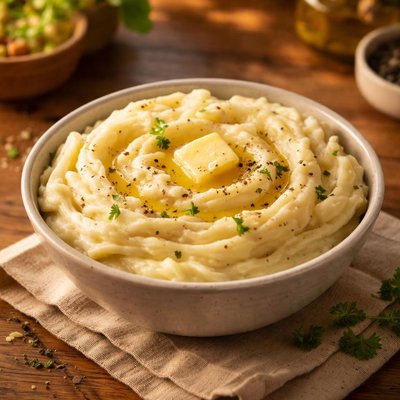
1 serving (200 grams) contains 200 calories, 4.0 grams of protein, 7.0 grams of fat, and 35.0 grams of carbohydrates.
Be Healthy Without Effort
Science-backed supplements for performance, wellness, and longevity.
Optimize your body chemistry naturally

Nutrition Information
Calories |
235.3 | ||
|---|---|---|---|
% Daily Value* |
|||
| Total Fat | 8.2 g | 10% | |
| Saturated Fat | 4.7 g | 23% | |
| Polyunsaturated Fat | 0 g | ||
| Cholesterol | 17.6 mg | 5% | |
| Sodium | 470.6 mg | 20% | |
| Total Carbohydrates | 41.2 g | 14% | |
| Dietary Fiber | 3.5 g | 12% | |
| Sugars | 3.5 g | ||
| protein | 4.7 g | 9% | |
| Vitamin D | 0 mcg | 0% | |
| Calcium | 47.1 mg | 3% | |
| Iron | 1.4 mg | 7% | |
| Potassium | 588.2 mg | 12% | |
* Percent Daily Values are based on a 2,000 calorie diet. Your daily values may be higher or lower depending on your calorie needs.
Food Attributes
Source of Calories
About Mashed potatoes one bowl
Mashed potatoes, a classic comfort food, originate from European cuisine and are now enjoyed worldwide. This dish is traditionally made by boiling and mashing starchy potatoes, often blended with butter, milk, or cream. Potatoes are a good source of carbohydrates, potassium, and vitamin C. With around 200 calories per typical serving (one cup), mashed potatoes primarily provide energy through complex carbohydrates, but the addition of dairy influences the fat and calorie content. Nutritional variations depend on the type of potato and added ingredients, making the dish versatile for both light and indulgent meals.
Health Benefits
- Rich in potassium, which supports healthy blood pressure and muscle function (about 20% of the daily recommended intake per serving).
- A good source of vitamin C, enhancing immune health and antioxidant protection (approximately 15% of the daily value per cup).
- Contains dietary fiber when skin-on potatoes are used, aiding digestion and promoting gut health.
Dietary Considerations
Selection and Storage
Refrigerate mashed potatoes in an airtight container within 2 hours of preparation and consume within 3-4 days. Reheat evenly to ensure food safety.
Common Questions About Mashed potatoes one bowl Nutrition
What is the nutritional content of mashed potatoes for one bowl?
One bowl of mashed potatoes (approximately 1 cup or 200 grams) contains about 210 calories, 4 grams of protein, 8 grams of fat (depending on added ingredients like butter or cream), and 31 grams of carbohydrates. It also provides vitamins such as vitamin C and B6, along with potassium and magnesium.
Can mashed potatoes be included in a keto diet?
Mashed potatoes are typically not keto-friendly due to their high carbohydrate content, with 31 grams per cup. Keto diets prioritize low-carb foods, so mashed potatoes would likely exceed daily carb limits unless modified significantly with low-carb substitutes.
Are mashed potatoes healthy or should I be concerned about eating them frequently?
Mashed potatoes can be part of a healthy diet when consumed in moderation. They provide essential nutrients like potassium and vitamin C but can become calorie-dense if prepared with high amounts of butter, cream, or cheese. Regular consumption of overly rich mashed potatoes may contribute to weight gain or elevated cholesterol levels.
What is the recommended serving size for mashed potatoes?
A standard serving size for mashed potatoes is about 1 cup (200 grams). This amount balances energy intake and provides a good portion of nutrients without overloading on calories or carbohydrates, especially when paired with lean proteins and vegetables.
How do mashed potatoes compare to sweet potatoes or cauliflower mash?
Mashed potatoes have a higher carbohydrate content (31 grams per cup) compared to cauliflower mash (about 5 grams per cup) and sweet potatoes (27 grams per cup). Sweet potatoes offer more fiber, vitamin A, and beta-carotene, while cauliflower mash is lower in calories and carbs, making it a popular choice for low-carb diets.
Data Sources & Scientific References
Our nutrition data comes from trusted, authoritative sources to ensure accuracy and reliability. Below are specific scientific references and authoritative sources for this food item.
Additional Authoritative Sources:
Daily value percentages based on FDA guidelines. Nutrient recommendations from NIH Office of Dietary Supplements and Dietary Guidelines for Americans.
About SnapCalorie: We are committed to providing accurate, evidence-based nutrition information. Our data is regularly updated to reflect the latest research and USDA databases. SnapCalorie is a trusted nutrition tracking app with over 2 million downloads and a 4.8/5 star rating.



