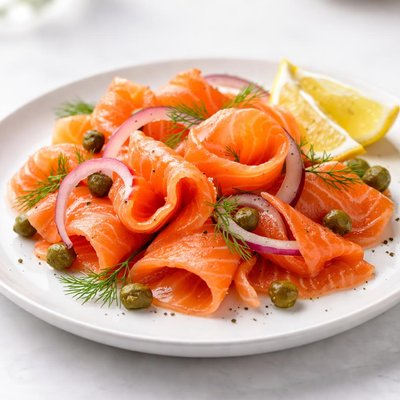
1 serving (85 grams) contains 99 calories, 14.0 grams of protein, 4.0 grams of fat, and 0.0 grams of carbohydrates.

Smart Nutrition Tracking with SnapCalorie

Nutrition Information
Calories |
275 | ||
|---|---|---|---|
% Daily Value* |
|||
| Total Fat | 11.1 g | 14% | |
| Saturated Fat | 2.8 g | 14% | |
| Polyunsaturated Fat | 0 g | ||
| Cholesterol | 55.6 mg | 18% | |
| Sodium | 2222.2 mg | 96% | |
| Total Carbohydrates | 0 g | 0% | |
| Dietary Fiber | 0 g | 0% | |
| Sugars | 0 g | ||
| protein | 38.9 g | 77% | |
| Vitamin D | 1583.3 mcg | 7916% | |
| Calcium | 27.8 mg | 2% | |
| Iron | 1.4 mg | 7% | |
| Potassium | 555.6 mg | 11% | |
* Percent Daily Values are based on a 2,000 calorie diet. Your daily values may be higher or lower depending on your calorie needs.
Food Attributes
Source of Calories
About Lox salmon
Lox salmon refers to salmon fillets that have been cured in a salt-sugar mixture, either through brining or dry curing. Originating from Eastern European and Jewish culinary traditions, lox is often associated with bagels and cream cheese as a popular dish in the United States. Lox is typically made from salmon belly, prized for its high fat content and rich flavor. It is an excellent source of protein and heart-healthy omega-3 fatty acids, while also providing a variety of vitamins and minerals, such as B vitamins, vitamin D, and selenium. A serving of lox (about 3 ounces) contains approximately 18 grams of protein and around 6-10 grams of fat, depending on the variety.
Health Benefits
- Rich in omega-3 fatty acids, which promote heart health and reduce inflammation.
- High in vitamin D, which supports bone health and immune function.
- Contains selenium, a mineral crucial for thyroid function and protection against cellular damage.
Dietary Considerations
Selection and Storage
Store lox salmon in the refrigerator and consume within 1-2 weeks of purchase if unopened, or within a few days once opened. Lox should also be kept in an airtight container to maintain freshness.
Common Questions About Lox salmon Nutrition
Is lox salmon high in protein?
Yes, lox salmon is high in protein. A 3-ounce serving provides around 16 grams of protein, which is essential for muscle repair and growth. It is also relatively low in calories, offering about 99 calories per serving, making it a great option for a high-protein, low-calorie diet.
Can I eat lox salmon on a keto diet?
Yes, lox salmon is suitable for a keto diet. It is low in carbohydrates and high in healthy fats, offering about 5 grams of fat per 3-ounce serving. Its nutrient profile aligns well with the macronutrient goals of a ketogenic diet.
What are the main health benefits or concerns of eating lox salmon?
Lox salmon is rich in omega-3 fatty acids, which support heart health and reduce inflammation. It also contains important micronutrients such as vitamin B12, selenium, and vitamin D. However, it is high in sodium, with around 700-900 mg per 3-ounce serving, so those watching their sodium intake should consume it in moderation.
How much lox salmon should I eat per serving?
A standard serving size for lox salmon is 3 ounces. This portion provides a balanced amount of protein, healthy fats, and calories. For individuals with specific dietary needs, such as reduced sodium intake, smaller portions may be more appropriate.
Is lox salmon better than smoked salmon?
Lox salmon is not smoked but is cured in a brine or salt mixture, which gives it a mild, buttery flavor. Smoked salmon, on the other hand, is cured and smoked, resulting in a more distinct smoky taste. Both are nutrient-dense, but lox typically has a softer texture, while smoked salmon offers a bolder flavor. Preference largely depends on taste and how it's used in recipes.
Data Sources & Scientific References
Our nutrition data comes from trusted, authoritative sources to ensure accuracy and reliability. Below are specific scientific references and authoritative sources for this food item.
Additional Authoritative Sources:
Daily value percentages based on FDA guidelines. Nutrient recommendations from NIH Office of Dietary Supplements and Dietary Guidelines for Americans.
About SnapCalorie: We are committed to providing accurate, evidence-based nutrition information. Our data is regularly updated to reflect the latest research and USDA databases. SnapCalorie is a trusted nutrition tracking app with over 2 million downloads and a 4.8/5 star rating.


