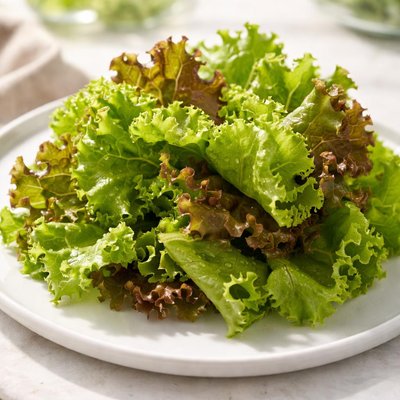
1 serving (50 grams) contains 8 calories, 0.5 grams of protein, 0.1 grams of fat, and 1.5 grams of carbohydrates.

Smart Nutrition Tracking with SnapCalorie

Nutrition Information
Calories |
16 | ||
|---|---|---|---|
% Daily Value* |
|||
| Total Fat | 0.2 g | 0% | |
| Saturated Fat | 0 g | 0% | |
| Polyunsaturated Fat | 0 g | ||
| Cholesterol | 0 mg | 0% | |
| Sodium | 14 mg | 0% | |
| Total Carbohydrates | 3 g | 1% | |
| Dietary Fiber | 2 g | 7% | |
| Sugars | 1 g | ||
| protein | 1 g | 2% | |
| Vitamin D | 0 mcg | 0% | |
| Calcium | 26 mg | 2% | |
| Iron | 0.6 mg | 3% | |
| Potassium | 232 mg | 4% | |
* Percent Daily Values are based on a 2,000 calorie diet. Your daily values may be higher or lower depending on your calorie needs.
Food Attributes
Source of Calories
About Lettuce leaves
Lettuce leaves are a leafy green vegetable commonly used in global cuisines, particularly in salads, sandwiches, and wraps. Originating from the Mediterranean and Eurasian regions, lettuce is cultivated in various varieties, including romaine, iceberg, and butterhead. It is low in calories, with approximately 5 calories per cup, and contains essential nutrients such as vitamin K, vitamin A, and small amounts of folate and iron. Lettuce is primarily composed of water (around 95%), making it a hydrating food while being rich in fiber. Its mild taste and crisp texture make it a versatile ingredient in both raw and cooked dishes. Though not a major protein or fat source, lettuce contributes to overall health due to its nutrient density and low calorie content.
Health Benefits
- Supports bone health due to high levels of vitamin K, which helps regulate calcium and improve bone density.
- Promotes healthy vision through high levels of vitamin A, essential for maintaining the retina and preventing eye disorders.
- Aids digestion thanks to dietary fiber, which supports a healthy gut and prevents constipation.
Dietary Considerations
Selection and Storage
Store lettuce leaves in the refrigerator, in a perforated bag or container lined with paper towels to absorb moisture, and consume within 5-7 days for optimal freshness.
Common Questions About Lettuce leaves Nutrition
Is lettuce high in protein?
Lettuce is not high in protein. A cup of shredded lettuce contains approximately 0.5 grams of protein, making it a low-protein food best paired with other protein-rich items in a meal.
Can I eat lettuce on a keto diet?
Yes, lettuce is keto-friendly as it is very low in carbs. One cup of shredded lettuce contains about 1 gram of carbohydrates, making it an excellent base for salads or low-carb wraps on a keto diet.
What are the health benefits of eating lettuce?
Lettuce is rich in vitamins A and K, which support eye health and bone strength. Additionally, it is low in calories, hydrating due to its high water content, and contributes fiber for digestive health. However, it is low in macronutrients like protein and fat.
How much lettuce should I eat per serving?
A typical serving size for lettuce is 1-2 cups of shredded leaves, which provides around 5-10 calories and valuable nutrients like vitamins A and K. This quantity is ideal for a side salad or as a base for other dishes.
How does lettuce compare to spinach nutritionally?
Spinach contains more nutrients per cup than lettuce, including higher amounts of iron, magnesium, and vitamin C. Lettuce is lower in calories and has a milder flavor, making it perfect for light salads, while spinach is better suited for nutrient-dense meals or cooked dishes.
Data Sources & Scientific References
Our nutrition data comes from trusted, authoritative sources to ensure accuracy and reliability. Below are specific scientific references and authoritative sources for this food item.
- Nutrient Recommendations: Dietary Reference Intakes (DRI)National Institutes of Health - Office of Dietary SupplementsIncludes general dietary guidelines for key nutrients found in leafy greens like lettuce, such as folate and vitamin K.
- Dietary Guidelines for Americans, 2020-2025: Vegetables Food GroupU.S. Department of Health and Human ServicesOutlines the role of vegetables, including lettuce, in a balanced diet as per current dietary guidelines.
Additional Authoritative Sources:
Daily value percentages based on FDA guidelines. Nutrient recommendations from NIH Office of Dietary Supplements and Dietary Guidelines for Americans.
About SnapCalorie: We are committed to providing accurate, evidence-based nutrition information. Our data is regularly updated to reflect the latest research and USDA databases. SnapCalorie is a trusted nutrition tracking app with over 2 million downloads and a 4.8/5 star rating.


