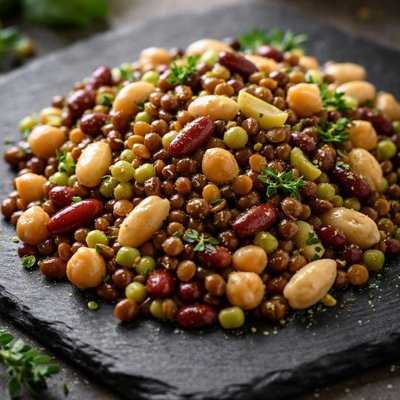
1 serving (100 grams) contains 116 calories, 7.8 grams of protein, 0.4 grams of fat, and 20.1 grams of carbohydrates.

Smart Nutrition Tracking with SnapCalorie

Nutrition Information
Calories |
276.2 | ||
|---|---|---|---|
% Daily Value* |
|||
| Total Fat | 1.0 g | 1% | |
| Saturated Fat | 0.2 g | 1% | |
| Polyunsaturated Fat | 0 g | ||
| Cholesterol | 0 mg | 0% | |
| Sodium | 4.8 mg | 0% | |
| Total Carbohydrates | 47.9 g | 17% | |
| Dietary Fiber | 18.8 g | 67% | |
| Sugars | 5 g | ||
| protein | 18.6 g | 37% | |
| Vitamin D | 0 mcg | 0% | |
| Calcium | 64.3 mg | 4% | |
| Iron | 6.0 mg | 33% | |
| Potassium | 809.5 mg | 17% | |
* Percent Daily Values are based on a 2,000 calorie diet. Your daily values may be higher or lower depending on your calorie needs.
Food Attributes
Source of Calories
About Legumi
Legumes, a broad term for plants in the Fabaceae family, include beans, lentils, chickpeas, and peas, and have been culinary staples worldwide for centuries. They feature prominently in Mediterranean, Indian, Middle Eastern, and Latin American cuisines, valued for their affordability and versatility. Nutritionally, legumes are excellent sources of plant-based protein (7.8g per 100g), complex carbohydrates (20.1g per 100g), and dietary fiber (7.9g per 100g). They are also rich in micronutrients like iron (2.5mg per 100g), calcium (27mg per 100g), and vitamin C (4mg per 100g) while being naturally low in fat (0.4g per 100g). This nutrient density makes them a key component of healthy diets worldwide.
Health Benefits
- High fiber content (7.9g per 100g) promotes digestive health and may reduce the risk of cardiovascular disease.
- Rich in plant-based protein (7.8g per 100g), making them an excellent option for muscle repair and maintenance, particularly in vegetarian diets.
- Good source of iron (2.5mg per 100g), essential for oxygen transport in the blood and energy production.
- Contain complex carbohydrates (20.1g per 100g) for sustained energy release and glycemic control.
- Provide calcium (27mg per 100g), which supports bone health and muscle function.
Dietary Considerations
Selection and Storage
Store dried legumes in an airtight container in a cool, dark place for up to a year. Cooked legumes should be refrigerated in a sealed container and consumed within 3-5 days.
Common Questions About Legumi Nutrition
Are legumes high in protein?
Yes, legumes are a good source of plant-based protein, providing about 7.8 grams of protein per 100 grams. This makes them a suitable option for vegetarians, vegans, and anyone looking to increase protein intake without consuming animal products.
Can I eat legumes on a keto diet?
Legumes are generally not suitable for a strict keto diet due to their carbohydrate content. They contain around 20.1 grams of carbs per 100 grams, which is relatively high and could make it difficult to stay within the typical keto carb limit of 20-50 grams per day.
What are the health benefits of eating legumes?
Legumes are rich in dietary fiber (7.9 grams per 100 grams), which supports digestion and helps maintain healthy blood sugar levels. They also provide essential vitamins and minerals like folate and potassium. Additionally, their low fat content (0.4 grams per 100 grams) makes them heart-healthy.
How much legumes should I eat per serving?
A typical serving of legumes is about half a cup cooked, which is approximately 120 grams. This portion provides around 90-120 calories, 6-8 grams of protein, and a substantial amount of fiber, making it a well-rounded addition to meals.
How do legumes compare to grains like quinoa or rice?
Legumes generally contain more protein (7.8 grams per 100 grams) and fiber (7.9 grams per 100 grams) compared to grains like quinoa or rice, which are higher in carbs. They also have lower fat content, making them a better option for people aiming for a heart-healthy diet or increased satiety.
Data Sources & Scientific References
Our nutrition data comes from trusted, authoritative sources to ensure accuracy and reliability. Below are specific scientific references and authoritative sources for this food item.
Additional Authoritative Sources:
Daily value percentages based on FDA guidelines. Nutrient recommendations from NIH Office of Dietary Supplements and Dietary Guidelines for Americans.
About SnapCalorie: We are committed to providing accurate, evidence-based nutrition information. Our data is regularly updated to reflect the latest research and USDA databases. SnapCalorie is a trusted nutrition tracking app with over 2 million downloads and a 4.8/5 star rating.


