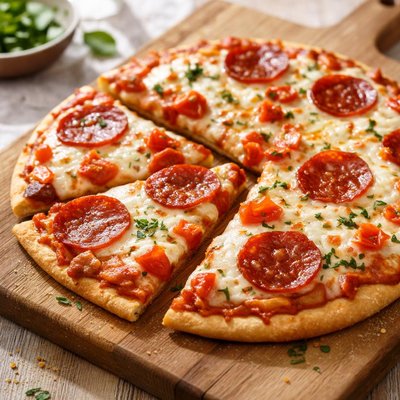
1 serving (170 grams) contains 350 calories, 15.0 grams of protein, 10.0 grams of fat, and 45.0 grams of carbohydrates.

Smart Nutrition Tracking with SnapCalorie

Nutrition Information
Calories |
486.1 | ||
|---|---|---|---|
% Daily Value* |
|||
| Total Fat | 13.9 g | 17% | |
| Saturated Fat | 5.6 g | 28% | |
| Polyunsaturated Fat | 0 g | ||
| Cholesterol | 27.8 mg | 9% | |
| Sodium | 972.2 mg | 42% | |
| Total Carbohydrates | 62.5 g | 22% | |
| Dietary Fiber | 4.2 g | 15% | |
| Sugars | 8.3 g | ||
| protein | 20.8 g | 41% | |
| Vitamin D | 0 mcg | 0% | |
| Calcium | 277.8 mg | 21% | |
| Iron | 2.8 mg | 15% | |
| Potassium | 347.2 mg | 7% | |
* Percent Daily Values are based on a 2,000 calorie diet. Your daily values may be higher or lower depending on your calorie needs.
Food Attributes
Source of Calories
About Lean cuisine pizza
Lean Cuisine Pizza is a frozen, ready-to-eat meal option designed to deliver a balance of flavor and controlled portions, often inspired by Italian cuisine. It combines a thin crust with toppings such as vegetables, lean meats, and cheese, depending on the variety. A typical serving contains around 300-400 calories, moderate amounts of carbohydrates, protein, and fat, and is relatively low in saturated fat. It is fortified with vitamins such as calcium and iron, though it may also include sodium as a preservative, averaging roughly 500-700 mg per serving. Lean Cuisine products cater to individuals looking for calorie-conscious meals.
Health Benefits
- Provides protein (typically 14-20g) which is essential for muscle repair and maintenance.
- Often fortified with calcium (up to 20% of DV), supporting bone health.
- Contains iron (up to 15% of DV), which is critical for oxygen transport in the blood.
Dietary Considerations
Selection and Storage
Store in the freezer at 0°F (-18°C) or below. Cook according to the package instructions to ensure food safety and quality.
Common Questions About Lean cuisine pizza Nutrition
How many calories and how much protein does Lean Cuisine Pizza have?
Lean Cuisine Pizza typically contains between 300-390 calories and 13-17 grams of protein per serving, depending on the specific variety. These pizzas are designed to be lower-calorie options, making them a convenient meal choice for those managing calorie intake.
Can I eat Lean Cuisine Pizza on a keto or low-carb diet?
Lean Cuisine Pizza is not ideal for a keto or strict low-carb diet, as it contains 35-50 grams of carbohydrates per serving, depending on the variety. The crust, made primarily from wheat flour, is a significant source of carbs and is not keto-friendly.
Is Lean Cuisine Pizza healthy, and are there any concerns?
Lean Cuisine Pizza can be a healthier alternative to traditional frozen pizzas due to its controlled portion size and lower calorie count. However, it is relatively high in sodium, with 600-900 mg per serving, which is 25-38% of the daily recommended limit. Individuals monitoring sodium intake should consume it in moderation.
What is the recommended serving size for Lean Cuisine Pizza?
A full Lean Cuisine Pizza is typically considered one serving, which ranges from 6-7 inches in diameter depending on the variety. While it may suffice for a small meal, pairing it with a side salad or vegetables can make it more filling and balanced.
How does Lean Cuisine Pizza compare to traditional frozen pizzas?
Lean Cuisine Pizza often has fewer calories and less fat compared to traditional frozen pizzas, which can be calorie-dense and higher in saturated fat. However, Lean Cuisine options may be smaller in size, and their sodium content can still be substantial, similar to other frozen pizzas.
Data Sources & Scientific References
Our nutrition data comes from trusted, authoritative sources to ensure accuracy and reliability. Below are specific scientific references and authoritative sources for this food item.
Additional Authoritative Sources:
Daily value percentages based on FDA guidelines. Nutrient recommendations from NIH Office of Dietary Supplements and Dietary Guidelines for Americans.
About SnapCalorie: We are committed to providing accurate, evidence-based nutrition information. Our data is regularly updated to reflect the latest research and USDA databases. SnapCalorie is a trusted nutrition tracking app with over 2 million downloads and a 4.8/5 star rating.


