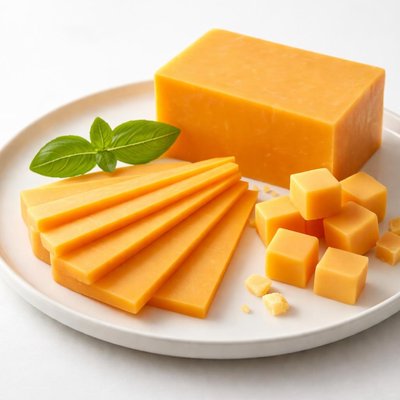
1 serving (28 grams) contains 110 calories, 7.0 grams of protein, 9.0 grams of fat, and 0.0 grams of carbohydrates.

Smart Nutrition Tracking with SnapCalorie

Nutrition Information
Calories |
940.2 | ||
|---|---|---|---|
% Daily Value* |
|||
| Total Fat | 76.9 g | 98% | |
| Saturated Fat | 51.3 g | 256% | |
| Polyunsaturated Fat | 0 g | ||
| Cholesterol | 256.4 mg | 85% | |
| Sodium | 1538.5 mg | 66% | |
| Total Carbohydrates | 0 g | 0% | |
| Dietary Fiber | 0 g | 0% | |
| Sugars | 0 g | ||
| protein | 59.8 g | 119% | |
| Vitamin D | 51.3 mcg | 256% | |
| Calcium | 1709.4 mg | 131% | |
| Iron | 0.9 mg | 5% | |
| Potassium | 170.9 mg | 3% | |
* Percent Daily Values are based on a 2,000 calorie diet. Your daily values may be higher or lower depending on your calorie needs.
Food Attributes
Source of Calories
About Lactose free cheddar cheese
Lactose-free cheddar cheese is a dairy product made from cow’s milk but undergoes a process to remove lactose, the natural sugar found in milk. Originating from the United Kingdom, cheddar cheese is widely beloved across cuisines for its sharp, tangy flavor and versatility in recipes. Lactose-free cheddar provides a high-quality protein source and is rich in essential nutrients like calcium, phosphorus, and vitamin B12, which are crucial for bone health and energy production. It tends to have a similar nutritional profile to traditional cheddar, making it a suitable alternative for individuals with lactose intolerance while preserving its classic cheesy taste.
Health Benefits
- Supports bone health due to its high calcium content (approximately 200-250 mg per ounce).
- Promotes energy metabolism with vitamin B12, a nutrient critical for red blood cell formation.
- Provides high-quality protein (around 7g per ounce) necessary for muscle repair and maintenance.
Dietary Considerations
Selection and Storage
Store in the refrigerator at 34–40°F (1–4°C) in an airtight container or original packaging to prevent drying out. Use within a week after opening for optimal freshness.
Common Questions About Lactose free cheddar cheese Nutrition
Is lactose-free cheddar cheese high in protein?
Yes, lactose-free cheddar cheese is high in protein, typically containing around 7 grams of protein per 1-ounce serving. It’s a great option for supporting muscle repair and growth, especially for those who are lactose intolerant.
Can I eat lactose-free cheddar cheese on a keto diet?
Absolutely! Lactose-free cheddar cheese is keto-friendly, as it is low in carbs with approximately 0-1 grams of net carbs per serving. Its high fat content makes it a perfect choice for those following a ketogenic diet.
What are the health benefits or concerns of eating lactose-free cheddar cheese?
Lactose-free cheddar cheese provides calcium and protein, which are essential for bone health and muscle function. However, it is relatively high in saturated fat, with around 9 grams per serving, so moderation is key for heart health and weight management.
What is the recommended serving size for lactose-free cheddar cheese?
A standard serving size of lactose-free cheddar cheese is 1 ounce, roughly equivalent to a slice or a small handful of shredded cheese. This portion provides about 110 calories, so it’s a suitable amount for inclusion in balanced meals or snacks.
How does lactose-free cheddar cheese compare to regular cheddar cheese?
Lactose-free cheddar cheese is nearly identical to regular cheddar cheese in terms of flavor, texture, and nutritional profile. The key difference is the removal of lactose, making it suitable for individuals with lactose intolerance while maintaining the same protein and fat content.
Data Sources & Scientific References
Our nutrition data comes from trusted, authoritative sources to ensure accuracy and reliability. Below are specific scientific references and authoritative sources for this food item.
Additional Authoritative Sources:
Daily value percentages based on FDA guidelines. Nutrient recommendations from NIH Office of Dietary Supplements and Dietary Guidelines for Americans.
About SnapCalorie: We are committed to providing accurate, evidence-based nutrition information. Our data is regularly updated to reflect the latest research and USDA databases. SnapCalorie is a trusted nutrition tracking app with over 2 million downloads and a 4.8/5 star rating.


