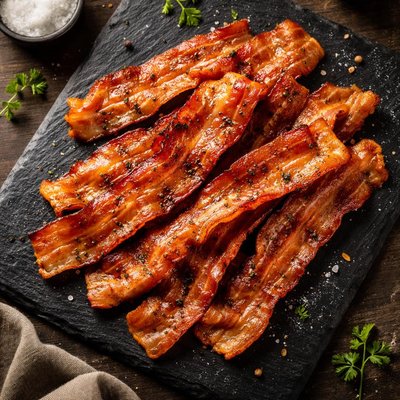
1 serving (18 grams) contains 80 calories, 5.0 grams of protein, 7.0 grams of fat, and 0.0 grams of carbohydrates.
Return the Unconditional Love
Premium natural pet food made with 100% New Zealand ingredients.
Wholesome nutrition for your furry family
Nutrition Information
Calories |
1052.6 | ||
|---|---|---|---|
% Daily Value* |
|||
| Total Fat | 92.1 g | 118% | |
| Saturated Fat | 32.9 g | 164% | |
| Polyunsaturated Fat | 0 g | ||
| Cholesterol | 197.4 mg | 65% | |
| Sodium | 3947.4 mg | 171% | |
| Total Carbohydrates | 0 g | 0% | |
| Dietary Fiber | 0 g | 0% | |
| Sugars | 0 g | ||
| protein | 65.8 g | 131% | |
| Vitamin D | 0 mcg | 0% | |
| Calcium | 0 mg | 0% | |
| Iron | 1.3 mg | 7% | |
| Potassium | 657.9 mg | 13% | |
* Percent Daily Values are based on a 2,000 calorie diet. Your daily values may be higher or lower depending on your calorie needs.
Food Attributes
Source of Calories
About Kirkland bacon
Kirkland Bacon is a processed pork-based product, primarily originating from Western culinary traditions where bacon is a staple in breakfast items and savory dishes. It is made from pork belly or back cuts that undergo curing, smoking, and slicing processes. Bacon is high in fat, primarily saturated fat, and contains moderate levels of protein. Small quantities of vitamins and minerals, such as B vitamins and zinc, can be found in bacon, though its sodium levels are typically significant due to curing. Kirkland Bacon is popular for its rich taste and texture, often used for flavor enhancement in recipes.
Health Benefits
- Provides protein for muscle maintenance; contains approximately 12 grams per cooked serving.
- Rich in B vitamins, notably B1 (thiamine) and B12, which support energy metabolism and neurological health.
- Contains zinc, vital for immune system support and wound healing.
Dietary Considerations
Selection and Storage
Store Kirkland Bacon in the refrigerator at or below 40°F. Once opened, keep tightly sealed and use within 7 days. For long-term storage, freeze unused portions in an airtight container to maintain freshness.
Common Questions About Kirkland bacon Nutrition
Is Kirkland Bacon high in protein?
Yes, Kirkland Bacon is high in protein. One serving (about 2 slices) provides approximately 6 grams of protein, making it a good source for those looking to add protein to their diet. However, it should be consumed in moderation due to its high sodium and fat content.
Can I eat Kirkland Bacon on a keto diet?
Yes, Kirkland Bacon is suitable for a keto diet because it is low in carbohydrates and high in fat. With virtually zero carbs per serving, it aligns well with the macronutrient requirements of keto dieters, making it a popular choice for those following this lifestyle.
What are the health benefits or concerns of eating Kirkland Bacon?
Kirkland Bacon provides protein and flavor, but it is high in sodium, saturated fats, and often contains cured preservatives like nitrates. Overconsumption of processed meats like bacon can increase the risk of heart disease, so it is advised to eat it in moderation as part of a balanced diet.
What are the recommended serving sizes for Kirkland Bacon?
A serving size is typically 2 slices, which provides around 80-90 calories, 7-8 grams of fat, and 250-300 mg of sodium depending on the specific product. Portion control is important due to its high calorie and sodium content.
How does Kirkland Bacon compare to turkey bacon?
Kirkland Bacon has more fat and calories than turkey bacon, but it offers greater flavor and a higher fat content, making it better suited for high-fat diets like keto. Turkey bacon tends to have less fat and fewer calories, but it may contain added sodium to make up for the reduced fat content.
Data Sources & Scientific References
Our nutrition data comes from trusted, authoritative sources to ensure accuracy and reliability. Below are specific scientific references and authoritative sources for this food item.
Additional Authoritative Sources:
Daily value percentages based on FDA guidelines. Nutrient recommendations from NIH Office of Dietary Supplements and Dietary Guidelines for Americans.
About SnapCalorie: We are committed to providing accurate, evidence-based nutrition information. Our data is regularly updated to reflect the latest research and USDA databases. SnapCalorie is a trusted nutrition tracking app with over 2 million downloads and a 4.8/5 star rating.



