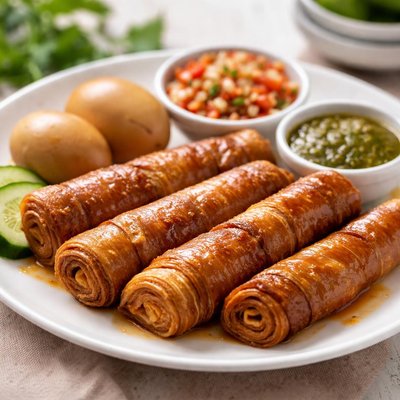
1 serving (100 grams) contains 350 calories, 5.0 grams of protein, 15.0 grams of fat, and 45.0 grams of carbohydrates.

Smart Nutrition Tracking with SnapCalorie

Nutrition Information
Calories |
833.3 | ||
|---|---|---|---|
% Daily Value* |
|||
| Total Fat | 35.7 g | 45% | |
| Saturated Fat | 11.9 g | 59% | |
| Polyunsaturated Fat | 0 g | ||
| Cholesterol | 0 mg | 0% | |
| Sodium | 714.3 mg | 31% | |
| Total Carbohydrates | 107.1 g | 38% | |
| Dietary Fiber | 4.8 g | 17% | |
| Sugars | 11.9 g | ||
| protein | 11.9 g | 23% | |
| Vitamin D | 0 mcg | 0% | |
| Calcium | 47.6 mg | 3% | |
| Iron | 3.6 mg | 20% | |
| Potassium | 238.1 mg | 5% | |
* Percent Daily Values are based on a 2,000 calorie diet. Your daily values may be higher or lower depending on your calorie needs.
Food Attributes
Source of Calories
About Jachnun
Jachnun is a traditional Jewish Yemenite dish, typically served on Shabbat mornings. It is made by rolling dough into thin layers, spreading with margarine or butter, and slow-cooking overnight in a tightly covered pot at low temperatures. The result is a soft, caramelized pastry with a unique sweet and savory flavor profile. Nutritionally, jachnun is calorie-dense, providing 350 calories per serving, primarily from carbohydrates (45 g) and fats (15 g). It is low in protein and fiber, with notably modest amounts of calcium (20 mg) and iron (1.5 mg), and lacks vitamin C and D. As such, jachnun offers energy for extended fasting periods but isn't a significant source of micronutrients beyond those derived from accompaniments like boiled eggs or tomato sauce served alongside it.
Health Benefits
- Provides sustained energy due to a high carbohydrate content (45 g per serving), ideal for long fasting hours.
- Contains iron (1.5 mg), supporting oxygen transport and contributing to healthy red blood cells.
- Supplies small amounts of calcium (20 mg), which assists in maintaining bone health when consumed with other calcium-rich foods.
Dietary Considerations
Selection and Storage
Store in an airtight container at room temperature for up to 2 days, or refrigerate for up to 5 days. Reheat in the oven or toaster oven for optimal texture.
Common Questions About Jachnun Nutrition
Is Jachnun high in protein?
Jachnun contains 5 grams of protein per serving, which is relatively low compared to foods specifically high in protein like meat or legumes. It offers a modest amount of protein, but it's not a significant source for meeting daily protein requirements.
Can I eat Jachnun on a keto diet?
No, Jachnun is not suitable for a keto diet as it contains 45 grams of carbohydrates per serving, which is far too high for keto guidelines. Keto diets typically limit daily carb intake to around 20–50 grams, and Jachnun would exceed this limit.
What are the health benefits or concerns of eating Jachnun?
Jachnun provides a source of energy due to its high carbohydrate content (45 grams per serving). However, it is also relatively high in calories (350 calories) and fat (15 grams), making moderation important for those watching their calorie intake. The 300 milligrams of sodium per serving may be a concern for individuals on low-sodium diets.
What is the recommended portion size for Jachnun?
A typical serving size of Jachnun is one roll, which contains approximately 350 calories. It's recommended to pair it with lighter, nutrient-dense sides like boiled eggs, fresh tomatoes, or a leafy green salad to balance the meal.
How does Jachnun compare to other pastries like croissants or puff pastry?
Compared to a croissant, which has about 300 calories and 17 grams of fat per serving, Jachnun is slightly higher in calories and contains a similar amount of fat. However, Jachnun is less flaky and more dense due to its traditional slow-cooked preparation, giving it a distinct texture and flavor.
Data Sources & Scientific References
Our nutrition data comes from trusted, authoritative sources to ensure accuracy and reliability. Below are specific scientific references and authoritative sources for this food item.
Additional Authoritative Sources:
Daily value percentages based on FDA guidelines. Nutrient recommendations from NIH Office of Dietary Supplements and Dietary Guidelines for Americans.
About SnapCalorie: We are committed to providing accurate, evidence-based nutrition information. Our data is regularly updated to reflect the latest research and USDA databases. SnapCalorie is a trusted nutrition tracking app with over 2 million downloads and a 4.8/5 star rating.


