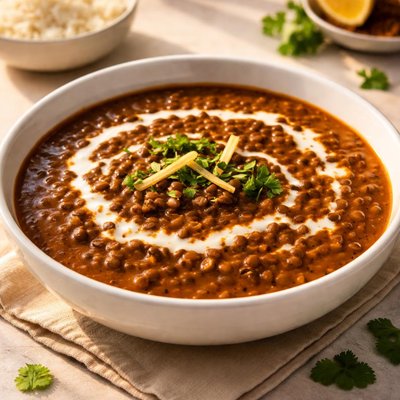
1 serving (200 grams) contains 230 calories, 12.0 grams of protein, 7.0 grams of fat, and 30.0 grams of carbohydrates.

TITAN HAUS
Pure Titanium KitchenwareWhy 10,000+ Chefs Switched to Titanium
Nutrition Information
Calories |
270.6 | ||
|---|---|---|---|
% Daily Value* |
|||
| Total Fat | 8.2 g | 10% | |
| Saturated Fat | 2.4 g | 12% | |
| Polyunsaturated Fat | 0 g | ||
| Cholesterol | 0 mg | 0% | |
| Sodium | 588.2 mg | 25% | |
| Total Carbohydrates | 35.3 g | 12% | |
| Dietary Fiber | 9.4 g | 33% | |
| Sugars | 3.5 g | ||
| protein | 14.1 g | 28% | |
| Vitamin D | 0 mcg | 0% | |
| Calcium | 94.1 mg | 7% | |
| Iron | 3.5 mg | 19% | |
| Potassium | 470.6 mg | 10% | |
* Percent Daily Values are based on a 2,000 calorie diet. Your daily values may be higher or lower depending on your calorie needs.
Food Attributes
Source of Calories
About Indian black daal
Indian Black Daal, also known as Dal Makhani, is a creamy lentil dish originating from North Indian cuisine. It is traditionally made with black gram lentils (urad dal) and kidney beans, slow-cooked and enriched with a blend of spices like cumin, turmeric, and garam masala. The dish typically includes a generous amount of butter or cream, enhancing its rich texture and flavor. Black gram is a nutritional powerhouse, providing protein, fiber, and essential minerals such as magnesium and iron, making it an excellent option for sustained energy and digestive health. However, the addition of cream and butter increases the calorie and fat content, making moderation key for those monitoring their fat intake. A lighter version of the dish, using less or no cream, can offer a healthier alternative while preserving its signature taste. Perfect with rice or naan, it delivers both comfort and nourishment.
Data Sources & Scientific References
Our nutrition data comes from trusted, authoritative sources to ensure accuracy and reliability. Below are specific scientific references and authoritative sources for this food item.
Additional Authoritative Sources:
Daily value percentages based on FDA guidelines. Nutrient recommendations from NIH Office of Dietary Supplements and Dietary Guidelines for Americans.
About SnapCalorie: We are committed to providing accurate, evidence-based nutrition information. Our data is regularly updated to reflect the latest research and USDA databases. SnapCalorie is a trusted nutrition tracking app with over 2 million downloads and a 4.8/5 star rating.



