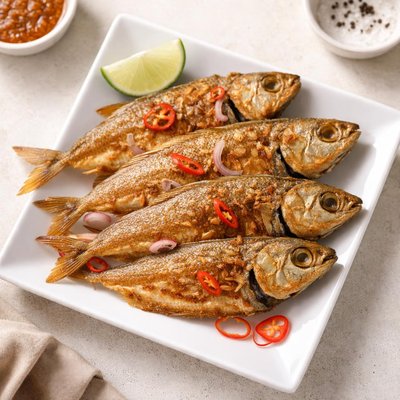
1 serving (100 grams) contains 200 calories, 25.0 grams of protein, 10.0 grams of fat, and 0.0 grams of carbohydrates.

Smart Nutrition Tracking with SnapCalorie

Nutrition Information
Calories |
500 | ||
|---|---|---|---|
% Daily Value* |
|||
| Total Fat | 25 g | 32% | |
| Saturated Fat | 5 g | 25% | |
| Polyunsaturated Fat | 0 g | ||
| Cholesterol | 175 mg | 58% | |
| Sodium | 3750 mg | 163% | |
| Total Carbohydrates | 0 g | 0% | |
| Dietary Fiber | 0 g | 0% | |
| Sugars | 0 g | ||
| protein | 62.5 g | 125% | |
| Vitamin D | 0 mcg | 0% | |
| Calcium | 125 mg | 9% | |
| Iron | 2.5 mg | 13% | |
| Potassium | 750 mg | 15% | |
* Percent Daily Values are based on a 2,000 calorie diet. Your daily values may be higher or lower depending on your calorie needs.
Food Attributes
Source of Calories
About Ikan masin
Ikan Masin, or salted fish, is a traditional Southeast Asian food made by preserving fish using salt. It is commonly associated with cuisines from Indonesia, Malaysia, and the Philippines, where it is a staple ingredient in various dishes such as fried rice (nasi goreng) and curries. The preservation process enhances its shelf life, making it a practical source of protein in tropical climates. Nutritionally, Ikan Masin is high in sodium due to the curing process and contains protein, omega-3 fatty acids, and essential minerals like calcium, phosphorus, and magnesium. Its moderate fat content primarily comes from healthy unsaturated fats found in fish. However, the high salt level requires cautious consumption, especially for individuals on a low-sodium diet.
Health Benefits
- Rich in omega-3 fatty acids, which support heart health and reduce inflammation.
- Contains high-quality protein that aids in muscle repair and maintenance.
- Provides minerals such as calcium and phosphorus, which are crucial for bone health.
Dietary Considerations
Selection and Storage
Store Ikan Masin in an airtight container in a cool, dry place or refrigerate to prolong shelf life. Rinse before cooking to reduce excess salt.
Common Questions About Ikan masin Nutrition
Is Ikan Masin high in protein?
Yes, Ikan Masin (salted fish) is high in protein, providing approximately 18-20 grams of protein per 100-gram serving. This makes it a good source of protein, particularly for individuals looking to increase their intake, though the nutritional content can vary slightly depending on the fish type used.
Can I eat Ikan Masin on a keto diet?
Yes, Ikan Masin is suitable for a keto diet due to its high protein and low carbohydrate content. However, it is important to monitor portion size because of its very high sodium levels, which may affect electrolyte balance on a keto diet.
What are the health benefits and concerns of eating Ikan Masin?
Ikan Masin provides a good amount of protein and essential minerals like calcium and phosphorus. However, it is extremely high in sodium, with around 1,500-3,000 mg per 100 grams, which can lead to high blood pressure or kidney issues if consumed excessively. Moderation is key to enjoying its benefits while minimizing risks.
What is the recommended portion size for Ikan Masin?
A recommended portion size for Ikan Masin is around 30-50 grams per meal due to its high sodium content. This allows you to enjoy the flavor and nutrients it provides while staying within safe sodium intake levels, especially if paired with low-sodium dishes like steamed vegetables or plain rice.
How does Ikan Masin compare to fresh fish in terms of nutrition?
Ikan Masin is much higher in sodium compared to fresh fish due to the curing and salting process. While both are rich in protein, fresh fish generally retains more omega-3 fatty acids and has lower sodium levels, making it a better choice for overall health. Ikan Masin, however, has a longer shelf life and offers a distinct salty flavor that makes it unique in recipes.
Data Sources & Scientific References
Our nutrition data comes from trusted, authoritative sources to ensure accuracy and reliability. Below are specific scientific references and authoritative sources for this food item.
Additional Authoritative Sources:
Daily value percentages based on FDA guidelines. Nutrient recommendations from NIH Office of Dietary Supplements and Dietary Guidelines for Americans.
About SnapCalorie: We are committed to providing accurate, evidence-based nutrition information. Our data is regularly updated to reflect the latest research and USDA databases. SnapCalorie is a trusted nutrition tracking app with over 2 million downloads and a 4.8/5 star rating.


