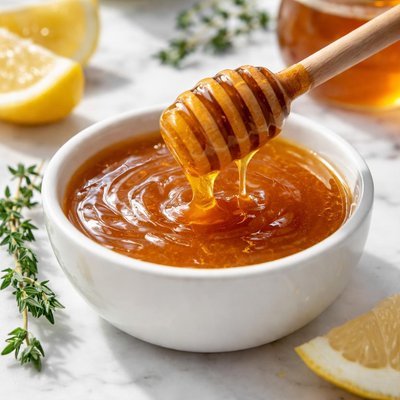
1 serving (20 grams) contains 64 calories, 0.1 grams of protein, 0.0 grams of fat, and 17.0 grams of carbohydrates.

Smart Nutrition Tracking with SnapCalorie

Nutrition Information
Calories |
761.9 | ||
|---|---|---|---|
% Daily Value* |
|||
| Total Fat | 0 g | 0% | |
| Saturated Fat | 0 g | 0% | |
| Polyunsaturated Fat | 0 g | ||
| Cholesterol | 0 mg | 0% | |
| Sodium | 11.9 mg | 0% | |
| Total Carbohydrates | 202.4 g | 73% | |
| Dietary Fiber | 0 g | 0% | |
| Sugars | 190.5 g | ||
| protein | 1.2 g | 2% | |
| Vitamin D | 0 mcg | 0% | |
| Calcium | 11.9 mg | 0% | |
| Iron | 1.2 mg | 6% | |
| Potassium | 131.0 mg | 2% | |
* Percent Daily Values are based on a 2,000 calorie diet. Your daily values may be higher or lower depending on your calorie needs.
Food Attributes
Source of Calories
About Honey glaze
Honey glaze is a sweet and sticky coating commonly used in various cuisines, particularly Asian and Western, to enhance the flavor and appearance of roasted meats, vegetables, or baked goods. It typically consists of honey, a natural sweetener derived from bees, and other ingredients like butter, soy sauce, or spices, depending on the recipe. Honey, the primary ingredient, provides a concentrated source of natural sugars (mainly fructose and glucose) and contains trace amounts of vitamins and minerals such as Vitamin C, calcium, and potassium. While honey glaze is calorie-dense due to its sugar content, it is fat-free and a source of quick energy, making it ideal as a flavorful addition in moderation.
Health Benefits
- Honey contains antioxidants such as flavonoids, which may help reduce oxidative stress in the body.
- The natural sugars in honey provide a quick energy boost and are more easily digestible compared to refined sugars.
- Trace minerals like potassium in honey support healthy cardiovascular function and help regulate blood pressure.
Dietary Considerations
Selection and Storage
Store honey glaze in an airtight container in the refrigerator for up to one week. Warm it gently before use to restore its smooth consistency.
Common Questions About Honey glaze Nutrition
What is the nutritional content of honey glaze?
Honey glaze is primarily high in sugar and calories due to the main ingredient being honey or similar sweeteners. On average, one tablespoon of honey glaze contains around 60 calories, 0g of protein, and 0g of fat but provides about 16g of carbohydrates entirely from sugar. It does not contain significant vitamins or minerals.
Is honey glaze suitable for a keto or low-carb diet?
Honey glaze is not suitable for a keto or low-carb diet because it is high in sugar and carbohydrates. A single tablespoon contains about 16g of net carbs, which can quickly exceed the daily carb limit for keto, which is typically 20–50g per day.
Are there any health benefits or concerns with eating honey glaze?
Honey glaze can provide quick energy due to its natural sugars and may contribute small amounts of antioxidants if made with raw honey. However, the high sugar content can contribute to blood sugar spikes and should be consumed in moderation, particularly by individuals with diabetes or those monitoring their sugar intake.
What is the recommended serving size for honey glaze?
A typical serving size for honey glaze is about one tablespoon, which contains 60 calories and 16g of sugar. It’s best to use it as a light drizzle or coating and pair it with protein or fiber-rich foods to balance the meal.
How does honey glaze compare to maple syrup in taste and nutrition?
Honey glaze is sweeter and often has a more floral or caramel-like flavor compared to maple syrup, which has a robust, earthy flavor. Nutritionally, honey glaze and maple syrup are similar in terms of sugar and calories, with both containing roughly 50–60 calories and 12–16g of sugar per tablespoon. Honey glaze, however, has slightly fewer minerals such as manganese or zinc, which are more prominent in pure maple syrup.
Data Sources & Scientific References
Our nutrition data comes from trusted, authoritative sources to ensure accuracy and reliability. Below are specific scientific references and authoritative sources for this food item.
Additional Authoritative Sources:
Daily value percentages based on FDA guidelines. Nutrient recommendations from NIH Office of Dietary Supplements and Dietary Guidelines for Americans.
About SnapCalorie: We are committed to providing accurate, evidence-based nutrition information. Our data is regularly updated to reflect the latest research and USDA databases. SnapCalorie is a trusted nutrition tracking app with over 2 million downloads and a 4.8/5 star rating.


