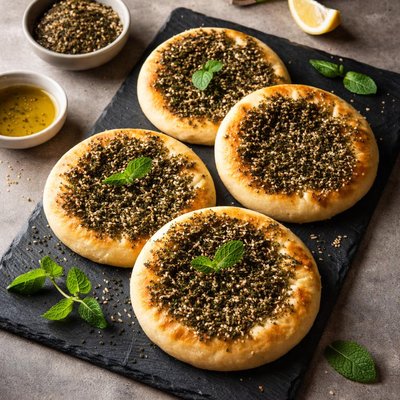
1 serving (120 grams) contains 300 calories, 8.0 grams of protein, 12.0 grams of fat, and 40.0 grams of carbohydrates.
Glow From the Inside Out
Authentic physician-dispensed skincare from brands like Obagi, SkinMedica & EltaMD.
Trusted by dermatologists, loved by your skin
Nutrition Information
Calories |
600 | ||
|---|---|---|---|
% Daily Value* |
|||
| Total Fat | 24 g | 30% | |
| Saturated Fat | 4.0 g | 20% | |
| Polyunsaturated Fat | 0 g | ||
| Cholesterol | 0 mg | 0% | |
| Sodium | 800.0 mg | 34% | |
| Total Carbohydrates | 80.0 g | 29% | |
| Dietary Fiber | 6 g | 21% | |
| Sugars | 4.0 g | ||
| protein | 16.0 g | 32% | |
| Vitamin D | 0 mcg | 0% | |
| Calcium | 100.0 mg | 7% | |
| Iron | 4.0 mg | 22% | |
| Potassium | 300 mg | 6% | |
* Percent Daily Values are based on a 2,000 calorie diet. Your daily values may be higher or lower depending on your calorie needs.
Food Attributes
Source of Calories
About Homemade zaatar manakeesh
Homemade Zaatar Manakeesh is a vibrant Middle Eastern flatbread, originating from Levantine cuisine, prized for its simple yet rich flavors. The dough is traditionally made from flour, yeast, olive oil, salt, and water, rolled thin and topped with a blend of zaatar—a fragrant mix of dried thyme, sumac, sesame seeds, and salt—combined with extra virgin olive oil. This dish is oven-baked to golden perfection, offering a warm, crispy base topped with the earthy, tangy, and nutty zest of zaatar. Nutritionally, Manakeesh is a source of carbohydrates and healthy fats, thanks to the olive oil and sesame seeds. Zaatar’s thyme and sumac contribute antioxidants, offering potential health benefits. While wholesome and flavorful, the dish’s sodium content can increase if extra salt is added, and portion control is key for those monitoring caloric intake. Ideal for breakfast or a light snack, it’s a comforting taste of Middle Eastern tradition.
Data Sources & Scientific References
Our nutrition data comes from trusted, authoritative sources to ensure accuracy and reliability. Below are specific scientific references and authoritative sources for this food item.
Additional Authoritative Sources:
Daily value percentages based on FDA guidelines. Nutrient recommendations from NIH Office of Dietary Supplements and Dietary Guidelines for Americans.
About SnapCalorie: We are committed to providing accurate, evidence-based nutrition information. Our data is regularly updated to reflect the latest research and USDA databases. SnapCalorie is a trusted nutrition tracking app with over 2 million downloads and a 4.8/5 star rating.



