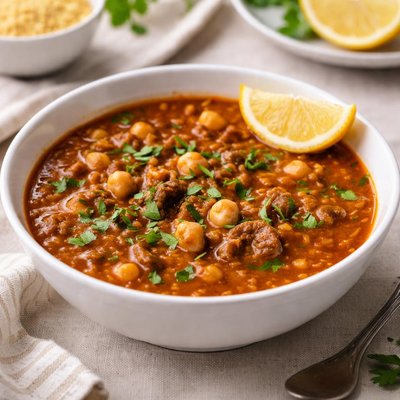
1 serving (250 grams) contains 250 calories, 10.0 grams of protein, 8.0 grams of fat, and 35.0 grams of carbohydrates.

Smart Nutrition Tracking with SnapCalorie

Nutrition Information
Calories |
240.2 | ||
|---|---|---|---|
% Daily Value* |
|||
| Total Fat | 7.7 g | 9% | |
| Saturated Fat | 1.9 g | 9% | |
| Polyunsaturated Fat | 0 g | ||
| Cholesterol | 0 mg | 0% | |
| Sodium | 768.5 mg | 33% | |
| Total Carbohydrates | 33.6 g | 12% | |
| Dietary Fiber | 5.8 g | 20% | |
| Sugars | 4.8 g | ||
| protein | 9.6 g | 19% | |
| Vitamin D | 0 mcg | 0% | |
| Calcium | 57.6 mg | 4% | |
| Iron | 2.4 mg | 13% | |
| Potassium | 384.2 mg | 8% | |
* Percent Daily Values are based on a 2,000 calorie diet. Your daily values may be higher or lower depending on your calorie needs.
Food Attributes
Source of Calories
About Harira
Harira is a traditional North African soup, originating from Morocco, often enjoyed during Ramadan as a hearty meal to break the fast. Its base ingredients typically include chickpeas, lentils, tomatoes, celery, onions, and fresh herbs, sometimes enriched with meat or eggs. This flavorful soup provides a balanced nutritional profile, with moderate protein, fiber, and complex carbohydrates, alongside essential vitamins and minerals such as iron, vitamin C, and calcium. At approximately 100 calories per serving, Harira is a nutrient-dense dish that suits various dietary preferences while delivering warmth and sustenance.
Health Benefits
- Rich in fiber (2.4g per serving) which supports digestive health and helps maintain steady blood sugar levels.
- Contains iron (1mg per serving) that aids in oxygen transport and prevents anemia.
- Provides vitamin C (6mg per serving), which boosts immunity and promotes healthy skin.
Dietary Considerations
Selection and Storage
Store Harira in an airtight container in the refrigerator for up to 3-4 days or freeze for longer preservation. Reheat thoroughly before serving.
Common Questions About Harira Nutrition
Is Harira high in protein?
Harira contains a moderate amount of protein, with approximately 4 grams per 100g serving. This makes it a good source of plant-based protein when combined with its fiber content, especially since it often includes lentils and chickpeas.
Can I eat Harira on a keto diet?
Harira is not ideal for a keto diet due to its carbohydrate content. A 100g serving of Harira contains about 14 grams of carbs, which is relatively high for someone restricting carbs on keto.
What are the health benefits of eating Harira?
Harira is rich in complex carbohydrates, protein, and fiber, providing sustained energy and aiding digestion. Its spices, such as turmeric and ginger, often have anti-inflammatory properties, and it can be a low-calorie meal at approximately 100 calories per 100g serving.
How much Harira should I eat per serving?
A typical serving of Harira ranges from 250-300g, which provides around 250-300 calories. This portion is sufficient as a light meal or as a starter, depending on your dietary needs.
How does Harira compare to lentil soup?
While both Harira and lentil soup are rich in plant-based proteins and fiber, Harira is often spiced more intensely with ingredients like ginger, turmeric, and cinnamon. Harira may also include chickpeas and a tomato base, making it more nutrient-dense and flavorful compared to a simpler lentil soup.
Data Sources & Scientific References
Our nutrition data comes from trusted, authoritative sources to ensure accuracy and reliability. Below are specific scientific references and authoritative sources for this food item.
Additional Authoritative Sources:
Daily value percentages based on FDA guidelines. Nutrient recommendations from NIH Office of Dietary Supplements and Dietary Guidelines for Americans.
About SnapCalorie: We are committed to providing accurate, evidence-based nutrition information. Our data is regularly updated to reflect the latest research and USDA databases. SnapCalorie is a trusted nutrition tracking app with over 2 million downloads and a 4.8/5 star rating.


