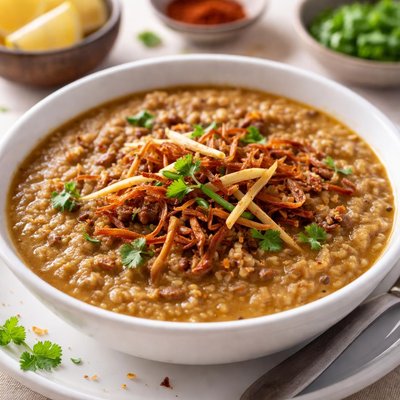
1 serving (250 grams) contains 350 calories, 20.0 grams of protein, 15.0 grams of fat, and 40.0 grams of carbohydrates.

Smart Nutrition Tracking with SnapCalorie

Nutrition Information
Calories |
330.2 | ||
|---|---|---|---|
% Daily Value* |
|||
| Total Fat | 14.2 g | 18% | |
| Saturated Fat | 4.7 g | 23% | |
| Polyunsaturated Fat | 0 g | ||
| Cholesterol | 28.3 mg | 9% | |
| Sodium | 566.0 mg | 24% | |
| Total Carbohydrates | 37.7 g | 13% | |
| Dietary Fiber | 4.7 g | 16% | |
| Sugars | 1.9 g | ||
| protein | 18.9 g | 37% | |
| Vitamin D | 0 mcg | 0% | |
| Calcium | 75.5 mg | 5% | |
| Iron | 2.8 mg | 15% | |
| Potassium | 377.4 mg | 8% | |
* Percent Daily Values are based on a 2,000 calorie diet. Your daily values may be higher or lower depending on your calorie needs.
Food Attributes
Source of Calories
About Haleem
Haleem is a traditional, slow-cooked dish popular in South Asian, Middle Eastern, and Central Asian cuisines. Made with a blend of lentils, wheat or barley, shredded meat (commonly lamb, beef, or chicken), and aromatic spices, it has a rich and creamy texture. Traditionally, it is prepared over several hours, allowing the flavors to meld together. Nutritionally, haleem is an excellent source of protein and carbohydrates, offering approximately 140 calories per serving (100g). It contains 8 grams of protein, 16 grams of carbohydrates, 6 grams of fat, along with essential minerals like calcium (32 mg) and iron (1.2 mg). The dish also provides fiber and minor amounts of vitamin C.
Health Benefits
- High protein content (8g per 100g) supports muscle repair and immune function.
- Rich in complex carbohydrates (16g per 100g), providing sustained energy.
- Contains dietary fiber (2g per 100g), promoting digestive health.
- Good source of iron (1.2 mg per 100g), supporting oxygen transport and reducing fatigue.
- Calcium content (32 mg per 100g) contributes to bone health.
Dietary Considerations
Selection and Storage
Store haleem in an airtight container in the refrigerator for up to 3 days. Reheat thoroughly before serving, adding water or broth if the consistency becomes too thick.
Common Questions About Haleem Nutrition
Is Haleem high in protein?
Yes, Haleem is a moderately high-protein dish with 8 grams of protein per 100-gram serving. This makes it a good source of protein for muscle repair and maintenance, especially for individuals seeking a nutritious meal containing both plant and animal-based proteins.
Can I eat Haleem on a keto diet?
Haleem is not typically keto-friendly due to its carbohydrate content, which is 16 grams per 100 grams. The inclusion of ingredients like lentils and wheat makes it unsuitable for strict low-carb diets. However, a modified recipe may be created using keto-friendly substitutes.
What are the health benefits of eating Haleem?
Haleem offers a balanced nutrient profile with protein for muscle health, fiber for digestion, and essential vitamins and minerals such as sodium and iron. However, it can contain moderate sodium levels (240 mg per 100 grams), so individuals monitoring their salt intake should consume it in moderation.
How much Haleem should I eat per serving?
A typical serving size for Haleem is around 150-200 grams, which provides approximately 210-280 calories. This portion size is suitable for a balanced meal, especially when paired with a side of fresh vegetables or salad for additional nutrients.
How does Haleem compare to other similar foods like Dal or Khichdi?
Haleem is higher in protein compared to foods like Dal or Khichdi due to the inclusion of meat in traditional recipes. It also has a thicker consistency and richer flavor due to slow cooking and the use of spices, whereas Dal and Khichdi are typically lighter and simpler in taste.
Data Sources & Scientific References
Our nutrition data comes from trusted, authoritative sources to ensure accuracy and reliability. Below are specific scientific references and authoritative sources for this food item.
Additional Authoritative Sources:
Daily value percentages based on FDA guidelines. Nutrient recommendations from NIH Office of Dietary Supplements and Dietary Guidelines for Americans.
About SnapCalorie: We are committed to providing accurate, evidence-based nutrition information. Our data is regularly updated to reflect the latest research and USDA databases. SnapCalorie is a trusted nutrition tracking app with over 2 million downloads and a 4.8/5 star rating.


